Experienced Attorneys
Committed to Protecting the
Rights of Injured Workers
Committed to Protecting the
Rights of Injured Workers



A Chicago forklift accident lawyer from our team can ensure that you receive fair compensation for medical bills, lost wages, and other needs after a serious forklift workplace injury. Whether you’re pursuing a workers’ compensation claim or a personal injury lawsuit, our top-rated Chicago attorneys are here to help. Contact us today for a free consultation about your legal rights after a forklift accident.
Past results do not guarantee a particular settlement or verdict. The value of a forklift accident claim depends on its specific facts, injuries, damages, and available evidence.
Our Chicago forklift accident attorneys are nationally recognized for peerless trial representation and a 98% success rate in recovering compensation. With over 5,000 successful personal injury claims resulting in over $490 million in verdicts, we are committed to ensuring forklift accident victims receive maximum compensation for their injury claim.
Our experience includes forklift accidents involving warehouses, distribution centers, construction sites, manufacturing facilities, retail locations, and other workplaces where powered industrial trucks are used.
Workers’ compensation benefits are a type of insurance provided by companies for injured workers. This is a no-fault system, meaning that it doesn’t matter whether you were responsible for the accident. Depending on the circumstances, benefits may cover necessary medical treatment, vocational rehabilitation, and certain wage-related losses.
Those who suffered forklift injuries at someone else’s worksite can seek a third-party lawsuit against forklift operators, general contractors, construction site operators, and companies. A third-party personal injury claim may also apply when someone other than your employer contributed to the accident, potentially allowing recovery of damages not available through workers’ compensation.
If defective equipment or inadequate safety warnings caused a forklift accident, you can hold the forklift manufacturer accountable through a personal injury claim. Potential issues include defective design, manufacturing defects, inadequate warnings, or dangerous forklift components.
Fatal forklift accidents leave grieving families with high medical expenses and emotional trauma. Our forklift accident attorneys will pursue compensation from operators, companies, and manufacturers on your behalf.
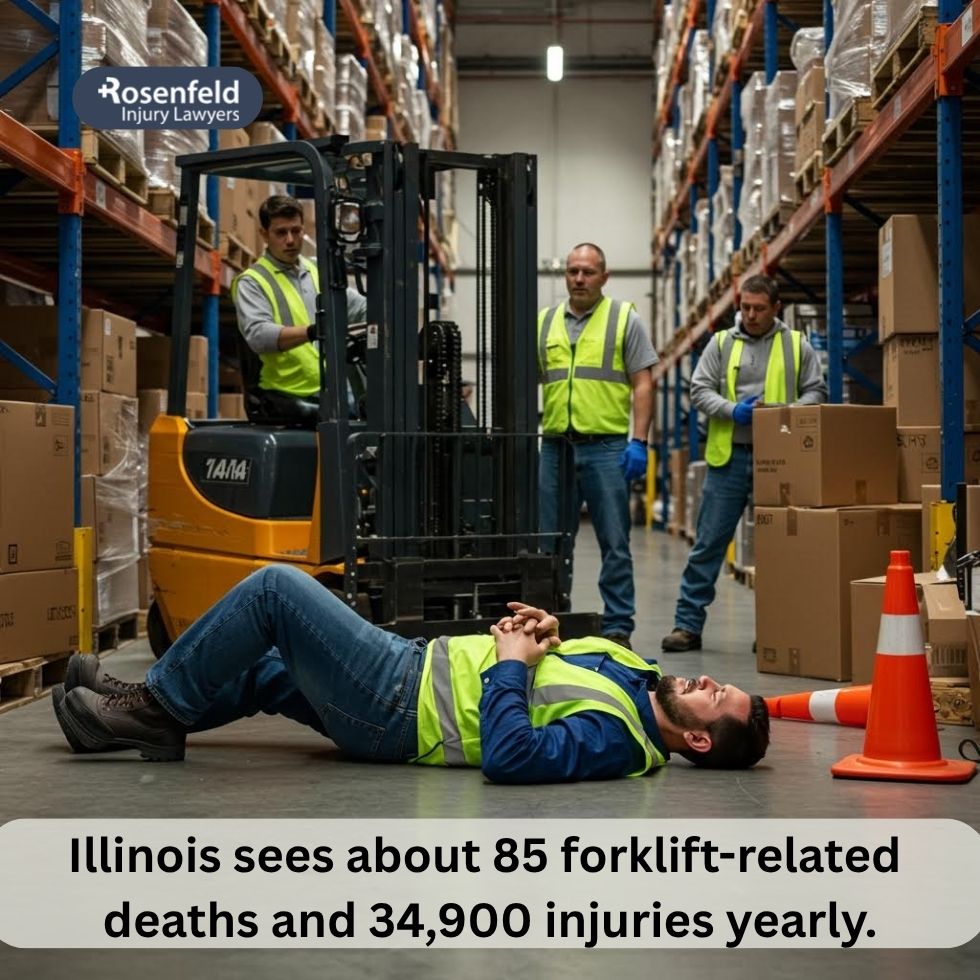
Inadequate training, inattention, or reckless driving often leads to tip-overs, collisions, and crushing incidents.
Malfunctioning brakes, steering issues, and hydraulic failures from neglected maintenance are a frequent cause of accidents.
Cluttered aisles, blind spots, and narrow passageways increase the risk of forklifts striking workers or objects.
Driving too fast for the environment, especially in tight warehouse areas, reduces reaction time and increases the risk of rollovers.
Unsecured or uneven loads can shift or fall, leading to tipping accidents or materials falling onto workers.
Work zones without marked walkways, mirrors, or warning signals often result in workers being hit by forklifts.
Dim lighting, blocked sightlines, or lack of backup alarms make it difficult for operators to detect nearby hazards.
Operating on cracked floors, steep ramps, or loose gravel can cause forklifts to lose stability or traction.
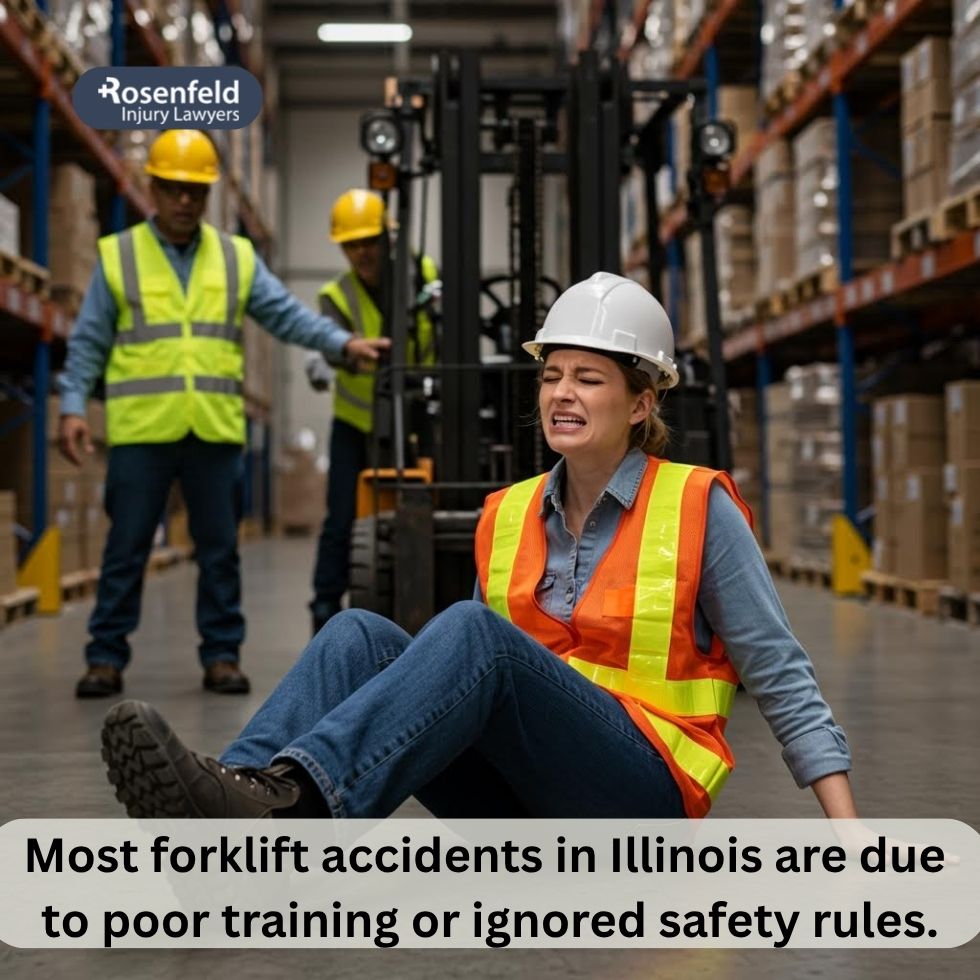
Employers who skip training requirements, ignore equipment inspections, or fail to enforce safety policies increase the likelihood of serious injuries.
OSHA’s powered industrial truck requirements address operator training, vehicle inspection, maintenance, safe operation, and workplace conditions. Violations may provide important evidence when investigating whether unsafe practices contributed to a forklift injury.
The Occupational Safety and Health Administration provides clear standards for the proper training, maintenance, and operation of forklifts. The National Institute for Occupational Safety and Health (NIOSH) explains them as follows:
Forklift accidents can result in serious injuries or even death. Common forklift accident injuries include:
Our forklift accident lawyers will negotiate for full compensation based on your injuries. If you are seeking workers’ compensation benefits, your compensation will include medical bills and lost wages, while a personal injury lawsuit may provide non-economic damages like emotional distress.
A forklift accident workers’ comp claim can include:
A forklift accident personal injury lawsuit can offer additional compensation, such as:
The average forklift accident settlement in Chicago is $2,806,232, with a median settlement of $2,000,000. In general, a personal injury case may provide additional categories of damages because it can include non-economic damages.
These are only general estimates, and only experienced Chicago forklift accident lawyers can give you a full evaluation of your case. Compensation is based on several factors, including available insurance, severity of your injuries, and how clear the evidence is.
Past settlement figures are not a guarantee of future results. The value of an individual forklift accident claim depends on liability, the nature and permanence of the injuries, medical treatment, lost income, and other damages.
In one case, a man who was struck and severely injured in a forklift accident secured $10,100,000, even though he was able to return to full employment.
Another man, an Army veteran who lost part of his foot to a crush injury, was awarded $15.2 million in a jury verdict.
Lastly, a forklift operator who suffered spinal cord damage as a result of an accident at O’Hare Airport received $4.8 million to cover his physical rehabilitation and loss of income.
Those injured in forklift accidents may not be aware of all their legal options, such as whether they can pursue a personal injury suit in addition to claiming workers’ compensation from their employer. When filing a lawsuit, forklift accident victims may not know what fair compensation involves or what evidence they need to strengthen their case.
Our Chicago forklift accident attorneys will help you review your options, identify all liable parties, and represent you in negotiations with the relevant insurance company. We can investigate operator training, forklift maintenance, safety procedures, surveillance footage, accident reports, and other evidence that may establish liability. This ensures you have the best possible chance of recovering compensation that covers your needs.
Per OSHA investigation summaries, a total of 22 workplace incidents were recorded in Chicago since 2020. Of these, six were fatal, reflecting a workplace fatality rate of approximately 27% for the cases shown. The incidents span a variety of serious injuries and industries, with many involving heavy machinery or high-risk environments.
A significant portion of the events, 14 out of 22 cases (64%), involved forklift-related workplace accidents, including workers being struck, run over, or crushed by forklifts, as well as limbs becoming caught in forklift mechanisms. These forklift injuries often occurred in industries such as warehousing, logistics, retail, and manufacturing, where powered industrial trucks are commonly used.
Several incidents involved crushing or blunt force trauma due to falling materials or structural elements. Notably, multiple cases involved limb amputations or severe fractures, including injuries to the foot, leg, wrist, arm, or fingers.
The most commonly recorded injury types included fractures, crush injuries, amputations, lacerations, and, in some cases, concussions or multiple trauma injuries.
Falls from height and incidents involving falling objects were also present, including one fatal fall from elevation and multiple injuries from being struck by pallets or steel containers. Additionally, several events resulted from pinning injuries, where workers were caught between equipment or materials, especially in warehouse or factory settings.
Overall, forklift accident statistics highlight the high-risk nature of industrial and warehouse work, where powered industrial vehicles like forklifts, poorly secured loads, and fall hazards frequently lead to catastrophic or fatal outcomes.
Approximately 91% of Illinois workers are covered by the Illinois Workers’ Compensation Act, which mandates that businesses provide workers’ compensation insurance to covered employees (820 ILCS 305/1). This is a no-fault system, and employers generally cannot deny workers’ compensation benefits based on who was at fault for the accident. The act does not cover certain independent contractors, although whether a worker is legally classified as an employee or independent contractor depends on the circumstances. If you were injured in a forklift accident while working for someone else, you may be entitled to workers’ compensation benefits depending on your employment status and the circumstances of the accident.
If you were in a forklift accident but were not an employee of the company, you may be able to recover compensation through a personal injury suit. To prove your case, you must ensure that your claim meets the standards for negligence: duty of care, breach of duty, causation, and damages. A third-party claim may apply when someone other than your employer, such as a property owner, contractor, forklift operator, or equipment manufacturer, contributed to your injuries.
Negligence means that the liable party had a responsibility to you, failed to uphold that duty, and caused your forklift injuries through that breach, resulting in financial or emotional losses. The standard of negligence has been repeatedly affirmed by Illinois appellate courts, such as in Dunning v. Dynegy Midwest Generation, Inc..
This wrongful death case was brought for a forklift operator who died due to defective product design, and the court found that to prove negligence, it must be demonstrated that an alternative design would have prevented the injury. Depending on the circumstances of a Chicago forklift accident, evidence of defective equipment, unsafe work conditions, inadequate training, or other safety failures may help establish liability.
For a personal injury suit, Illinois generally provides two years from the date of the accident to file a personal injury action under 735 ILCS 5/13-202, subject to exceptions. A workers’ compensation claim has different deadlines and notice requirements. Illinois law generally requires an employee to notify the employer of an accident as soon as practicable and no later than 45 days, subject to statutory exceptions.
Because filing and notice requirements can vary depending on the type of claim, it is important to seek legal advice promptly after a forklift accident.
Our Chicago forklift accident lawyers can hold a variety of parties liable for your injuries, including the following.
Workers’ compensation is a no-fault system, meaning that you only must prove that you were injured at work. However, third-party claims may be denied due to these common defenses. Our Chicago forklift accident lawyers will use meticulous evidence to demonstrate liability.
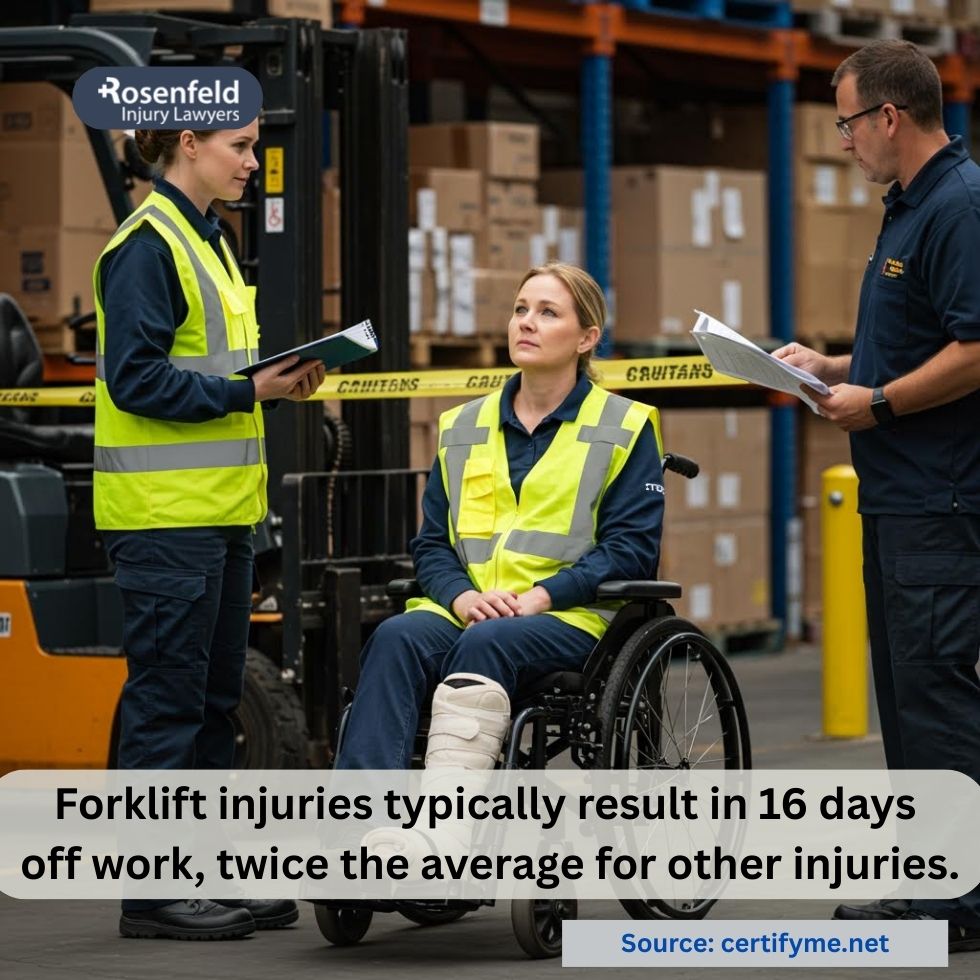
Our Chicago forklift accident lawyers will fight hard to ensure that you get the maximum settlement possible. We can assist with every aspect of your case, including:
With comprehensive and compassionate service, our top-rated attorneys will ensure you are treated fairly by third parties and the court system.
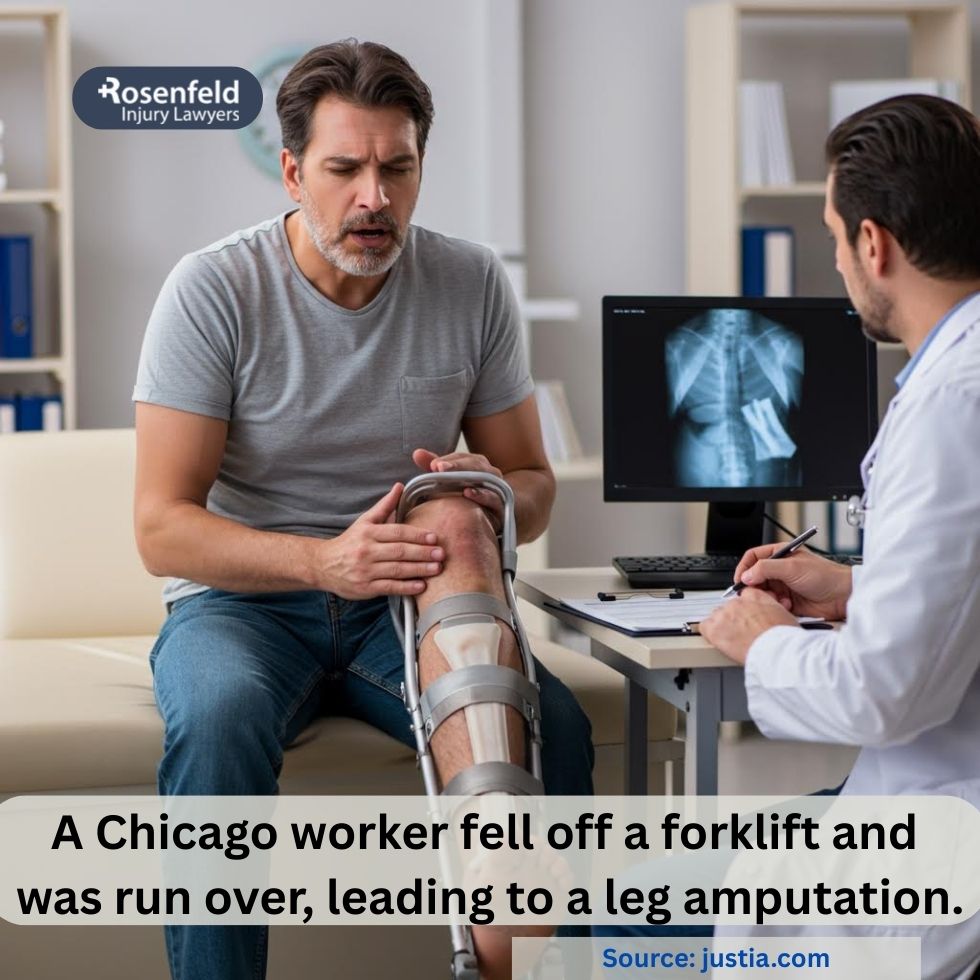
We provide legal assistance on a contingency fee basis, meaning that you owe us nothing unless we recover compensation.
Different forklift accident victims can file different claims. If you were an employee at a construction site or a distribution center, you can claim workers’ compensation benefits. Other parties, like contractors and third parties, can file a personal injury lawsuit.
How long it takes to settle depends on how willing the insurance company is to negotiate, the severity of your forklift injuries, and the strength of your evidence. Some cases may resolve within months, while complex claims involving severe injuries or disputed liability can take longer.
The three-point contact rule is to prevent forklift accidents by maintaining three points of contact with the machine at all times.
As with other forms of transportation, like cars, pedestrians always have the right-of-way when operating a forklift.
This rule means that operators should never allow two forklifts to come within 20 feet of each other. This allows for adequate stopping distance and prevents forklift accidents.
Forklift overturns and incidents involving workers being crushed or struck can result in fatal injuries. The circumstances of each accident vary, so no single accident type should be described as universally the most likely to cause death.
The safety halo is a distance rule meant to prevent serious injuries or death. The warning zone is within three and six feet, which is when operators and pedestrians should make eye contact. Pedestrians always have the right of way.
The danger zone is when pedestrians are within three feet of the machine. Operators should never move the forklift when a person is so close.
Some companies have installed warning lights that can remind pedestrians of safe distances, in addition to ensuring all workers are properly trained to prevent accidents.
In general, the maximum safe speed is 10 miles per hour. In crowded areas, operators should limit their speed to between 3 miles per hour and 8 miles per hour.
Our Chicago forklift accident lawyers are top-rated attorneys with a 98% success rate and over $490 million recovered. We work on a contingency fee basis, ensuring everyone can afford high-quality legal support. Contact us to explore your legal options during a free consultation.
 Legally Reviewed By
Attorney Jonathan Rosenfeld
Content legally reviewed by Jonathan Rosenfeld The information on this page has been legally reviewed by Attorney Jonathan Rosenfeld, founder and managing partner of Rosenfeld Injury Lawyers LLC. With extensive experience representing injured workers across Illinois, Mr. Rosenfeld is dedicated to helping workplace accident victims pursue the maximum compensation available under the law. His extensive legal knowledge and commitment to client advocacy ensure that the information provided is accurate, reliable, and aligned with current legal standards.