
Experienced Attorneys
Committed to Protecting the
Rights of Injured Workers
Committed to Protecting the
Rights of Injured Workers



A construction cutting injury lawyer helps workers hurt by saws, grinders and other blades on Illinois job sites. These injuries often involve deep lacerations, nerve damage and amputations. When a cutting blade accident happens because a blade guard was missing or failed, you may have a claim beyond workers’ compensation. Our cutting blade accident attorney can explain your options.
In Illinois, many workers use cutting blades during the course of their duties. Whether you regularly use table saws or other types of blades, these tools can pose significant risks to users and bystanders. Getting hurt by a table saw can cause severe injuries, and if this incident occurs at work, you may need legal assistance from a cutting blade accident attorney to secure compensation for your losses.
IL Work Injury Lawyer is uniquely positioned to guide you through the claims process, whether you are seeking workers’ compensation benefits or a personal injury claim payout. An accident attorney will assess your serious injuries, investigate the incident, and fight for the maximum settlement to cover legal damages.
As a Chicago construction accident attorney team, we handle every type of job site injury. Cutting blade cases need fast action, because the saw, the blade and the guard are often the most important evidence in the claim.
Our firm’s expert lawyers have secured millions for past clients with a 98% success rate. Additionally, some of our legal representatives are contributing authors for the National Law Review. The Better Business Bureau has recognized our Chicago-based firm with an A+ grade.
At IL Work Injury Lawyer, we have recovered millions in saw-related injury cases. Here is one such case where we successfully recovered $5.25 million for the victim:
Danielle, a 27-year-old graduate student in Chicago, was taking a woodworking class at a community makerspace in Lincoln Park when the circular saw she was using malfunctioned. Despite following all safety protocols, the blade guard failed to engage, pulling her left hand into the moving blade. She suffered catastrophic injuries, including multiple finger amputations and permanent nerve damage. The saw had a known history of mechanical issues and had not been properly serviced or recalled.
The case value was affected by multiple factors, including prior incident reports, permanent disfigurement, emotional impact, and occupational limitations.
Multiple factors affected the case value, including prior incident reports, permanent disfigurement, emotional impact, and occupational limitations.
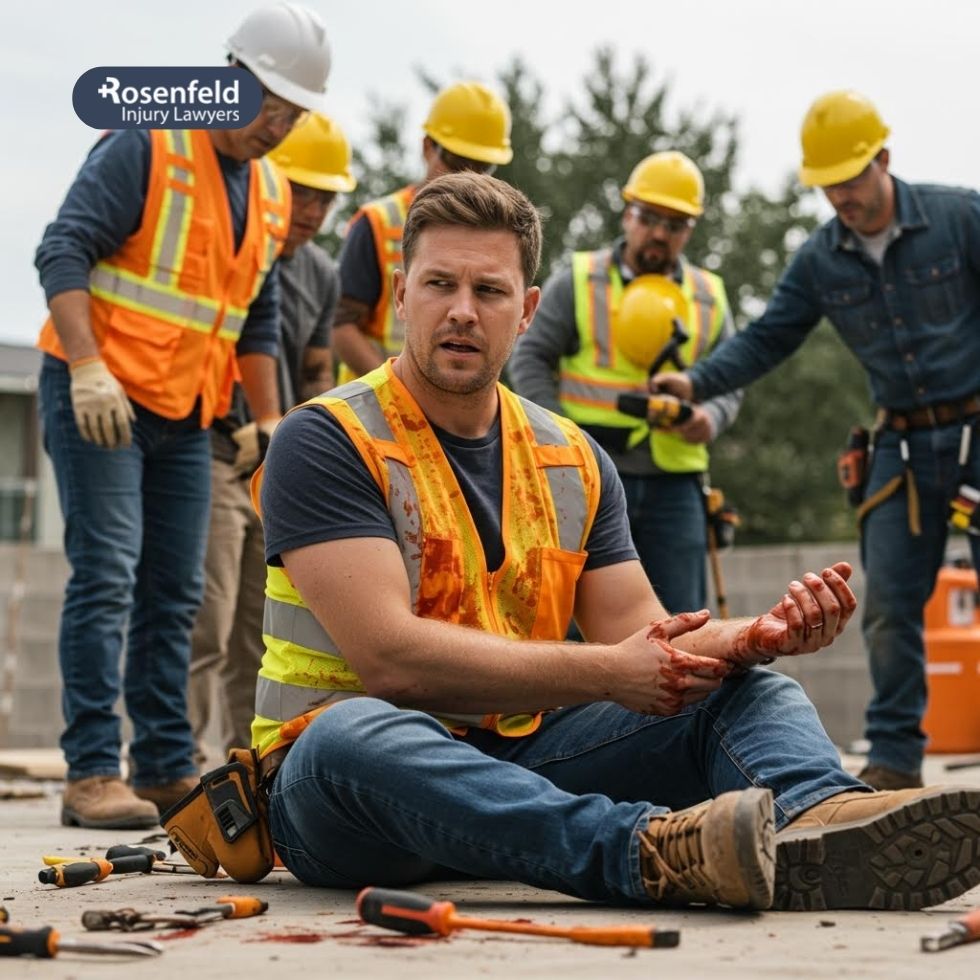
Cutting blades are found on many types of job sites around Illinois. Product misuse or insufficient safety guidelines can lead to serious injuries and long-term damages.
Here are some types of cutting blades that may affect construction workers:
Table saws alone cause more than 30,000 injuries a year in the United States, so a table saw injury is one of the most frequent blade claims in carpentry and framing work. Cutting hazards also appear on larger machines, such as walk-behind concrete saws and saw attachments on skid steers. Those cases often overlap with heavy equipment accidents, where machine guarding failures play the same central role.
Employers and employees are both responsible for enacting procedures to prevent injuries from table saws, power saws, box cutters, and other blades. Here are the common causes of most injuries connected to cutting blade accidents:
Injuries caused by most table saws and other blades can have serious consequences for the victims. You could recover compensation for injuries caused by the scenarios described above if they lead to medical bills, lost wages, and other losses.
Here are some of the most common injuries that happen at construction sites and other dangerous work environments:
Other possible injuries include a traumatic amputation, digit loss, and, in some cases, a degloving injury involving severe damage to the skin and underlying tissues.
Such injuries result in expensive emergency department visits and long-term medical treatment.
The more serious your table saw or cutting blade accident, the more compensation you could recover with a successful claim. The two primary types of legal damages are economic and non-economic.
Economic Damages
Non-Economic Damages
The type of compensation you can receive will depend on the specific legal action. A personal injury claim could yield a settlement to cover the previously mentioned losses. Workers’ compensation benefits typically include wage replacement, medical expenses, disability payments, and vocational rehabilitation costs.
If your injury involved the loss of a finger, hand or limb, see Amputation Injury Claims and Illinois Scheduled Loss Benefits below for the specific benefits Illinois pays.
Saw and blade accidents are a significant cause of work-related amputations, particularly injuries involving the fingers and hands. A power-saw injury may result in a workplace amputation and can raise questions about workers’ compensation, scheduled loss benefits, and potential third-party claims. A worker considering an amputation injury lawyer may need to determine whether the injury involved only workers’ compensation or also supports a separate claim. Our guide to workers’ compensation for construction workers help you understand these benefits.
Illinois workers’ compensation provides scheduled benefits for the loss of, or permanent and complete loss of use of, certain body parts under 820 ILCS 305/8(e). The current statutory schedule includes the following periods for injuries occurring on or after February 1, 2006:
| Body Part | Weeks of Benefits Under 820 ILCS 305/8(e) |
| Thumb | 76 weeks |
| Index finger | 43 weeks |
| Hand | 205 weeks |
| Arm | 253 weeks |
| Foot | 167 weeks |
| Leg | 215 weeks |
The statutory schedule can apply to loss of use as well as amputation, subject to the requirements of the Workers’ Compensation Act. The calculation of actual benefits also depends on the applicable compensation rate and the percentage of loss established in the claim.
Workers’ compensation medical benefits can also cover necessary medical treatment associated with a work injury, including prosthetic devices and related services. Illinois law provides for necessary medical, surgical, hospital, and related services under Section 8(a), and Illinois workers’ compensation authorities recognize coverage for prosthetic-related expenses.
A separate claim may also be possible when a defective saw, defective component, or missing blade guard contributed to the amputation. Depending on the facts, potential defendants may include a tool manufacturer or a contractor responsible for removing or disabling a required guard. Unlike workers’ compensation, a qualifying third-party personal injury claim may allow recovery for non-economic damages such as pain and suffering.
A Chicago amputation lawyer, amputation lawyer, or traumatic amputation lawyer can evaluate whether evidence supports a third-party claim in addition to workers’ compensation. The page’s discussion of disfigurement should also be linked here because Illinois separately addresses serious and permanent disfigurement under Section 8(c). You can choose to contact our construction cutting injury lawyer.
Workplace cutting blade accident claims in the United States range from $10,000 to $3.92 million. The average settlement is $1.04 million.
The potential value of an individual claim can be affected by:
Multiple factors affected the outcomes of these cases, including saw injury severity, permanent impairment, ability to return to work, and compensation for third-party damages. Every case is unique, so consult one of the best law firms in Chicago to gain clarity over your potential payout.
Jeff, a maintenance and repair worker, was cutting wood with a handheld electric circular saw in 2006. When he moved the piece of wood from one hand to the other, his shirt got caught in the blade and caused a serious laceration to his thigh. Jeff sued his employer for negligence for the malfunctioning saw, and a coworker claimed that the blade guard did not wrap around the entire blade while Jeff was cutting the wood. He was awarded over $429,000 by the jury.
Blake, a foreman of a remodeling crew, was working on a project in 2001 when he and several coworkers were pulled off the project site to head to another job. One of the employees never showed up, so the crew had to proceed shorthanded. While cutting trim with a chop saw, Blake cut his wrist on the rotating saw blade. He sued the contractor for not providing enough workers to do the job safely, claiming that he was an employee under IRS and workers’ comp guidelines. Blake was awarded $547,000 by the judge, who found the employer 100% liable.
Prior results do not guarantee a similar outcome. Every case is different, and past results do not guarantee future results.
Experienced accident lawyers in Illinois can simplify a complex process. Often, cases involving table saws and other blades lead to concurrent workers’ compensation and third-party negligence claims. Claims can also involve multiple entites, such as unions (LIUNA Local 4), contractors (IRPINO Construction), manufacturers, and property owners.
Our accident attorneys will investigate defective tools, Consumer Product Safety Commission standards, OSHA construction violations, and unsafe job site conditions to support your premises liability, third-party negligence, workers’ comp, or product liability lawsuit.
According to a study published in Plastic and Reconstructive Surgery in 2013, over 30,000 table saw injuries occur annually in the United States. The study estimated medical costs for treatment at more than $2 billion annually.
About 125,000 serious injuries related to portable and fixed power saws were reported in a U.S. Army Combat Readiness Center article published in 2022, with hand and finger blade contact involved in the majority of those accidents.
The existing page also reports 32 Chicago workplace saw-injury reports since 2020, including one fatality. This figure is based on the OSHA enforcement database and should be identified as an OSHA database figure accessed in 2026, rather than presented as a general estimate of all saw injuries in Chicago.
Safety standards from the Occupational Safety and Health Administration are supposed to govern the use of saw blades in all industries. However, some construction sites and work environments are far more prone to these accidents:
Here are some common locations where saw blade injury cases are more likely to arise:
Here are a few relevant laws that may impact the outcome of your claim.
OSHA standard 1926.300 addresses numerous safety regulations related to table saws and other cutting blade equipment. Some regulations include:
OSHA 29 CFR 1926.300 requires power-operated tools designed to accommodate guards to be equipped with those guards when in use. The standard also addresses guarding of points of operation and identifies power saws among machines that generally require point-of-operation guarding.
Guards are sometimes removed or disabled to speed up work or make certain cuts easier. If an employer knew a required guard had been removed or disabled, or allowed the practice to continue, that evidence may be important when determining whether safety obligations were breached. OSHA’s construction requirements can be reviewed in more detail through OSHA construction regulations.
OSHA’s rules also specifically address portable power-driven circular saws. Under 29 CFR 1926.304(d), these saws must have guards above and below the base plate or shoe, subject to the regulatory requirements.
Under state law 735 ILCS 5/13-202, victims with severe lacerations or other injuries caused by someone else’s negligence have two years to pursue compensation for legal damages.
Under 820 ILCS 305/6(d), employees have three years from the date of the injury, or two years from the last payment of benefits, whichever is later, to file their workers’ comp claims. As a rule, the sooner you pursue legal action, the better because it is easier to preserve evidence in the short-term.
Determining the liable party is an important step in the legal process. Although fault is irrelevant to receive the benefits workers’ compensation covers, it is still important to understand who is liable for a table saw accident.
Here are a few entities that may be at fault for your circular saw or table saw accident:
The defendant’s lawyers may use several tactics to undermine your claim:
Our expert accident lawyers can disprove these accusations by reviewing safety logs, maintenance records, surveillance footage, and expert testimony to support your case.
If you have suffered devastating injuries in a table saw accident, you must take immediate action to start building a strong claim:
To further preserve evidence after a cutting injury:
IL Work Injury Lawyer can play an important role in securing the compensation you deserve. Our legal services include:
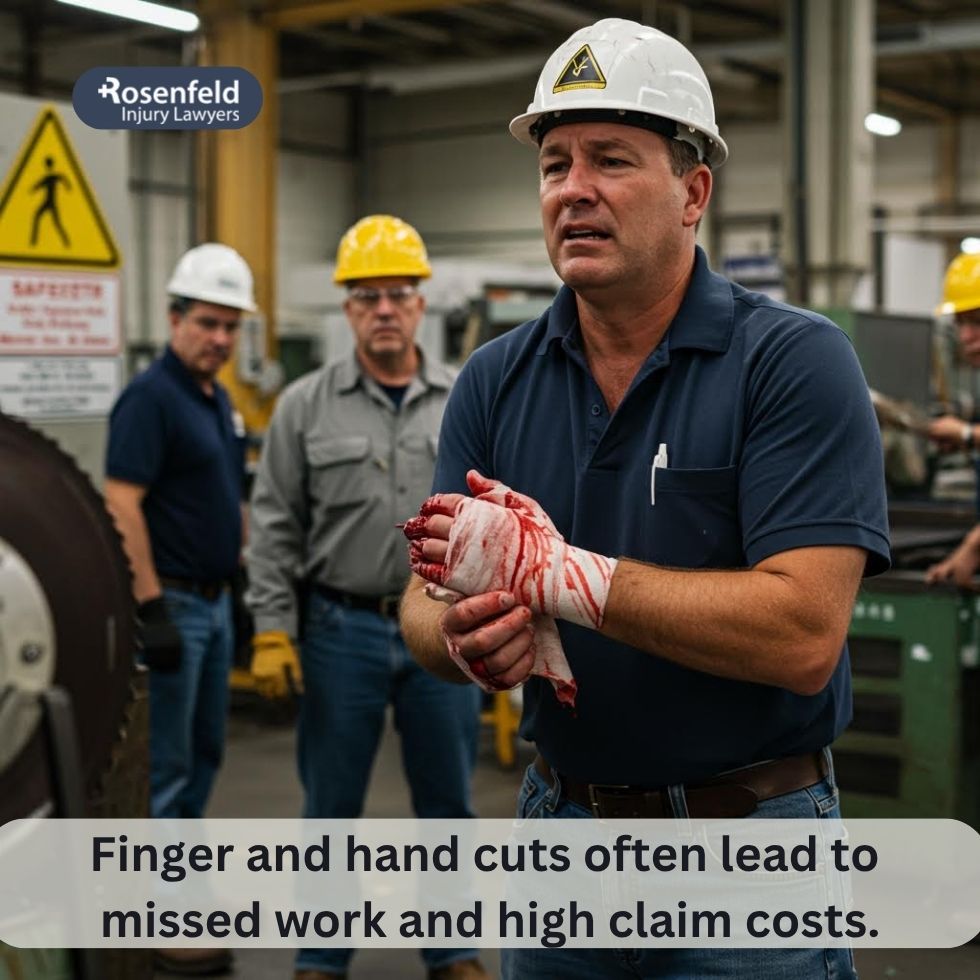
We work on a contingency fee basis, which means you owe nothing unless we win. That means you can avoid upfront legal costs, as our payment is only deducted from the settlement once it is awarded.
You can sue the at-fault party for defective saw injuries if their negligence caused the accident. Whether a manufacturer designed the product poorly or a property owner placed a table saw in a dangerous area, you may be eligible for legal damages after a table saw injury.
Workers’ comp should cover an amputation injury if it occurred during the normal course of your duties. Benefits could cover your medical bills, lost income, and ongoing disability payments, depending on the severity of the amputation and its impact on your life.
Illinois has no fixed dollar value for an amputation claim. Workers’ compensation scheduled-loss benefits depend on the body part and applicable percentage of loss, while a third-party claim may involve additional damages. The value of a third-party case depends on factors such as the injury, medical evidence, lost income, and liability.
Yes, Illinois workers’ compensation can cover necessary prosthetic devices related to a compensable work injury. Section 8(a) addresses necessary medical and related services, and Illinois workers’ compensation authorities recognize prosthetic-related expenses as part of covered medical benefits. Coverage and replacement requirements should be evaluated based on the specific claim.
You may still have a claim if someone else removed the blade guard. Workers’ compensation generally does not depend on proving fault, while a separate third-party claim may be available if another party’s conduct contributed to the injury. Evidence about who removed the guard, who controlled the equipment, and who knew about the condition can be important.
A severe table saw injury can turn your life upside down. You may be forced to find new work or lose earning capacity, all because an employer failed to maintain safety devices or enforce safe practices. Regardless of fault, you should be eligible for workers’ comp, but you could also sue the at-fault party for non-economic damages if their negligence caused your injury.
IL Work Injury Lawyer is here to guide you through the claims process and fight for fair compensation. Because we work on a contingency fee basis, you pay no fees unless we win. We also offer a free consultation so you can ask questions about the legal process.
Our Chicago work injury attorneys represent clients across the state affected by table saw accidents. Contact us today to schedule a free case evaluation.
 Legally Reviewed By
Attorney Jonathan Rosenfeld
Content legally reviewed by Jonathan Rosenfeld The information on this page has been legally reviewed by Attorney Jonathan Rosenfeld, founder and managing partner of Rosenfeld Injury Lawyers LLC. With extensive experience representing injured workers across Illinois, Mr. Rosenfeld is dedicated to helping workplace accident victims pursue the maximum compensation available under the law. His extensive legal knowledge and commitment to client advocacy ensure that the information provided is accurate, reliable, and aligned with current legal standards.