
Experienced Attorneys
Committed to Protecting the
Rights of Injured Workers
Committed to Protecting the
Rights of Injured Workers



Construction site injuries in Illinois include sprains and strains, back injuries, cuts, broken bones, brain injuries, burns, and electrical injuries. Construction workers can also suffer crush injuries, amputations, eye injuries, hearing loss, and occupational illnesses. Falls, struck-by incidents, electrocutions, and caught-between accidents are leading causes of construction-related deaths.
The Bureau of Labor Statistics (BLS) reported 167,100 nonfatal injury and illness cases in the construction industry in 2024, a rate of 2.2 cases per 100 full-time workers. If you suffer construction site injuries while working in Illinois, you may qualify for workers’ compensation benefits and, in some cases, pursue a separate claim against a negligent third party. A Chicago construction accident lawyer from our team can help you understand your options.
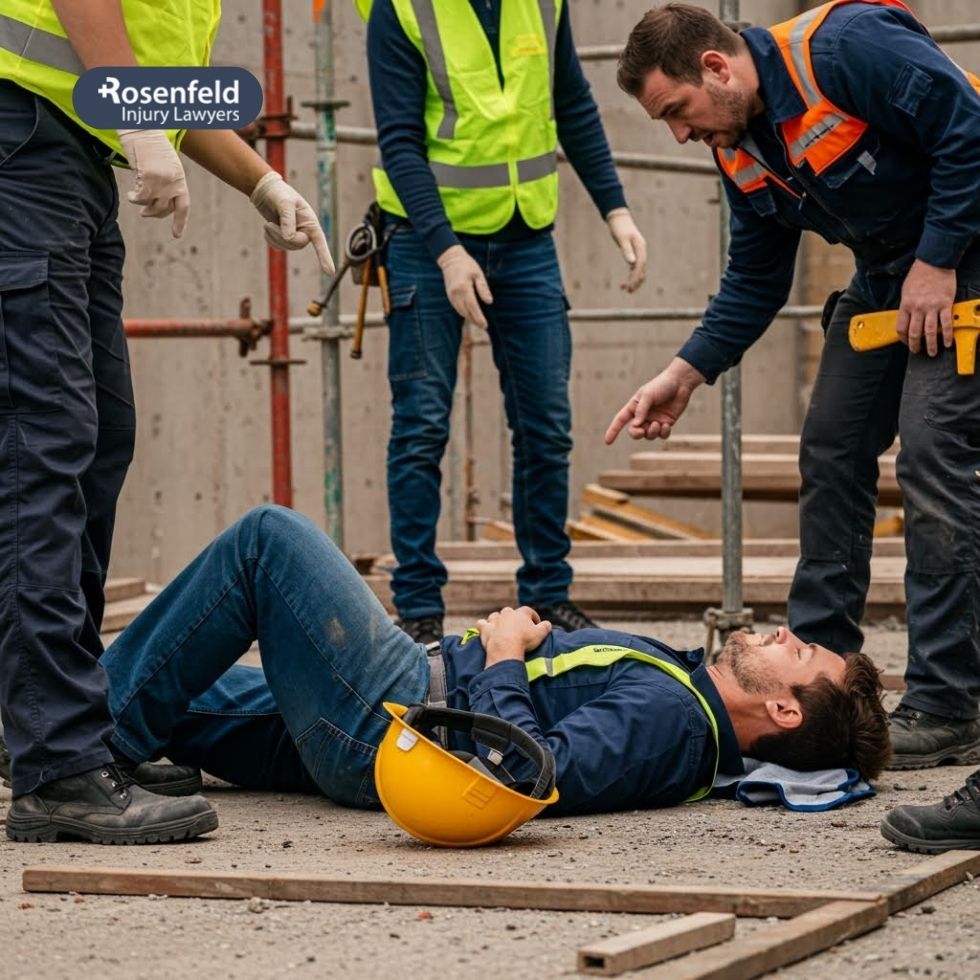
Numerous hazards exist in many construction zones across the state. Heavy machinery, elevated work areas, loose debris, electrical exposure, and moving vehicles can all contribute to the dangers present on a project.
OSHA identifies falls, struck-by incidents, electrocutions, and caught-in or caught-between incidents as the Fatal Four because they are leading causes of construction worker deaths. These are accident categories, not a complete list of the most common nonfatal construction injuries. The following sections explain how these hazards cause construction accident injuries and the harm workers may suffer.
A fall is one of the most common types of construction site accidents. More severe injuries tend to occur when workers fall from significant heights, such as from scaffolding, ladders, or roofs. Employers are required to enforce safety regulations that prevent incidents involving falls. If they choose to cut corners instead, it could increase the risk of a worker getting hurt.
Here are some Occupational Safety and Health Administration codes related to preventing falls:
Falls can cause spinal cord injuries, herniated discs, broken bones, and traumatic brain injuries. Recovery may require surgery, rehabilitation, and time away from work. Learn more about ladder falls, roof falls, and scaffolding accidents.
Nonfatal falls in construction accidents often lead to spinal cord damage, broken bones, and traumatic brain injuries.
Getting struck by an object could happen because of a falling object, a moving vehicle, or a mobile piece of equipment. Struck-by accidents are fairly common in these work environments, especially if other workers are not paying attention or safety professionals have not done their jobs.
Some OSHA regulations that can protect construction workers from falling objects and moving vehicles include:
Falling tools, debris, and moving equipment can cause head trauma, eye injuries, fractures, and crush injuries. Even when a worker wears a hard hat, a heavy or fast-moving object can cause serious harm. See our page on falling debris injuries.
Another type of construction accident that can have devastating effects is electrocution. Electrocution may be caused by contact with power lines or improperly grounded equipment. Every construction site should have ample warnings and systems in place to promote safety from electrocution during the project.
Relevant construction safety standards include:
Electrical injuries may include entry and exit burns, nerve damage, cardiac arrest, and falls caused by an electric shock. The severity depends on factors such as the current, contact duration, and affected body areas. Learn more about electrocution injuries.
Getting caught between objects can cause very severe injuries, such as crushed limbs, amputations, and fractures. These incidents often involve collapsed trenches or workers being pinned between heavy equipment and structures. Relevant OSHA standards include:
A trench collapse, machinery malfunction, or worker being pinned against a structure can cause broken bones, internal injuries, severe tissue damage, or amputation. See our pages on excavation accidents and heavy equipment accidents.
Repetitive stress injuries are very common among construction workers. You may face chronic pain due to years of overexertion, but you could also suffer a significant one-time injury to your back, arms, or legs. Repetitive tool use can also do damage to your body. Repetitive motion and overexertion injuries are common in the back, shoulder, arms, and joints.
The National Institute for Occupational Safety and Health has developed a mathematical model for predicting injury risk based on manual lifting. This formula can be used to assess the risks to certain construction workers.
Sprains, strains, muscle tears, hernias, and shoulder injuries can result from lifting drywall, concrete bags, rebar, and other heavy materials. Repeated overhead work and vibrating tools may also contribute to long-term problems. These are among the most common construction injuries and may require physical therapy, restrictions on lifting, or surgery. Learn more about lifting injuries on construction sites and construction back injuries.
Construction sites use many types of machinery and heavy equipment. Forklifts, cranes, and bulldozers are frequently seen in project zones, but these vehicles can cause dangerous construction accidents that can lead to fatal construction injuries. Defective or poorly maintained construction equipment is commonly cited as a cause of struck-by incidents and other concerns.
Relevant construction standards include:
The wrong equipment, inadequate operator training, or poor maintenance can lead to crush injuries, fractures, deep cuts, and amputations. The former reference to 29 CFR 1917.43(b)(2) has been removed because Part 1917 covers marine terminals, not construction sites.
One of the hidden dangers of the construction industry is exposure to toxic materials. This is a major issue during the demolition phase of a project. Many construction workers face exposure to asbestos, silica dust, and welding fumes on a regular basis. These risks can cause long-term illnesses, such as lung disease or cancer.
Relevant OSHA construction standards include:
Long-term exposure can contribute to silicosis, asbestos-related disease, and other respiratory problems. Some occupational illnesses develop years after exposure, so workers may need medical evaluation and records documenting their work history. Occupational disease claims may fall under the Illinois Workers’ Occupational Diseases Act (820 ILCS 310), which has separate filing requirements.
Other serious construction injuries include cuts and lacerations from saws or grinders, eye injuries from flying debris or welding flash, and hearing loss caused by prolonged noise exposure. Severe cuts may result in permanent damage or amputation. Wet concrete can also cause chemical burns that worsen over time. See our pages on cutting and blade injuries, concrete burns, brain injuries, and other workplace injuries.
There are two legal options for workers who are hurt on construction sites in Illinois: a workers’ compensation claim or a third-party injury lawsuit. It is extremely important to understand the differences so you can choose the best option for your situation. Which option applies depends on how the injury occurred, the worker’s employment relationship, and whether another party may be legally responsible.
Workers’ Compensation for Construction Accidents
If you are an employee and get hurt on the job, you can file a workers’ compensation claim. If successful, you could receive benefits like medical expenses, lost wages, disability benefits, and vocational rehabilitation. However, there are limits placed on these benefits, and although fault is irrelevant in most cases, the injury generally must arise out of and in the course of employment under 820 ILCS 305/2. It does not have to occur during your usual duties to potentially qualify.
There are no non-economic damages in this type of claim, so you cannot receive a settlement for emotional distress or pain and suffering. Temporary total disability benefits generally equal two-thirds of average weekly wages, subject to statutory limits and eligibility rules. Permanent injuries may be evaluated under different provisions depending on the affected body part and resulting impairment.
Third-Party Construction Injury Lawsuits
If your incident was caused by a subcontractor, equipment manufacturer, or property owner, you could sue the at-fault party for negligence in a personal injury claim. Workers can simultaneously file for compensation through their employer and a settlement from the negligent party if they can provide sufficient evidence of wrongdoing.
Illinois workers generally cannot sue their own employer for a workplace injury when workers’ compensation applies, but a separate claim may be available against a negligent contractor, property owner, or equipment manufacturer. Under 820 ILCS 305/5(b), the employer or insurer may have a lien against a third-party recovery for benefits paid, subject to statutory deductions and allocation of costs.
Types of legal damages you could receive compensation for in an injury lawsuit include lost income, diminished earning capacity, medical expenses (past and future), emotional distress, pain and suffering, disfigurement, and loss of quality of life.
For example, if your non-fatal injuries were caused by defective scaffolding, you could seek a workers’ compensation claim to address your lost income and medical bills. Additionally, you may have the option to sue the scaffolding manufacturer for designing a defective product and creating potential hazards on a construction site. Read more about workers’ comp for construction workers and a potential construction injury lawsuit.
If you have been seriously injured on an Illinois construction site, our law firm can provide guidance through the claims process. Whether you were hurt due to repetitive work with power tools, a failure to enforce safety procedures, a lack of safety glasses, or the presence of slippery surfaces, attorneys from IL Work Injury Lawyer can investigate the accident to determine the cause.
We know what it takes to secure physical evidence, such as defective safety harnesses or surveillance footage of trench collapses. Our team can also speak to witnesses and take recorded statements to support your claim. We can also investigate whether another contractor, property owner, or equipment manufacturer may share responsibility for your injuries.
Lastly, our lawyers know what tactics employers and insurance companies may use to challenge your claim. We can help you understand the available benefits and potential claims based on the facts and evidence in your case.
Sprains, strains, and muscle tears are common construction injuries, often caused by lifting heavy materials, repetitive movements, and overexertion. Construction workers also experience cuts, fractures, and back injuries. The Bureau of Labor Statistics reported 167,100 nonfatal injury and illness cases in the construction industry in 2024.
Falls are a leading cause of construction worker deaths. In 2024, 370 construction and extraction workers died from falls, slips, and trips, according to the Bureau of Labor Statistics. OSHA identifies falls, struck-by incidents, electrocutions, and caught-in or caught-between incidents as the Fatal Four.
Generally, workers covered by Illinois workers’ compensation cannot sue their employer for a workplace injury. However, you may be able to pursue a third-party lawsuit against a negligent subcontractor, property owner, or equipment manufacturer. The circumstances of the accident determine whether a separate claim is available.
For workers’ compensation, the general deadline is three years from the injury or two years after the last compensation payment, whichever is later, subject to applicable rules and exceptions. A personal injury lawsuit generally has a two-year deadline. Specific circumstances can affect these time limits.
No. Illinois workers’ compensation generally covers eligible medical expenses, wage-loss benefits, and qualifying disability benefits, but not pain and suffering. If a negligent third party caused your construction site injuries, a separate personal injury claim may allow recovery for pain and suffering and other damages.
Construction sites can expose workers to serious hazards, including falls, exposed power lines, and heavy machinery. If negligence or unsafe working conditions cause an injury, you may have options for pursuing workers’ compensation benefits or a third-party claim.
At our Chicago-based work injury law firm, we represent injured construction workers across Illinois. We work on a contingency fee basis, so you owe no attorney fee unless we recover compensation for you. We offer free consultations to discuss your injuries and explain your legal options.
Contact us today or call 312-757-7348 to schedule a free consultation. Our team is available 24/7 to discuss your construction injury claim.
 Legally Reviewed By
Attorney Jonathan Rosenfeld
Content legally reviewed by Jonathan Rosenfeld The information on this page has been legally reviewed by Attorney Jonathan Rosenfeld, founder and managing partner of Rosenfeld Injury Lawyers LLC. With extensive experience representing injured workers across Illinois, Mr. Rosenfeld is dedicated to helping workplace accident victims pursue the maximum compensation available under the law. His extensive legal knowledge and commitment to client advocacy ensure that the information provided is accurate, reliable, and aligned with current legal standards.