
Experienced Attorneys
Committed to Protecting the
Rights of Injured Workers
Committed to Protecting the
Rights of Injured Workers



Reviewed by Jonathan Rosenfeld, Illinois work injury attorney | Last updated October 21, 2026
Workers compensation injuries in Illinois may qualify for benefits when they arise out of and in the course of employment. Under the Illinois Workers’ Compensation Act (820 ILCS 305) and the Workers’ Occupational Diseases Act (820 ILCS 310), eligible employees can receive benefits for sudden accidents, repetitive trauma, and certain work-related diseases, regardless of fault, subject to limited exceptions.
IL Work Injury Lawyer is a Chicago-based law firm representing employees who have been hurt or become ill because of their work. If you are unsure whether your injury is covered, our team can help you understand your options.
Illinois workers’ compensation can cover injuries caused by a single accident, repeated work activities, or exposure to harmful workplace conditions.
An accidental injury may result from a fall, equipment malfunction, burn, electrocution, falling object, or vehicle collision. Repetitive movements can also cause compensable conditions, even when symptoms develop gradually.
An occupational disease develops because of workplace exposure. Examples may include asbestos-related illnesses, silica-related diseases, and hearing loss caused by workplace noise. These claims may fall under the Workers’ Occupational Diseases Act rather than the Workers’ Compensation Act.
| Injury type | Law that may apply | Examples |
| Accidental injury | 820 ILCS 305 | Falls, fractures, burns, electrical injuries |
| Repetitive trauma | 820 ILCS 305 | Carpal tunnel syndrome, tendinitis |
| Occupational disease | 820 ILCS 310 | Asbestos-related illness, silica disease, gradual hearing loss |
The applicable law can affect the evidence and filing deadlines. Read more about the Illinois Workers’ Compensation Act.
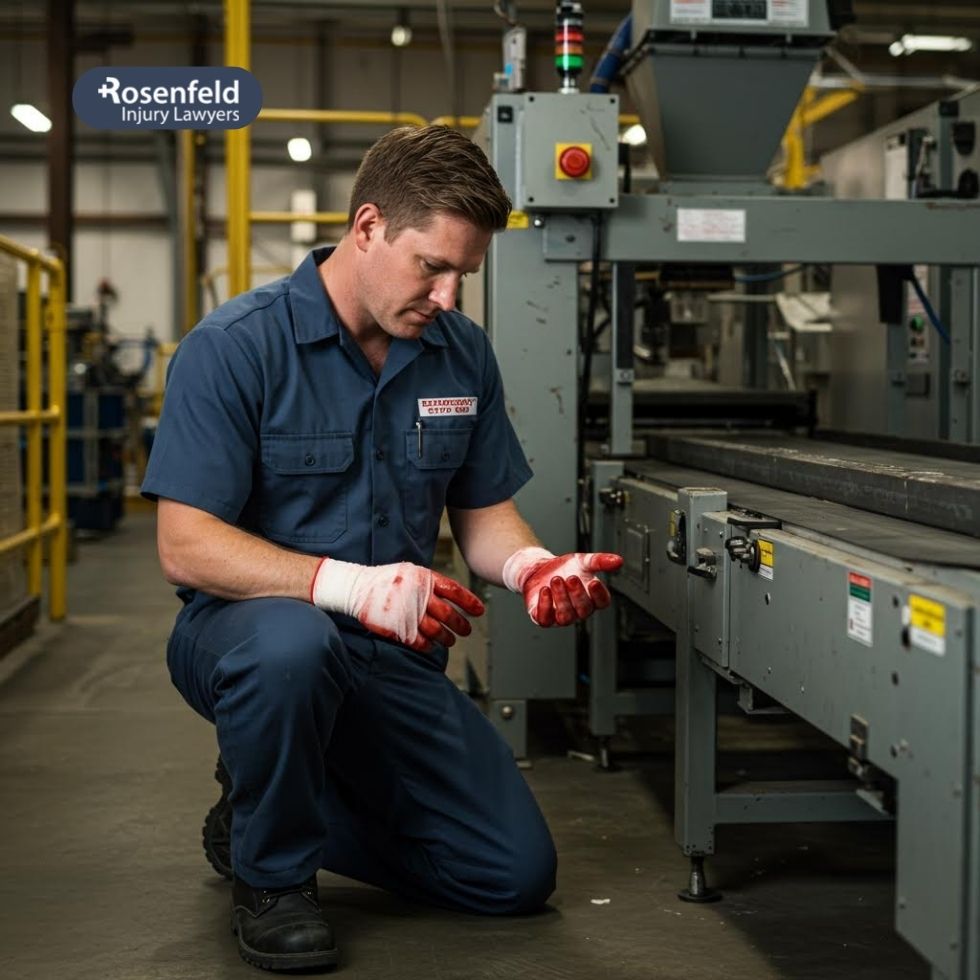
Repeated typing, gripping tools, or lifting materials can contribute to carpal tunnel syndrome, tendinitis, and other repetitive strain injuries. Illinois recognizes repetitive trauma as a form of accidental injury, and the date the condition manifests may affect filing deadlines. See Peoria County Belwood Nursing Home v. Industrial Commission, 115 Ill. 2d 524 (1987). Learn more about carpal tunnel workers’ comp claims.
A previous injury or degenerative condition does not automatically disqualify a worker. If job duties aggravate or accelerate the condition, the resulting disability may qualify for benefits. See Sisbro, Inc. v. Industrial Commission, 207 Ill. 2d 193 (2003).
A psychological condition resulting from a physical workplace injury may qualify for benefits. Mental injuries without a related physical injury generally face a stricter standard requiring a sudden, severe shock traceable to a definite time, place, and cause. See Pathfinder Co. v. Industrial Commission, 62 Ill. 2d 556 (1976). Gradual job stress alone generally does not meet this standard.
Workers can suffer injuries in offices, warehouses, factories, hospitals, and construction sites. Whether a condition qualifies depends on the circumstances and evidence connecting it to employment.
Lifting, falls, and work-related vehicle crashes can cause strains, herniated discs, and other spinal injuries. Depending on the lasting effects, benefits may be assessed under the person-as-a-whole framework. Learn about back injury workers’ comp claims.
Falls, falling objects, machinery, and vehicle collisions can cause fractures in the arms, hands, legs, and feet. Certain limb injuries qualify for scheduled benefits under Illinois law. Read about broken bone injuries at work.
Falls and blows to the head can cause concussions or more serious brain injuries, and symptoms may not appear immediately. Medical evaluation and documentation help establish the injury and its effects. See our page on work-related brain injuries.
Workplace burns may result from flames, hot surfaces, chemicals, or electrical incidents. Serious burns may require extensive treatment and leave permanent scars or disfigurement. Learn about workplace burn injuries.
Live wires and damaged equipment can cause burns, nerve damage, and other serious injuries. Because some effects may not be immediately apparent, prompt medical attention is important. Read about electrocution injuries at work.
Flying debris, chemical splashes, and welding flashes can damage the eyes or impair vision. Not wearing safety glasses does not automatically bar a claim; the circumstances and applicable law matter. Learn about work eye injuries.
Sudden noise incidents may cause accidental hearing injuries, while prolonged exposure to loud machinery can cause gradual hearing loss. The applicable law depends partly on how the condition developed. See occupational hearing loss claims.
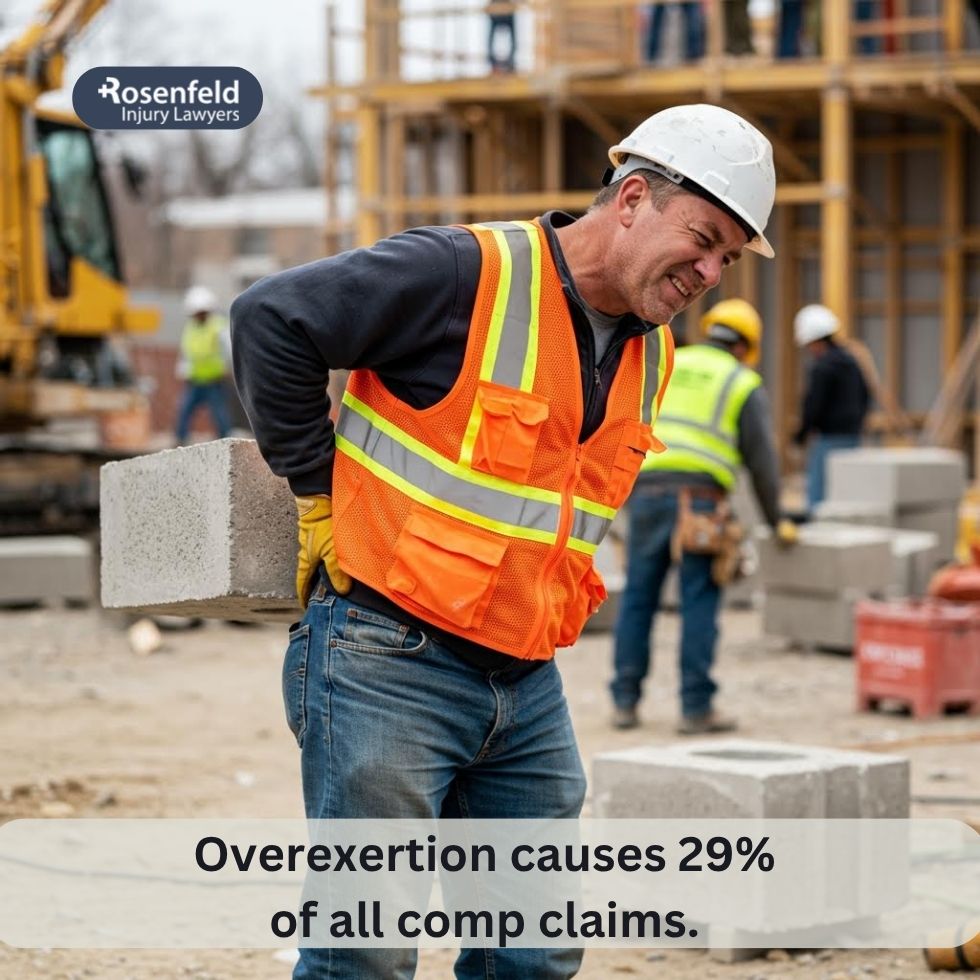
Lifting, carrying, pushing, or pulling can cause back strains, hernias, and shoulder injuries. A claim may qualify even if an ordinary work task triggered the symptoms rather than a dramatic accident. Learn about lifting injuries at work.
Repeated hand and wrist movements can contribute to carpal tunnel syndrome, particularly in jobs involving typing, gripping, or repetitive tool use. The date symptoms manifest may matter when determining filing deadlines. Read about carpal tunnel workers’ comp claims.
Repeated movements can contribute to tendinitis, trigger finger, and shoulder or elbow strain. These conditions may qualify when medical evidence connects them to job duties. Learn about repetitive strain injuries.
Cuts and burns may leave permanent scars. Section 8(c) of the Illinois Workers’ Compensation Act provides for awards for qualifying disfigurement involving specified body areas. Read about scarring and disfigurement benefits.
Asbestos exposure can cause illnesses such as mesothelioma and asbestosis, sometimes years after exposure. Occupational disease claims may require medical and workplace evidence linking the condition to employment. Learn about asbestos exposure claims.
Workers may also suffer injuries in a work-related car accident or pursue benefits after fatal workplace injuries.
Illinois law uses different methods to calculate certain permanent partial disability (PPD) awards. Section 8(e) sets scheduled benefits for specified body parts, including certain injuries involving the hand, arm, leg, foot, eye, and hearing.
Other injuries may be evaluated under Section 8(d)(2), which addresses person-as-a-whole awards. Depending on the claim, this may include injuries to the back, neck, brain, or internal organs.
Shoulder injuries require particular care because Illinois courts have addressed them as person-as-a-whole injuries rather than scheduled arm injuries. See Will County Forest Preserve District v. Illinois Workers’ Compensation Commission, 2012 IL App (3d) 110077WC. Learn about scheduled injuries and permanent partial disability benefits.
Workers’ compensation may help cover qualifying medical expenses and lost income. Available benefits depend on the worker’s condition, ability to work, and recovery.
Visit our page on Illinois workers’ compensation benefits for more information.
Not every injury that happens during the workday qualifies for benefits. Common issues include:
A pre-existing condition is not automatically excluded if work aggravated or accelerated it. Read more about whether workers’ comp applies if the accident was your fault.
Illinois generally requires employers to provide workers’ compensation coverage even if they have only one employee, subject to statutory exceptions. Part-time, seasonal, and temporary employees may qualify, as may workers in construction, manufacturing, healthcare, transportation, and retail.
A limited agricultural exemption may apply when an employer has fewer than 400 working days of agricultural labor during any calendar quarter of the preceding calendar year. Learn more about Illinois farm workers and agricultural exemptions.
Some workers classified as independent contractors may legally qualify as employees, depending on the working relationship. Federal employees generally fall under a separate federal system. Railroad workers may have claims under FELA, and qualifying maritime workers may have claims under the Jones Act.
Understanding your status can help clarify your Illinois workers’ rights after a workplace injury. See our page on temporary worker claims.
Read what to do after a work injury in Illinois and review Illinois workers’ comp deadlines.
IL Work Injury Lawyer helps injured employees navigate claims and pursue benefits available under Illinois law.
If another company or person contributed to your injury, you may also have grounds for a separate third-party injury lawsuit.
Yes. Repetitive trauma, including carpal tunnel syndrome and certain tendon injuries, may qualify when evidence connects the condition to work. The date the injury manifests can affect the filing deadline.
Yes, potentially. If job duties aggravated or accelerated a previous condition, the resulting disability may qualify. Medical evidence can help establish the connection.
Some psychological conditions qualify, particularly those resulting from a physical workplace injury. Mental injuries without a related physical injury generally must meet Illinois’s stricter standard involving a sudden, severe shock tied to a definite time, place, and cause.
Illinois generally requires notice to the employer within 45 days, subject to exceptions. A separate deadline applies to filing a claim with the Illinois Workers’ Compensation Commission.
Workers’ compensation is generally the exclusive remedy against an employer for covered injuries under Section 5(a) of the Act, subject to limited exceptions. A separate claim against a responsible third party may still be possible.
Many workplace injuries may qualify for workers’ compensation benefits when the legal requirements are met. IL Work Injury Lawyer helps employees understand their options and pursue available benefits.
Not sure if your injury is covered? Call for a free case review. We work on a contingency fee basis, with no upfront attorney fees; fees are handled under the terms of your agreement with the firm.
Contact us today to schedule a free consultation with a Chicago workers’ compensation lawyer.
Reviewer information: Jonathan Rosenfeld is an Illinois work injury attorney who reviews workers’ compensation content for legal accuracy and relevance to Illinois law.
 Legally Reviewed By
Attorney Jonathan Rosenfeld
Content legally reviewed by Jonathan Rosenfeld The information on this page has been legally reviewed by Attorney Jonathan Rosenfeld, founder and managing partner of Rosenfeld Injury Lawyers LLC. With extensive experience representing injured workers across Illinois, Mr. Rosenfeld is dedicated to helping workplace accident victims pursue the maximum compensation available under the law. His extensive legal knowledge and commitment to client advocacy ensure that the information provided is accurate, reliable, and aligned with current legal standards.