



Are Illinois Farm Workers Covered by Workers’ Comp? The Agricultural Exemptions Families Miss


Whether farm workers are covered by workers’ comp in Illinois depends on how many working days the farm logs each quarter. Illinois requires agricultural coverage only when an employer averages more than 400 working days per quarter. Farms below that threshold can legally skip coverage, leaving many seasonal and part-time workers exposed.
That single rule catches families off guard every year. A farm worker gets hurt, assumes the same protections apply as any other job, and then learns the employer never had to carry a policy in the first place.
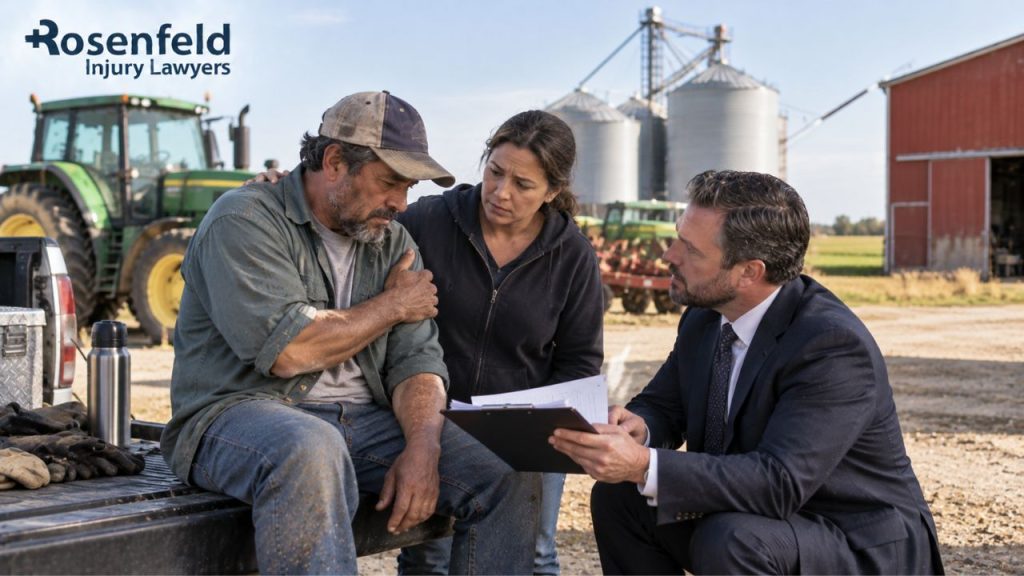
Are Farm Workers Covered by Workers’ Comp in Illinois?
Some are, and some are not. Illinois law generally requires agricultural employers to carry workers’ compensation coverage when they employ 400 or more working days of agricultural labor per quarter during the preceding calendar year.
Illinois is one of roughly twenty-one states that carve out exceptions for smaller agricultural operations, while fourteen states require coverage for every farm employer regardless of size. Fifteen states offer no agricultural coverage requirement at all. This patchwork is why so many injured farm families in Illinois get conflicting answers when they start asking questions.
What Is the 400-Day Rule Everyone Misses?
The 400-day threshold measures total working days across all employees in a single quarter, not per person. A farm running several seasonal hires during harvest can cross that line quickly, even if no single worker logs a full-time schedule.
This detail matters because the rule resets each year based on the prior year’s activity. A farm that stayed under the threshold last season may owe coverage this season, and vice versa. Reviewing workers’ compensation for farm workers in Illinois in detail helps families understand which side of that line their case falls on.
Who Counts as a Farm Worker Under Illinois Law?
Full-time, part-time, and seasonal employees can all count toward an employer’s working-day total, though coverage obligations still hinge on whether the farm crosses the 400-day mark. Migrant and seasonal laborers are often the hardest hit by the exemption because their hours are irregular and harder to track after an accident.
Family members working on a relative’s farm, and workers hired through informal arrangements, raise additional questions about employment status. Sorting out who legally qualifies as an employee, rather than an independent contractor or unpaid helper, is often the first step in any claim.
What Happens If a Farm Doesn’t Carry Coverage?
If a farm falls below the 400-day threshold and has no policy, an injured worker generally cannot file a standard workers’ comp claim against that employer. That does not mean the worker has no options.
Workers’ compensation is a no-fault system when it does apply, meaning fault does not need to be proven. Without that coverage, the path shifts to proving negligence, which opens the door to a personal injury claim against the farm, a manufacturer, or another responsible party.
Can Farm Workers Still Sue After an Accident?
Yes, in some cases. When workers’ compensation is unavailable or a third party contributed to the injury, Illinois law may allow a separate personal injury claim. These claims can provide another path to compensation beyond workers’ compensation benefits.
Illinois follows modified comparative negligence, so an injured worker may recover damages if they are at fault by more than 50%. Third-party claims may involve defective tractors or grain equipment, pesticide exposure, or negligent contractors. Unlike workers’ compensation, a personal injury lawsuit may allow recovery for pain and suffering.
Farms must also follow applicable workplace and sanitation requirements. Violations that contribute to an injury may provide evidence supporting a negligence claim when workers’ compensation does not apply.
How Common Are Farm Injuries in Illinois?
Agricultural work carries some of the highest injury and fatality rates of any industry in the state. Grain bins, tractors, augers, and livestock all present serious hazards, and the numbers reflect that reality across Illinois agricultural accident statistics tracked over recent years.
Because so much of this workforce is seasonal or part-time, injury data likely understates the true toll. Many incidents involving migrant or informally hired workers go unreported, which makes the coverage gap even more consequential for the families it affects.
What Should a Farm Family Do After an Injury?
Start by determining whether the employer meets the applicable employee threshold for workers’ compensation coverage. Payroll and scheduling records can help establish this, and an attorney may request them if the employer is uncooperative.
Report the injury in writing as soon as possible, keep copies of relevant records, and avoid signing documents from an insurance adjuster before seeking legal advice. Even when workers’ compensation coverage is uncertain, thorough documentation can help protect available legal options.
Our Illinois farm accident attorneys can review payroll records, safety violations, and equipment maintenance history to determine whether workers’ compensation or a personal injury claim may apply. Contact us today for a free consultation to discuss your options.
Frequently Asked Questions
No. Coverage only applies when the employer averages more than 400 working days per quarter in the prior year. Smaller or seasonal operations may fall outside this requirement entirely.
An attorney can review payroll records to confirm whether the farm met the 400-day threshold. If it was, the farm may be liable for failing to carry required insurance.
Yes, if the employer meets the 400-day threshold. Seasonal and migrant workers face added challenges proving hours worked, so thorough documentation is essential.
No. If coverage does not apply, or a third party like an equipment manufacturer contributed to the injury, you may be able to file a personal injury lawsuit instead.
Workers’ compensation claims generally must be filed within three years of the accident or within two years after the last payment of compensation, whichever is later. Certain exceptions may apply, so act promptly.
 Legally Reviewed By
Attorney Jonathan Rosenfeld
Content legally reviewed by Jonathan Rosenfeld The information on this page has been legally reviewed by Attorney Jonathan Rosenfeld, founder and managing partner of Rosenfeld Injury Lawyers LLC. With extensive experience representing injured workers across Illinois, Mr. Rosenfeld is dedicated to helping workplace accident victims pursue the maximum compensation available under the law. His extensive legal knowledge and commitment to client advocacy ensure that the information provided is accurate, reliable, and aligned with current legal standards.