
Experienced Attorneys
Committed to Protecting the
Rights of Injured Workers
Committed to Protecting the
Rights of Injured Workers



You may not think of wet cement as being a dangerous substance, but many construction workers in Illinois experience concrete burns when it comes into contact with their skin. Cement burns can have painful and long-lasting effects on the individual. A concrete burn injury lawyer can help an injured worker understand potential workers’ compensation and third-party claims after a serious cement or concrete chemical burn.
IL Work Injury Lawyer has decades of experience helping construction industry workers pursue workers’ compensation benefits or third-party liability claims.
A firm with a strong reputation can make all the difference in securing a fair settlement after cement burns. Our legal team is recognized among the top 5% of attorneys by Super Lawyers, and we maintain an A+ grade from the Better Business Bureau. IL Work Injury Lawyer even has experience specifically with concrete burn injuries.
Tyrone, a 38-year-old laborer from Bronzeville, suffered severe chemical burns to both legs while helping pour a foundation at a commercial build in the West Loop, after being left standing in wet concrete without proper protective gear. He required multiple skin grafts and was left with permanent mobility issues, with the case focusing on failures in site safety training and supervision. A settlement of $6.4 million was awarded to Tyrone.
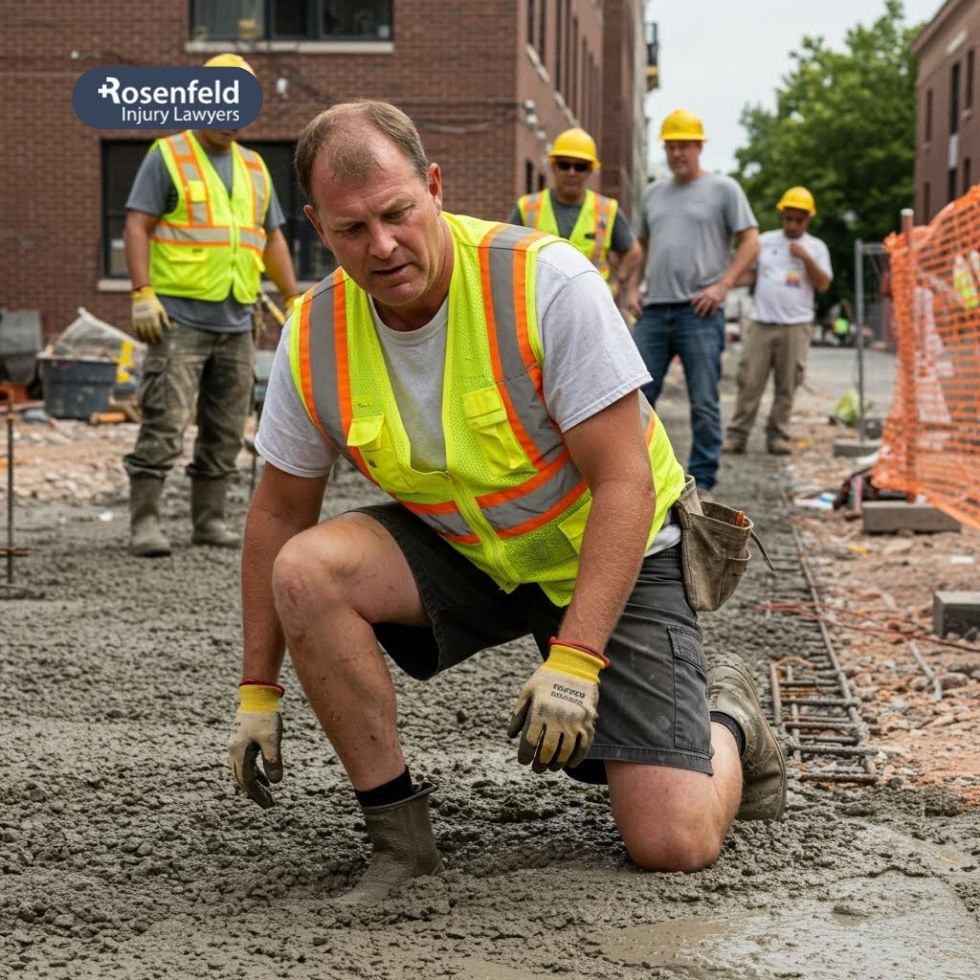
A concrete burn is a chemical, or alkaline, burn caused by the high pH of wet cement. Unlike a typical heat burn, a concrete chemical burn can continue damaging tissue after contact and may have a delayed onset, meaning significant injury may develop before the worker notices severe pain. Wet cement contains calcium hydroxide, which can cause an alkaline burn after prolonged skin contact.
There are several types of construction injuries that fall into this category, and they can range from mild to severe concrete burns:
Determining the cause of more severe burns could play an important role in securing maximum compensation, especially for third-party liability claims. Here are some common causes of construction worker burns:
Concrete exposure can cause first-degree burns, second-degree burns, and even third-degree burns. Here are the most common effects of these cement burns in construction worker accidents:
Concrete burns commonly affect the hands, knees, feet, and ankles. A concrete burn on hands can result from direct contact with wet cement, while a concrete burn on feet can occur when wet concrete becomes trapped inside boots. Severe burns may cause full-thickness tissue damage, scarring, or require a skin graft. For medical treatment, rinse the affected area with water and seek medical care promptly, telling the provider it is a cement burn.
If you are hurt as an employee, you may be entitled to workers’ compensation benefits for medical bills, lost wages, disability benefits, and vocational rehabilitation costs. Learn more about workers’ compensation for construction workers and the benefits available under the Illinois Workers’ Compensation Act (820 ILCS 305).
Under state law 740 ILCS 100/, multiple parties can be held liable for an accident. However, the victim can pursue lost income, medical expenses, emotional distress, pain and suffering, disfigurement, and loss of normal life damages if they are no more than 50% liable.
Illinois workers’ compensation law provides a separate benefit for certain serious and permanent disfigurement under 820 ILCS 305/8(c). Concrete burns can leave permanent scars on areas such as the hands, knees, feet, or other exposed skin, particularly when serious tissue damage or skin grafting occurs. Whether a worker qualifies for a disfigurement benefit and the amount available depend on the injury and applicable statutory requirements, so an attorney should review the specific circumstances.
It is difficult to calculate an average settlement amount when so many factors can affect the settlement. Your payout will depend on the injury severity, permanent damage, liability impact, and lost earning capacity caused by the wet cement burns.
Factors that may affect the value of a concrete burn claim include:
Severe cases involving cement burns can be very complex. They may involve Occupational Safety and Health Administration violations, a lack of personal protective equipment, and defective safety protocols.
At IL Work Injury Lawyer, we can represent both union and non-union workers across the state. This can include concrete finishers, masonry workers, and general laborers.
Every year in the United States, roughly 1.8% of burn patients suffer from wet cement burns (out of 50,000). Chemical burns may not manifest any signs of an injury until up to six hours after exposure.
Some locations in Illinois are more likely to cause burn injuries than others. Here are some environments where workers should be extra cautious about exposure to wet concrete:
For wet concrete work, appropriate protection may include alkali-resistant gloves, waterproof boots, knee pads, eye protection, and protective clothing. OSHA generally requires employers to provide covered PPE at no cost, subject to specific exceptions.
If you need assistance with a construction-related injury, a Chicago construction accident attorney can help evaluate potential workers’ compensation and third-party claims. Employers also have obligations under applicable OSHA construction regulations concerning workplace hazards and protective equipment.
Under 735 ILCS 5/13-202, injured victims have two years from the date of their injuries to pursue a personal injury construction accident lawsuit.
If you are an employee who has been hurt by cement burns at work, 820 ILCS 305/6(d) grants you three years after the date of the injury or two years after the last benefit payment to file your claim. Whichever date comes later will apply.
Generally, it is always wiser to pursue legal options as soon as possible, as it will be easier to preserve evidence from the scene.
Concrete burns can have a delayed onset, so a worker may not immediately recognize the seriousness of the injury. Illinois law requires notice of a workplace accident as soon as practicable and generally no later than 45 days after the accident under 820 ILCS 305/6(c). Although the law permits notice within that period, reporting the injury promptly can help document when and where the accident occurred.
A worker should report the injury to the employer in writing when possible, obtain medical documentation, and preserve photographs showing how the burn develops. A delay does not automatically determine whether a claim is valid, but documentation can become important if the timing or work-related cause of the injury is later disputed.
Several parties may be liable for your severe burns on a construction site:
While a personal injury attorney can help you build a strong case, your claim’s strength depends on the actions you take in the immediate aftermath of the incident.
Here are the steps you should follow to prepare for a workers’ compensation or third-party injury claim (or both):
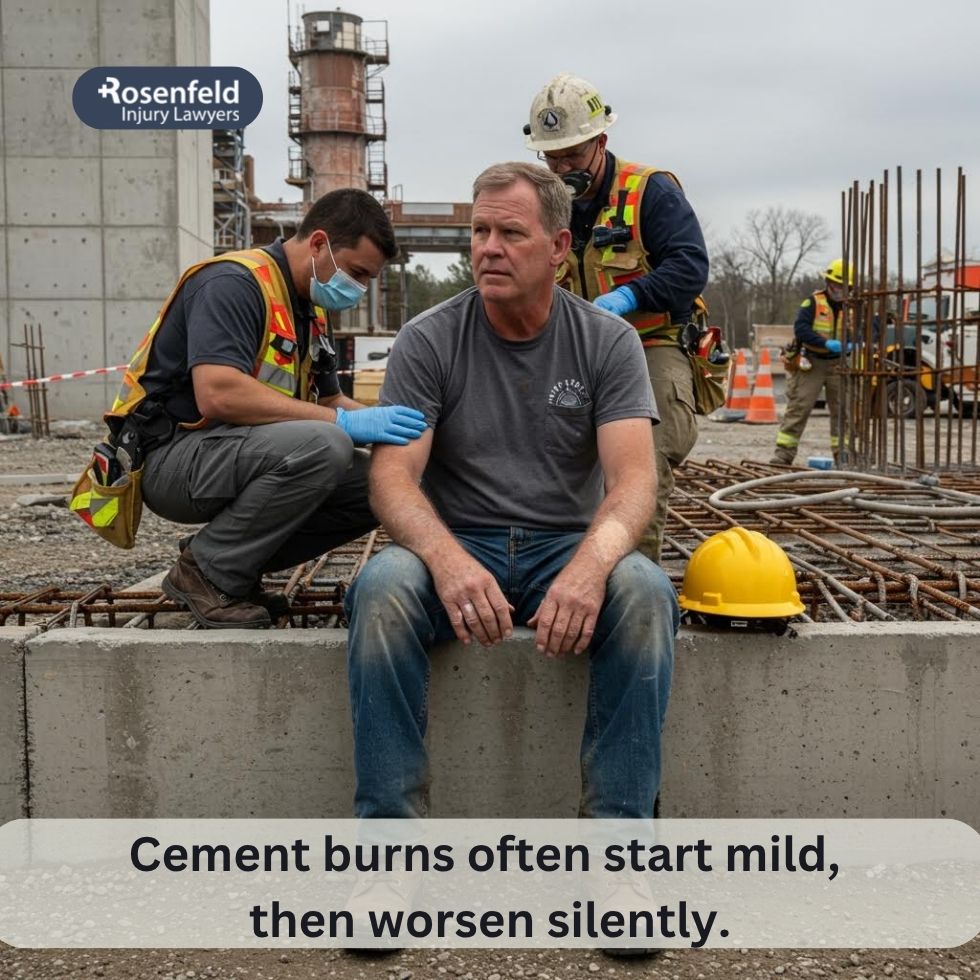
IL Work Injury Lawyer has experience with cement and concrete burn cases across the state. Our legal services for injured workers include:
Yes, a concrete burn suffered in the course of employment may be covered by Illinois workers’ compensation. Benefits can include medical expenses and disability or wage-loss benefits when statutory requirements are met. A separate third-party claim may also be possible depending on who caused or contributed to the injury.
A delayed report does not necessarily eliminate a claim, but Illinois generally requires notice of a workplace accident within 45 days under 820 ILCS 305/6(c). Because concrete burns may develop gradually, workers should report the injury as soon as practicable and preserve medical and photographic documentation.
Potentially. Workers’ compensation may apply regardless of fault, while a failure to provide required PPE may also be relevant to safety or third-party issues. OSHA’s construction PPE standards address employer responsibilities for necessary protective equipment and its payment, subject to specified exceptions.
Potentially. Illinois workers’ compensation law addresses certain serious and permanent disfigurement under 820 ILCS 305/8(c). Eligibility and the applicable benefit depend on the injury’s nature and location, as well as other statutory requirements. A concrete burn involving permanent scarring should therefore be evaluated on a case-by-case basis.
Potentially, depending on the facts. A supplier could become relevant to a third-party claim if the evidence supports a legally actionable defect, warning issue, or other basis for liability. Workers’ compensation and third-party claims can involve different legal standards, so evaluate potential claims separately.
Whether your construction injury was caused by a lack of proper training, defective safety equipment, or prolonged exposure to dangerous chemicals, IL Work Injury Lawyer will fight for fair financial compensation on your behalf. We work on a contingency fee basis, which means you owe nothing unless we win.
Our Chicago-based work injury law firm represents clients across Illinois, so contact us today to schedule your free case evaluation.
 Legally Reviewed By
Attorney Jonathan Rosenfeld
Content legally reviewed by Jonathan Rosenfeld The information on this page has been legally reviewed by Attorney Jonathan Rosenfeld, founder and managing partner of Rosenfeld Injury Lawyers LLC. With extensive experience representing injured workers across Illinois, Mr. Rosenfeld is dedicated to helping workplace accident victims pursue the maximum compensation available under the law. His extensive legal knowledge and commitment to client advocacy ensure that the information provided is accurate, reliable, and aligned with current legal standards.