
Experienced Attorneys
Committed to Protecting the
Rights of Injured Workers
Committed to Protecting the
Rights of Injured Workers



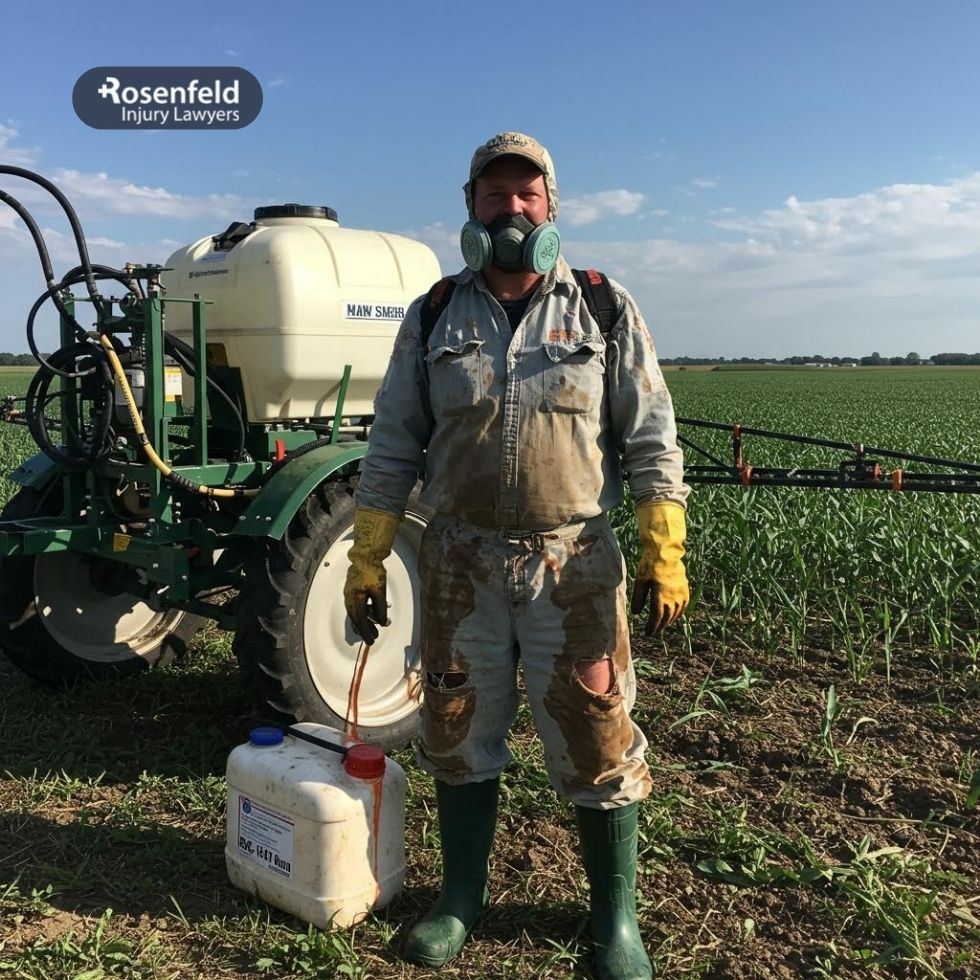
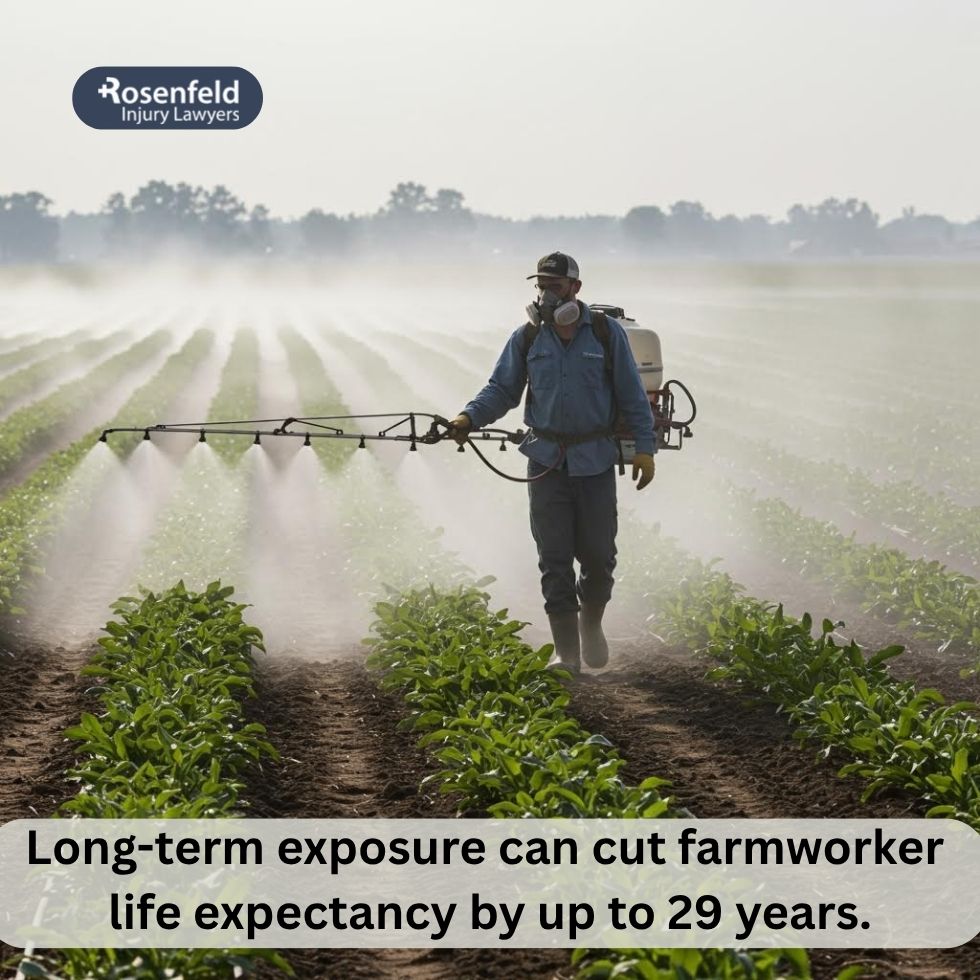
Farm workers exposed to pesticides may have workers’ compensation rights when their employment is covered by Illinois law. If an employer violated the EPA Worker Protection Standard, or a manufacturer failed to provide adequate warnings, other claims may also be available. A pesticide exposure lawyer can evaluate the circumstances, available evidence, and potential sources of compensation.
Agricultural chemical exposure claims hold farms liable for the health issues that can result from using dangerous substances like Paraquat. If you or a loved one is suffering from the effects of these chemicals, contact us for a free consultation about your legal rights.
The following results are matters recovered by the firm and should not be understood as representative of the results obtained in every case.
$7,400,000: June, a 33-year-old woman, suffered serious chemical burns after cleaning a storage tank at a food production facility. We demonstrated that the facility had not followed proper cleaning procedures.
$4,200,000: A group of farm workers experienced respiratory damage after exposure to widely used chemicals like ammonia. We demonstrated that the employer had failed to fulfill its legal obligation to protect employees, such as failing to provide proper protective equipment.
$3,333,333: Albert, a poultry slaughterhouse worker, was using strong chemicals to clean machinery and experienced respiratory issues as a result of mixing certain chemicals. We proved that his employer had not warned him about the health risks and had not properly labeled the chemicals.
Prior results do not guarantee or predict a similar outcome in another case.
Our Chicago farm accident law firm has successfully helped over 5,000 plaintiffs obtain fair compensation for the health issues resulting from chemical exposure. With a 98% success rate and a flawless 10/10 AVVO rating, we are widely regarded as the best work injury firm in Illinois, serving all counties in the state. IL Work Injury Lawyer has also secured the prestigious Super Lawyers rating and is a member of the Million Dollar Advocates Forum, thanks to our multi-million-dollar verdicts.
We also handle agricultural chemical exposure involving anhydrous ammonia. This nitrogen fertilizer can cause serious burns and respiratory injuries when released. Potential cases may involve hose, valve, tank, or application-equipment failures.
Chemical exposure at work may also result from pesticide drift, inadequate warnings, improper mixing, or workers entering treated areas before the applicable restricted-entry interval expires.
Pesticide exposure symptoms vary by chemical, route of exposure, and duration. Acute exposure may cause headache, nausea, dizziness, skin or eye irritation, or breathing difficulty. Chronic exposure may be associated with health problems that develop over a longer period. Anyone experiencing possible pesticide poisoning should seek medical care and tell the provider which chemical was involved, if known.
Our team will take legal action to recoup all your economic and non-economic damages. This can include:
Workers’ compensation chemical exposure claims may provide benefits for covered medical expenses and lost wages, while a separate third-party claim may apply when another party is legally responsible. Learn more about workers’ compensation for farm workers.
The farm accident settlements page currently reports a $700,000 median, a $5,000 to $2,065,000,000 range, and a $66,238,891 average. Because I could not verify a reliable underlying source for these exact figures, I recommend confirming the source and year before publishing the table. Do not present the figures as current, independently verified statistics until that source is confirmed.
| Measure | Figure | Source/Year |
| Median payout | $700,000 | Verify source/year |
| Range | $5,000–$2,065,000,000 | Verify source/year |
| Average payout | $66,238,891 | Verify source/year |
A small number of exceptionally large verdicts can substantially increase an average, so the median may better describe the middle result. Claim value can depend on the illness and its severity, documentation of the exposure, liability evidence, and whether a product liability claim is available.
Your payout will depend on various factors, including the duration of chemical exposure, overall health issues, damages, liability, available evidence, and applicable insurance policies.
Notable verdicts in other pesticide cases should be clearly identified as results from other litigation, not results obtained by this firm.
John Barnes was diagnosed with non-Hodgkin lymphoma after using Roundup as part of his professional duties. He sued Monsanto, alleging it failed to warn about the product’s risks. The reported verdict was $2,065,000,000.
Edwin Hardeman developed B-cell non-Hodgkin lymphoma after using Roundup weed killer. He sued Monsanto, alleging that the manufacturer failed to warn about the risks of prolonged exposure. A jury awarded $80,267,634.10.
Add the court, year, and reliable source for each verdict before publication.
Prior results in other cases do not guarantee or predict a similar outcome.
These cases can be challenging to litigate due to the strict regulations on chemical exposure in industrial settings. We must analyze Environmental Protection Agency (EPA) regulations, review OSHA standards, and establish a link between your injuries and chemical exposure symptoms.
In addition to gathering proper evidence, we must also coordinate with multiple liable parties, such as employers, contractors, and chemical manufacturers.
If you need a farm accident lawyer, we can also evaluate whether the facts support a separate personal injury claim.
Our team will thoroughly evaluate the scientific evidence, consult with toxicology experts, and coordinate third-party suits with workers’ compensation benefits.
The experienced attorneys at IL Work Injury Lawyer serve both rural and urban counties, including Cook, DeKalb, Sangamon, and McLean Counties.
| Existing figure | Recommended treatment |
| Approximately 1 billion pounds of pesticides used annually | Verify the EPA source/year before retaining |
| Almost 100% of American adults exposed | Remove unless the underlying study is confirmed and appropriate to this page |
| 90% of pesticides used in agriculture | Verify source/year before retaining |
| 400 times higher levels in some farm laborers | Verify study population and year before retaining |
| 13,000–15,000 farm workers | This is an older EPA estimate; identify it as historical rather than current data. |
Several Illinois regions are most notorious for high chemical exposure risks. These include:
The EPA Worker Protection Standard, established under 40 CFR Part 170, includes protections for agricultural workers and pesticide handlers. Depending on the circumstances, employers must provide required PPE, pesticide safety information, decontamination supplies, and protections against exposure during pesticide applications. Workers and handlers also have rights to access certain pesticide application and hazard information.
A restricted-entry interval (REI) is the period after a pesticide application when entry into the treated area is restricted. The pesticide label generally identifies the applicable REI. Workers may enter during an REI only under limited circumstances and with required protections. Sending workers into a treated area too
Some farm workers may be covered by workers’ compensation laws, which mandate some employers to provide insurance for medical bills and lost wages (820 ILCS 305). However, farms with fewer than 400 working days per quarter are exempt from this program, meaning that victims must use personal injury lawsuits as an alternative.
The exact applicability of the agricultural exemption depends on the employer and circumstances, so this statement should not imply that every worker at an exempt farm automatically has a personal injury claim.
The most common litigation method is premises liability, which holds property owners liable for providing safe conditions for all invitees (740 ILCS 130/). They can be held accountable if they fail to uphold OSHA hazard communication standards, such as OSHA Regulation 29 CFR 1910.1200, or for disregarding the EPA’s agricultural worker protection standards that prohibit spraying while people are present.
Product liability applies to manufacturers, like Monsanto, that don’t warn users about safe application practices or the potential long-term effects of their products (735 ILCS 5/2-21). The state of Illinois itself has sued Monsanto for poisoning the environment with polychlorinated biphenyls (PCBs), setting a precedent for product liability cases against the chemical company.
If a victim dies from chemical exposure, their loved ones can file a wrongful death claim for end-of-life expenses and grief (740 ILCS 180/).
Migrant and seasonal agricultural workers may also have protections under the Migrant and Seasonal Agricultural Worker Protection Act (MSPA). See rights of migrant farm workers for additional information. The U.S. Department of Labor identifies the MSPA as a federal law providing protections for migrant and seasonal agricultural workers.
In general, you have two years to file an exposure claim for personal injury (735 ILCS 5/13-202). Contact us immediately so that we can develop a strong case.
Potentially liable parties include:
Companies will do everything in their power to reduce your compensation and dismiss their liability. Our legal experts will effectively counter their defenses, which can include the following.
It is crucial that you act quickly after chemical exposure to build a strong legal case. Follow these steps immediately.
Our experienced attorneys will guide you through every part of the legal process, including:
Our team works on a contingency fee basis, so you owe us nothing unless we win your case. Our legal fees are deducted from your settlement, ensuring that workers of any financial means can secure world-class support.
Workers, contractors, vendors, farm guests, and family members of deceased victims may be eligible to pursue litigation. Contact us for a risk-free consultation about your options.
Many victims are not aware of chemical exposure before developing deadly health issues like cancer. In this case, you may be eligible for a claim under the delayed discovery rule, which tolls the statute of limitations until the problem is discovered.
Pesticide exposure symptoms can include headache, nausea, dizziness, skin or eye irritation, breathing difficulty, and other effects depending on the chemical and level of exposure. Some health problems may develop over a longer period. Seek medical care for suspected exposure and provide the doctor with information about the chemical involved.
Workers’ compensation may cover pesticide exposure when the worker and employer fall within the Illinois Workers’ Compensation Act. Agricultural employment is subject to specific statutory exceptions, so coverage depends on the facts of the employment.
A restricted-entry interval is the period after pesticide application when workers generally must stay out of the treated area. If a worker was directed into a treated area before the applicable interval expired, the pesticide label, application records, training, and other evidence may be relevant to the claim.
Our compassionate work injury attorneys in Chicago have helped clients across Illinois, winning thousands of cases over the past 25 years. We work on a contingency fee basis, so you owe us nothing unless we secure compensation for you. Call us today for a free consultation about your rights.
 Legally Reviewed By
Attorney Jonathan Rosenfeld
Content legally reviewed by Jonathan Rosenfeld The information on this page has been legally reviewed by Attorney Jonathan Rosenfeld, founder and managing partner of Rosenfeld Injury Lawyers LLC. With extensive experience representing injured workers across Illinois, Mr. Rosenfeld is dedicated to helping workplace accident victims pursue the maximum compensation available under the law. His extensive legal knowledge and commitment to client advocacy ensure that the information provided is accurate, reliable, and aligned with current legal standards.