
Experienced Attorneys
Committed to Protecting the
Rights of Injured Workers
Committed to Protecting the
Rights of Injured Workers



Work-related eye injuries may qualify for Illinois workers’ compensation benefits, including medical treatment and compensation for permanent vision loss. Under Illinois law, certain eye injuries are compensated as a scheduled loss, while serious and permanent disfigurement may qualify for a separate benefit. Understanding these benefits can help injured workers protect their rights after an eye injury workers’ compensation claim.
No matter what industry you work in, there is always a risk of injury in the course of your duties. Illinois workers who suffer from eye injuries could suffer significant losses from medical costs and missed time at work. Fortunately, you can apply for eye injury workers’ compensation to pursue benefits through your employer’s insurance company.
At IL Work Injury Lawyer, our attorneys know what it takes to secure compensation and file appeals for denied claims. Our Chicago-based workers’ compensation law firm can represent clients throughout Illinois.
Navigating the workers’ compensation system can be complicated. You need an experienced law firm with a strong reputation to have the best chance of earning fair benefits.
Our top-rated team is recognized among the top 5% of attorneys by Super Lawyers. We also maintain an A+ grade from the Better Business Bureau.
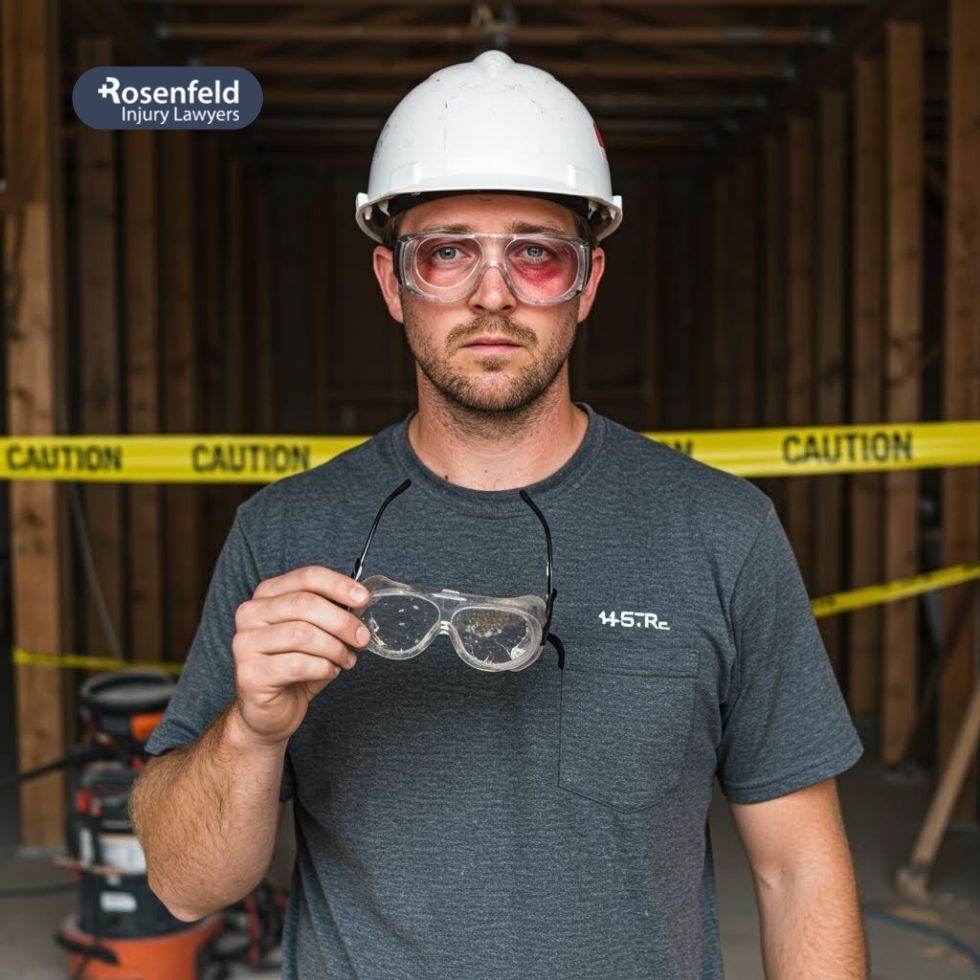
The Occupational Safety and Health Administration has specific personal protection equipment standards to prevent eye injuries in workplaces. 29 CFR 1910.133 includes requirements for appropriate eye and face protection when employees face hazards such as flying particles, liquid chemicals, or potentially injurious light radiation. Employers must also provide appropriate protection when workplace hazards create a risk of eye injury, and missing or inadequate protection may be relevant when evaluating an injury claim.
Under 29 CFR 1910.133, employers must ensure that affected employees use appropriate eye or face protection when exposed to workplace eye hazards, including flying particles, chemicals, and potentially injurious light radiation. PPE requirements your employer must meet may apply depending on the hazards present.
Here are some of the most common causes of workplace eye injuries:
A workers’ compensation claim may cover many eye diseases and injuries. However, the injured victim must be classified as an employee, which can include full-time, part-time, seasonal, and temporary workers. The injury also must have occurred during the course of their job duties.
Some common eye injuries that occur in Illinois work environments include:
Many employees who have never been injured before are unsure of what to do after an incident. Following the right procedures will ensure you maintain eligibility for workers’ compensation benefits:
Whether you suffer from a contaminated finger, permanent damage to your cornea, or chemical exposure, workers’ comp can provide significant financial compensation to cover your losses. Here are the primary benefits you can apply for from your employer’s insurance company.
Lost wages – You can typically recover up to 67% of your typical income for missing time at work because of a workplace injury.
Medical treatment costs – Any costs directly related to the diagnosis or treatment of conditions covered by workers’ comp.
Temporary Partial Disability – If you must work at a reduced capacity, you can receive payments to cover the difference
Temporary Total Disability – Up to two-thirds of your usual wages while you are out of work
Permanent Partial Disability – Ongoing payments to make up for lost earnings due to reduced working capacity
Permanent Total Disability – Permanent disability benefits in the form of regular payments
Vocational rehabilitation expenses – If you must invest in training to learn a new role because of your injuries, workers’ comp benefits can cover these expenses
For an accidental eye injury resulting in the loss of an eye, Illinois law provides 150 weeks of compensation for injuries occurring before February 1, 2006, and 162 weeks for injuries occurring on or after February 1, 2006. If the injury results in enucleation, or surgical removal of the eye, an additional 10 weeks applies to injuries before February 1, 2006, and an additional 11 weeks applies to injuries occurring on or after that date.
Illinois workers’ compensation generally treats permanent loss of sight in an eye as a scheduled loss. The amount depends on the extent of the vision loss and the applicable compensation rate based on the worker’s average weekly wage. The law provides a specific number of weeks for complete loss of sight, with partial loss compensated proportionally.
| Eye injury | Scheduled benefit under 820 ILCS 305/8(e) |
| Total loss of sight in one eye | 162 weeks for injuries occurring on or after February 1, 2006 |
| Enucleation (removal of an eye) | Additional 11 weeks for injuries occurring on or after February 1, 2006 |
| Partial loss of sight or use of an eye | A proportion of the applicable scheduled weeks based on the partial loss |
For injuries occurring before February 1, 2006, the statute provides different historical amounts. The current schedule should therefore be applied based on the date of injury.
A workers comp eye injury settlement may also involve other workers’ compensation benefits, including medical treatment and disability benefits, depending on the circumstances of the injury. A settlement amount cannot be determined from the scheduled weeks alone because the applicable compensation rate and other benefits must also be considered.
Eye injuries are one type of workplace injury that may involve scheduled-loss benefits under Illinois law. Similar rules can apply to other scheduled-loss injuries. For example, learn more about workers’ comp hearing loss claims and how hearing-related injuries may be evaluated under Illinois workers’ compensation law.
Corrected and uncorrected vision are not treated as automatically controlling measurements. Illinois courts have held that the extent of loss of use of an eye is a factual determination and is not limited to a mechanical measurement of corrected or uncorrected vision. The evidence in an individual case may therefore include the worker’s actual visual function and medical evidence.
Loss of the eye and loss of vision are also treated differently under the statute. Enucleation can result in additional scheduled compensation beyond the weeks assigned for loss of sight in one eye.
Illinois also provides a separate benefit for serious and permanent disfigurement involving specified parts of the body, including the head and face. The maximum for injuries occurring on or after February 1, 2006, is 162 weeks at the applicable rate, subject to the statutory requirements and limitations.
Workers should have an attorney review the medical evidence, applicable compensation rate, date of injury, percentage of vision loss, and any disfigurement before relying on a particular settlement calculation.
In 2018, Raul was a tractor-trailer driver sleeping in the cab while his coworker operated the vehicle. The coworker drove off an embankment, causing a rollover crash. Raul suffered numerous injuries to his spinal cord, head, and face, including a hemorrhage in his left eye. A settlement of $5.5 million was reached in a workers’ compensation claim with the employer.
In 2006, Jerry was opening boxes of champagne as part of his job as a liquor distributor. When he pulled out a bottle of champagne, it exploded in his hands, sending a shard of glass directly into his eye. Jerry sued multiple defendants for negligence, including the bottle manufacturer. These parties settled with him for an undisclosed amount, but Jerry also received $30,000 from the employer’s workers’ compensation insurance company.
Prior results do not guarantee or predict a similar outcome. Each workers’ compensation claim depends on its individual facts, medical evidence, applicable law, and other circumstances.
Your workers’ comp claim can cover numerous medical expenses. It is important to seek medical attention quickly after the accident to diagnose the injury and start a treatment plan.
Potential medical expenses that workers’ compensation could reimburse include emergency care, surgeries, ophthalmologist visits, medications, assistive devices, rehabilitation, and home accessibility upgrades.
Most injured workers can receive up to two-thirds of their weekly wages while they are out of work recovering from injuries. The average weekly wage (AWW) is calculated by adding the total actual earnings from the 52 weeks prior to the injury, then dividing that amount by 52.
This follows the regulations mentioned in state law 820 ILCS 305/10, which established pay rates for temporary disability benefits and permanent disability benefits.
Under 820 ILCS 305/19, a worker whose claim is denied or insufficient to cover losses can appeal the decision with the Illinois Workers’ Compensation Commission.
Common reasons why a workers’ comp claim may be denied include insufficient medical evidence, untimely reporting, disputes over whether the injury was related to work, and lack of testimony from medical professionals.
State law 735 ILCS 5/2-21 allows injured victims to pursue damages if a defective product causes their injuries. This product liability law may apply if your eye damage was caused by a malfunctioning piece of equipment at work, such as defective eyewear.
Property owners must demonstrate reasonable care to make the premises safe under state law 740 ILCS 130/. Therefore, if the property owner’s negligence creates a dangerous hazard that causes your eye injury, they could be held liable.
If defective safety eyewear or another defective product contributed to the injury, a claim against the manufacturer or another responsible third party may also be possible in addition to workers’ compensation, depending on the facts and applicable law.
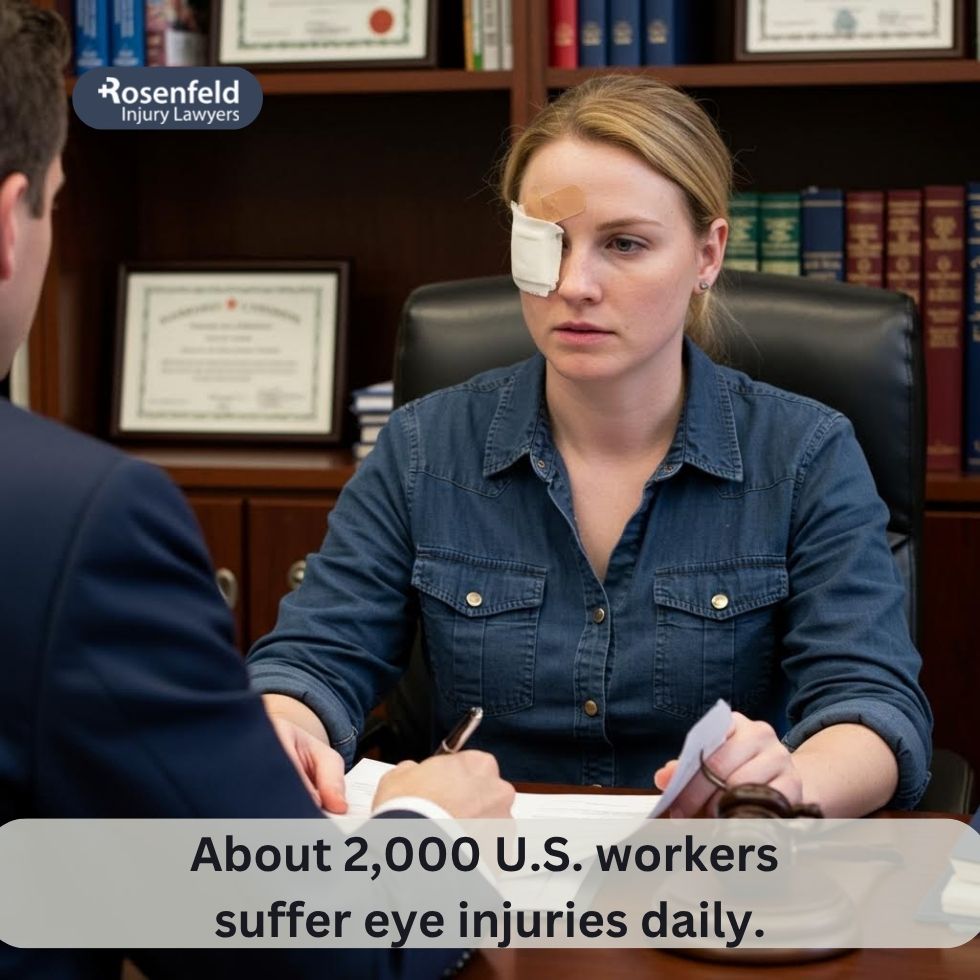
IL Work Injury Lawyer has the necessary experience to help you recover fair compensation for lost wages, medical bills related to recovery, disability, and other losses. Our legal services include:
Learn more about your workers’ compensation claims and the benefits that may be available after a workplace injury.
There is no single settlement amount for every claim. Illinois provides scheduled compensation for permanent loss of sight or use of an eye, with the applicable number of weeks determined by the statute and partial loss compensated proportionally. The worker’s applicable compensation rate and other benefits can also affect the value of a claim.
Corrective lenses do not automatically determine whether an eye injury is compensable or how much loss has occurred. Illinois courts have held that loss of use of an eye is a factual determination and cannot be reduced to a mechanical comparison of corrected and uncorrected vision. Medical evidence and the circumstances of the individual injury remain important.
Workers’ compensation may cover necessary medical treatment related to a compensable eye injury. Illinois law requires employers to provide necessary medical and surgical services reasonably required to cure or relieve the effects of an accidental injury. Whether a particular prosthetic device is covered depends on the medical necessity and circumstances of the claim.
Serious and permanent disfigurement may qualify for a separate workers’ compensation benefit. Illinois law provides compensation for qualifying disfigurement involving areas including the head and face, subject to the statutory requirements and maximum number of weeks. A permanent facial scar should therefore be evaluated separately from the scheduled eye loss.
A lack of required eye protection may be relevant to the circumstances surrounding your workplace injury. OSHA requires appropriate eye or face protection when employees are exposed to specified eye hazards. However, workers’ compensation eligibility is governed by Illinois law, so the absence of safety glasses does not by itself determine the outcome of a claim.
Illinois workers generally must notify their employer of an injury within 45 days, although other deadlines can apply to filing a claim with the Illinois Workers’ Compensation Commission. The specific deadline may depend on the type of claim and circumstances, so workers should act promptly and have their situation reviewed rather than relying on the 45-day notice period alone.
Our firm works on a contingency fee basis. This means you owe nothing unless we win. Additionally, you can ask questions about the legal process during a free case evaluation. Our Chicago-based work injury attorneys can represent construction workers, office employees, and other working individuals throughout Illinois.
Contact us today to schedule your free case evaluation with an expert work-related injury lawyer.
 Legally Reviewed By
Attorney Jonathan Rosenfeld
Content legally reviewed by Jonathan Rosenfeld The information on this page has been legally reviewed by Attorney Jonathan Rosenfeld, founder and managing partner of Rosenfeld Injury Lawyers LLC. With extensive experience representing injured workers across Illinois, Mr. Rosenfeld is dedicated to helping workplace accident victims pursue the maximum compensation available under the law. His extensive legal knowledge and commitment to client advocacy ensure that the information provided is accurate, reliable, and aligned with current legal standards.