
Experienced Attorneys
Committed to Protecting the
Rights of Injured Workers
Committed to Protecting the
Rights of Injured Workers



TBI workers’ comp settlements in Illinois do not have a fixed average. The value depends on the benefits available under state law, including wage replacement while you cannot work, necessary medical treatment, permanent disability benefits, and possible compensation for a lasting reduction in earning capacity. A brain injury’s long-term effects can matter as much as the initial diagnosis.
This guide explains how Illinois values a work-related traumatic brain injury (TBI), what affects a settlement, and what to consider before accepting a lump-sum payment. If you or a family member suffered a brain injury at work, our team offers a free consultation to discuss your options.
Illinois does not calculate a brain injury claim using a standard settlement amount. Benefits depend on the worker’s wages, time away from work, medical needs, permanent impairment, and ability to return to suitable employment.
| Benefit | What it pays | Illinois law |
| Temporary total disability (TTD) | Generally two-thirds of the average weekly wage while the worker is temporarily unable to work, subject to statutory rules and limits. | 820 ILCS 305/8(b) |
| Medical treatment and rehabilitation | Reasonable and necessary medical care and qualifying rehabilitation services. | 820 ILCS 305/8(a) |
| Permanent partial disability (PPD) | Compensation for qualifying permanent impairment. A person-as-a-whole award is calculated using a percentage of 500 weeks at 60% of the average weekly wage. | 820 ILCS 305/8(d)(2) |
| Wage differential | Generally two-thirds of the difference between pre-injury average weekly wages and the wages the worker can earn in suitable employment, subject to statutory conditions. | 820 ILCS 305/8(d)(1) |
| Permanent total disability (PTD) | Weekly benefits for qualifying permanent total disability, potentially for life. | 820 ILCS 305/8(f) |
| Vocational rehabilitation and maintenance | Qualifying retraining services and maintenance benefits during rehabilitation. | 820 ILCS 305/8(a) |
Weekly benefit rates are subject to the statutory maximum and minimum applicable to the accident date. Check the Illinois Workers’ Compensation Commission for published rate information.
Suppose a worker’s average weekly wage before the accident was $1,200 and the worker receives a 30% loss-of-the-person-as-a-whole award for a permanent brain injury. Assume the applicable weekly compensation rate is $720.
This is an illustration, not a prediction of a settlement. The assumed 30% PPD award is not the same as an AMA impairment rating. The example also excludes any TTD, medical, wage-differential, or other benefits that may apply.
A negotiated settlement may resolve some or all of these potential benefits for an agreed amount. The offer should be assessed against the worker’s likely benefits, future medical needs, and the rights the settlement would close.
Learn more about temporary total disability (TTD), permanent partial disability (PPD), and medical care.
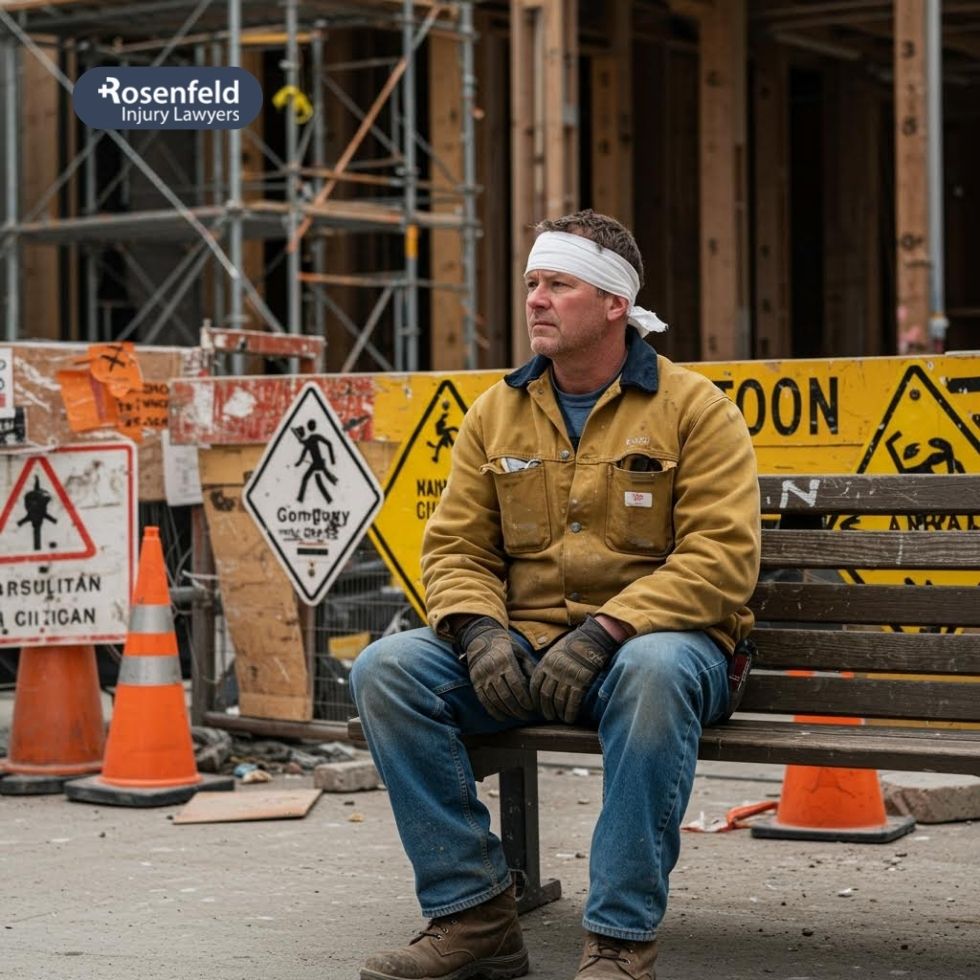
A brain injury may be evaluated as a percentage loss of the person as a whole rather than as a scheduled injury to a specific body part. For accidents on or after September 1, 2011, Section 8.1b of the Illinois Workers’ Compensation Act identifies five factors relevant to determining permanent partial disability:
No single factor automatically determines the award. For example, a crane operator may have difficulty returning to a safety-sensitive job because of concentration or memory problems, even if the impairment rating does not fully convey those practical limitations. Neuropsychological findings, treating-provider records, and vocational evidence may help explain the impact.
The distinction matters in tbi workers compensation settlements: a diagnosis alone does not establish the value of the claim. The evidence must show how the injury affects the worker’s functioning and earning capacity.
Read more about scheduled injuries under Illinois workers’ compensation law.
There is no reliable universal average for a traumatic brain injury workers’ compensation settlement in Illinois. Published figures sometimes combine civil lawsuit verdicts, third-party settlements, and workers’ compensation claims, which are different types of recovery governed by different rules.
The National Council on Compensation Insurance (NCCI) published Traumatic Brain Injuries in Workers Compensation in February 2021, using claims data from 2013 through 2018. The study reported average total incurred costs of approximately $136,000 for TBI claims, compared with about $51,000 for all lost-time claims. Approximately 2.5% of TBI claims exceeded $1 million, and about 15% of permanent total disability claims involved a TBI.
These are insurer claim costs, not settlement amounts. They do not tell an individual worker how much a claim should settle for.
Factors that may affect a brain injury workers’ comp settlement include:
If a third party contributed to the accident, a separate civil claim may allow recovery of damages not available through workers’ compensation, such as pain and suffering. That recovery is not guaranteed and depends on proving liability and damages.
A traumatic brain injury can qualify for permanent disability benefits, but the diagnosis alone does not establish permanent total disability. The evidence must show how the lasting impairment affects the worker’s ability to work and earn wages.
A worker who can return to employment but cannot earn what they did before the accident may qualify for a wage-differential award if the statutory requirements are met. Generally, the benefit is two-thirds of the difference between pre-injury average weekly wages and the wages the worker can earn in suitable employment. For qualifying accidents on or after September 1, 2011, payments generally continue until age 67 or for five years after the award, whichever is later.
PTD benefits may be available when a worker cannot earn wages in suitable employment under the applicable legal standard. Under the “odd-lot” concept, a worker may be able to perform limited tasks but still be unable to find a reasonably stable job market for that work.
Brain injuries can affect employment in ways that are not obvious. Memory problems, slowed processing, impaired judgment, and difficulty concentrating may prevent a worker from safely performing their former job. Medical and vocational evidence can help establish the extent of those limitations.
Some workers return to work after a concussion or other TBI; others need restrictions, a gradual return, or retraining for a different occupation. The decision should account for the worker’s symptoms, medical advice, and job duties.
Returning to work does not automatically end a workers’ compensation claim. The wages the worker can earn, ability to sustain employment, and need for ongoing treatment may still affect the claim’s value.
Learn more about vocational rehabilitation.
A lump-sum settlement can resolve a claim for an agreed payment, but it may also close rights that could be valuable after a brain injury—especially future medical benefits. Before accepting an offer, workers should understand exactly what the agreement resolves.
The process commonly involves:
A lump-sum settlement commonly closes future medical rights and the ability to reopen the settled claim, depending on the contract. An award after arbitration generally leaves qualifying medical rights under Section 8(a) open, subject to the Act and the circumstances of the case.
Workers enrolled in Medicare or reasonably expected to become eligible soon should consider how a settlement affects future injury-related treatment. A Workers’ Compensation Medicare Set-Aside Arrangement (WCMSA) allocates part of a settlement to pay for future medical care related to the injury that would otherwise be covered by Medicare.
CMS states that it will review proposed WCMSA arrangements when a claimant is a Medicare beneficiary and the total settlement exceeds $25,000, or when the claimant reasonably expects Medicare enrollment within 30 months and the anticipated settlement exceeds $250,000. These are CMS review thresholds, not a requirement that every qualifying settlement be submitted for review.
A TBI claim may involve continuing neurological care, medication, cognitive rehabilitation, or long-term support, making future medical costs particularly important. If the injury affects the worker’s ability to understand the settlement, the need for a guardian or legal representative may also need to be addressed.
Read more about how Illinois workers’ comp settlements work.
Section 5(a) of the Illinois Workers’ Compensation Act generally makes workers’ compensation the exclusive remedy against an employer for a covered workplace injury. However, an injured worker may have a separate claim against a third party whose negligence or defective product caused or contributed to the brain injury.
Potential third parties include general contractors, subcontractors, property owners, equipment manufacturers, or other companies working at the site. A separate lawsuit requires evidence of liability and causation.
Illinois comparative-fault rules under 735 ILCS 5/2-1116 may reduce damages based on the plaintiff’s share of fault. A personal injury lawsuit is generally subject to a two-year deadline under 735 ILCS 5/13-202, subject to applicable exceptions.
If the worker receives a third-party recovery, the employer or workers’ compensation insurer may have a lien under Section 5(b). The statute provides for a reduction related to attorney fees and a pro rata share of costs, which may affect the worker’s net recovery.
Learn about construction site brain injury claims or railroad brain injury claims under FELA. Railroad workers covered by FELA generally pursue claims under that federal law rather than Illinois workers’ compensation.
The value of a brain injury claim depends on its own facts, medical evidence, and applicable law. Civil lawsuit verdicts and settlements should not be presented as workers’ compensation settlement results because the two systems calculate recovery differently.
Confirmed firm results involving brain injuries may be presented here with the recovery amount, injury, occupation, and claim type—such as a workers’ compensation settlement or a third-party lawsuit.
Past results do not guarantee a similar outcome.
IL Work Injury Lawyer is recognized by Super Lawyers, and Jonathan Rosenfeld has a 10/10 Avvo rating.
A traumatic brain injury occurs when an impact, jolt, or penetrating injury disrupts normal brain function. The type of injury and the evidence available can affect how the claim is evaluated.
| Injury | Typical evidence | How it may affect the claim |
| Concussion or post-concussion syndrome | Symptoms documented by treating providers, neurological examination, and cognitive testing. | Headaches, dizziness, memory problems, or difficulty concentrating may interfere with work even without an obvious finding on initial imaging. |
| Brain contusion | Imaging and neurological findings showing bruising of brain tissue. | The injury may cause cognitive, behavioral, or physical limitations. |
| Hematoma or other bleeding | CT or MRI findings, hospital records, and treatment reports. | Bleeding may require urgent treatment and can result in lasting impairment. |
| Skull fracture | Imaging, emergency records, and specialist reports. | A fracture may occur alongside other brain injuries and require additional treatment. |
| Diffuse axonal injury | Neurological examination, clinical history, and appropriate imaging or specialist evaluation. | Damage to nerve fibers can cause significant impairment even when initial imaging does not show its full extent. |
| Hypoxic brain injury | Records showing reduced oxygen supply and neurological assessment. | The degree and duration of oxygen deprivation may affect long-term functioning. |
A normal CT scan does not necessarily rule out a concussion or diffuse axonal injury. Consistent treatment records and appropriate clinical or neuropsychological assessments can help explain symptoms and their effects on daily functioning.
Workplace brain injuries occur in construction, warehouses, manufacturing, transportation, and other industries. NCCI’s 2021 study reported that slips and falls, being struck or injured by an object or person, and motor vehicle accidents together accounted for more than 85% of TBI medical costs in the studied workers’ compensation claims.
Falls can occur from ladders, platforms, or scaffolds, or on the same level. Workers may also suffer head injuries when tools or materials fall from above, equipment strikes them, vehicles collide, or workplace assaults occur.
A 2011 study by Tiesman and colleagues in the American Journal of Preventive Medicine, using the Census of Fatal Occupational Injuries, examined fatal occupational TBIs from 2003 through 2008. These were occupational fatality data, not workers’ compensation settlement data. Read the study on PubMed.
OSHA’s head-protection standard for construction is 29 CFR 1926.100; the general-industry standard is 29 CFR 1910.135. The applicable rule depends on the workplace and the work being performed.
Learn more about warehouse injuries and forklift accidents.

Insurers may dispute brain injury claims when symptoms are not visible, appear over time, or are difficult to establish through initial imaging. They may argue that the injury was minor, symptoms are unrelated to the accident, or a pre-existing condition explains the worker’s limitations.
These steps can help protect a claim:
A TBI workers’ compensation lawyer can help obtain records, address disputed medical opinions, and evaluate the effects on employment and daily life. A lawyer can also explain the difference between workers’ compensation benefits and any separate third-party claim.
Read more about what to do after a work injury in Illinois.
Under 820 ILCS 305/6(d), a workers’ compensation claim generally must be filed within three years of the accident or within two years after the last payment of compensation, whichever is later, subject to the statute’s requirements and exceptions.
A separate third-party personal injury lawsuit is generally subject to a two-year deadline under 735 ILCS 5/13-202. Different rules may apply depending on the claim and the parties involved. See our Illinois workers’ compensation statute of limitations guide.
There is no fixed timeline. A claim may take longer when symptoms are changing, treatment is ongoing, permanent impairment is disputed, or the insurer contests benefits. Reaching maximum medical improvement can help clarify future needs, but it does not mean every case should settle immediately. Read about the Illinois workers’ comp settlement timeline.
Illinois has no standard settlement amount for every traumatic brain injury. NCCI reported average total incurred costs of about $136,000 per TBI claim in its 2013–2018 study, but these are insurer claim costs, not settlement amounts. An individual claim depends on disability, wage loss, medical needs, and the benefits supported by the evidence.
A concussion caused by a work-related accident may qualify for Illinois workers’ compensation. There is no standard concussion workers’ comp settlement amount. The outcome depends on documented symptoms, treatment, time away from work, lasting limitations, and applicable benefits. Persistent symptoms may need further evaluation even when initial imaging is normal.
It depends on how the claim is resolved and what the settlement contract says. A lump-sum settlement commonly closes future medical rights, while an award after arbitration generally leaves qualifying medical rights under Section 8(a) open. Understand the terms and any Medicare considerations before signing.
Our firm handles qualifying cases on a contingency-fee basis, meaning the fee is generally tied to a recovery rather than charged as an hourly fee upfront. Illinois law generally limits workers’ compensation attorney fees to 20% of the recovery, subject to statutory requirements. The representation agreement should explain fees and case costs.
If you or a loved one suffered a brain injury at work, our team can review the circumstances and explain which benefits and legal options may be available. Family members can contact us on behalf of a worker who is unable to manage the claim independently.
We offer a free consultation and handle qualifying cases on a contingency-fee basis under an agreed representation contract. Contact our Chicago workers’ compensation attorneys to discuss your situation and the next steps.
 Legally Reviewed By
Attorney Jonathan Rosenfeld
Content legally reviewed by Jonathan Rosenfeld The information on this page has been legally reviewed by Attorney Jonathan Rosenfeld, founder and managing partner of Rosenfeld Injury Lawyers LLC. With extensive experience representing injured workers across Illinois, Mr. Rosenfeld is dedicated to helping workplace accident victims pursue the maximum compensation available under the law. His extensive legal knowledge and commitment to client advocacy ensure that the information provided is accurate, reliable, and aligned with current legal standards.