
Experienced Attorneys
Committed to Protecting the
Rights of Injured Workers
Committed to Protecting the
Rights of Injured Workers



Workers who develop hearing problems because of workplace conditions may have a right to workers’ compensation benefits in Illinois. These claims can involve permanent hearing impairment caused by prolonged noise exposure, a sudden loud noise, or a work-related injury. Medical documentation is important when establishing the nature and extent of the impairment, while the circumstances surrounding the condition can affect how and when a claim should be pursued.
Work-related hearing loss may qualify for compensation under Illinois workers’ compensation laws, including scheduled-loss benefits for permanent hearing impairment. A workers comp hearing loss settlement depends in part on the amount of hearing loss shown by an audiogram and the applicable statutory schedule. Deadlines can also depend on when the worker knew or should have known the condition was work-related.
Some workers in Illinois may be exposed to dangers that could affect their hearing. Whether you experience a loud noise or a head trauma injury, you could lose your hearing while carrying out your work duties. Fortunately, you can file for hearing loss workers’ compensation to recover financial compensation for your losses.
When pursuing a workers’ compensation claim, an experienced law firm like IL Work Injury Lawyer can play an important role. Our team has vast experience with work-related hearing loss and other injuries. We will fight for fair compensation to ensure your financial future is secure after getting hurt at work.
Getting hurt in a work environment can be a stressful experience, especially if you are forced to miss work or pay costly medical bills. Our firm knows what it takes to support your workers’ compensation claim and increase your chances of a fair settlement.
Our top-rated workers’ compensation attorneys in Chicago are recognized among the top 5% of legal professionals by Super Lawyers. We also maintain an A+ grade from the Better Business Bureau.
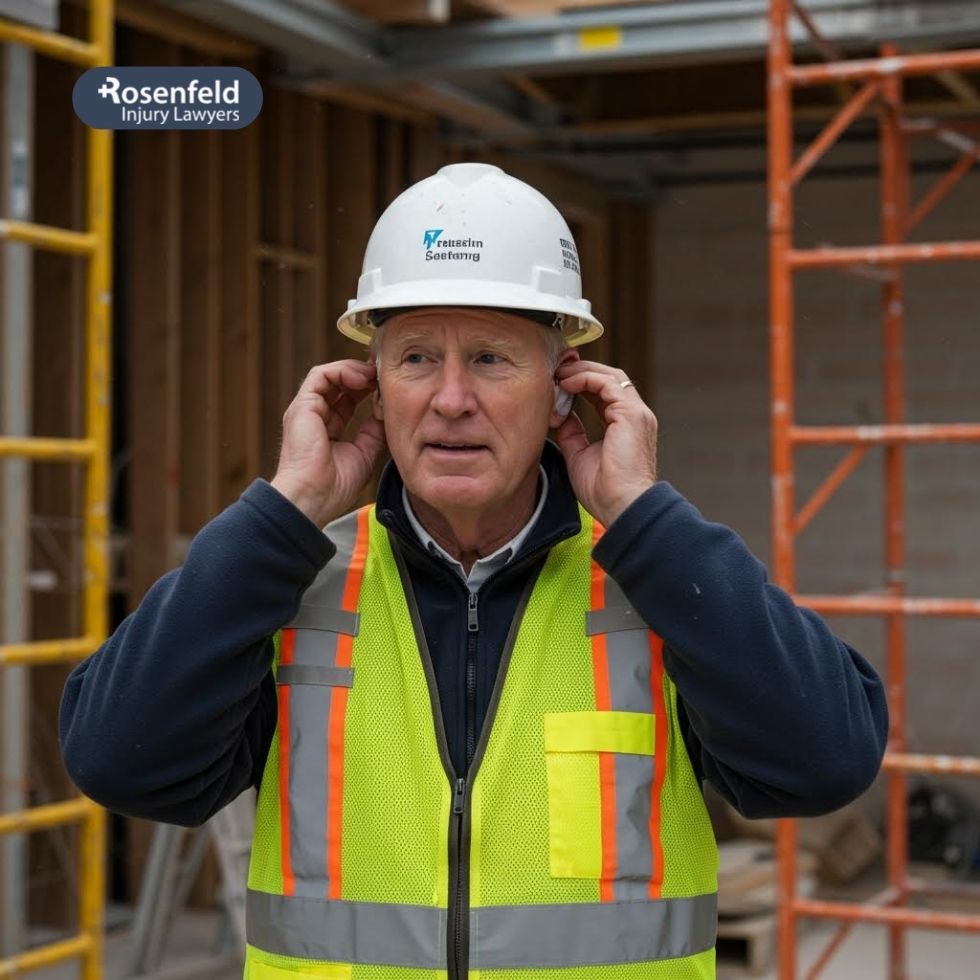
Several scenarios can cause occupational hearing loss:
Repeated exposure to high noise levels can cause noise induced hearing loss, while certain chemicals may contribute to occupational hearing loss. The risk depends on both the sound level and duration of exposure.
For covered general-industry workplaces, OSHA requires a hearing conservation program when employee noise exposure reaches an 8-hour time-weighted average of 85 dBA. OSHA also requires employers to monitor qualifying noise exposure and provide audiometric testing to covered employees. 29 CFR 1910.95 does not apply to every industry, so the applicable workplace standard should be confirmed for the worker’s occupation.
Typical workplace noise levels can vary substantially by equipment and conditions. OSHA materials for construction, for example, identify approximate levels such as:
| Job or equipment | Approximate noise level |
| Forklift | 93 dBA |
| Nail gun | 97 dBA |
| Concrete saw or electric grinder | 98 dBA |
| Bulldozer | 100 dBA |
| Jackhammer | 102 dBA |
| Chain saw | 110 dBA |
Source: OSHA, Construction Noise and Hearing Loss Prevention materials.
Workers may also be able to obtain records showing workplace noise monitoring and hearing-conservation measures. For more information about the PPE your employer must provide, see the firm’s OSHA and personal protective equipment resource.
These elements, especially if they are repetitive, can lead to hearing loss that impacts both your professional and private life.
The Illinois Workers’ Compensation Act (820 ILCS 305) states that injuries that occur during employment may be eligible for workers’ compensation benefits. For hearing loss, the issues must be directly caused by your job and meet the state’s impairment standards.
Here are the types of hearing loss injuries that could qualify for workers’ comp payments:
If you want to receive hearing loss workers’ compensation benefits, the following must be true about your condition:
Illinois law specifically provides a method for calculating occupational hearing loss using audiometric thresholds at 1,000, 2,000, and 3,000 cycles per second. The statute states that an average loss of 30 decibels or less at those frequencies does not constitute compensable hearing disability, while an average of 85 decibels or more constitutes total compensable hearing loss. 820 ILCS 305/8(e).
For workers with qualifying hearing impairment, the records may include an audiogram, baseline audiogram, later testing, and other evidence addressing whether the loss is work-related. A standard threshold shift under OSHA’s hearing-conservation rules is a separate workplace-recordkeeping concept and should not be treated as the same thing as the Illinois workers’ compensation impairment calculation.
For workers with other scheduled injuries, see our workers’ comp eye injury claims for information about another type of scheduled-loss claim.
Receiving workers’ comp benefits after you have suffered hearing loss will depend on the steps you take after discovering the issue. Here is what you must do to increase your chances of earning fair compensation:
Ask your employer for copies of your workplace hearing-test records, including any baseline audiogram and annual audiograms maintained under an applicable hearing conservation program. OSHA’s hearing standard requires covered employers to make audiometric testing available to employees exposed at or above the 85 dBA action level and to obtain annual audiograms after the baseline test.
You should also obtain a current audiogram and preserve relevant employment records, including job duties, noise exposure information, hearing-protection records, and prior hearing tests. These documents can help establish the timing and extent of a hearing loss claim.
Hearing loss can have a substantial impact on your future, especially regarding your finances. If you miss time at work to recover from your injuries, or if your work capacities are lessened, you can pursue compensation to make up for these losses.
Here are the primary benefits you could apply for through workers’ comp insurance:
A workers comp hearing loss settlement does not have one fixed dollar amount. Illinois treats qualifying permanent hearing loss as a scheduled loss, and 820 ILCS 305/8(e) assigns a specific number of weeks for total loss of hearing. For injuries occurring on or after February 1, 2006, the statute provides 54 weeks for loss of hearing in one ear and 215 weeks for total and permanent loss of hearing in both ears.
Partial hearing loss is calculated proportionally to the applicable scheduled weeks. Illinois law uses audiometric thresholds at 1,000, 2,000, and 3,000 cycles per second to determine the percentage of hearing loss for compensation purposes. The statute provides that an average loss above 30 decibels is used in the calculation, with 100% reached at an average loss of 85 decibels.
| Hearing loss | Scheduled weeks under 820 ILCS 305/8(e) |
| Total loss of hearing in one ear | 54 weeks |
| Total and permanent loss of hearing in both ears | 215 weeks |
The applicable weekly compensation rate is also important. In general terms, scheduled-loss compensation is calculated using the applicable statutory rate and the worker’s average weekly wage, subject to the limits in effect for the injury. The attorney should confirm the applicable rate and calculation for the date of injury before this section is published.
For example, if the applicable calculation determined a 25% compensable loss in both ears, the percentage would be applied to the 215-week schedule, and the resulting weeks would then be multiplied by the applicable weekly rate. This is a simplified illustration, not a calculation of an individual workers comp hearing loss settlement.
The final amount can depend on the documented percentage of loss, the date of injury or disablement, applicable statutory rates, prior compensable hearing loss, and whether the claim is resolved through an award or an approved settlement.
Miguel, a roofer, was on a job in 2012 when he fell off a roof about ten feet above the ground and landed on a concrete surface. He suffered multiple fractures, particularly on the left side of his head. Some of the side effects of this injury include Tinnitus and work-related hearing loss. Miguel received a $6 million settlement from his workers’ compensation case, which included $250,000 upfront and lifelong payments.
Raul, a farm worker in his 60s, was at work when a falling branch struck him in the head. He suffered a temporary loss of consciousness because of the physical injury, as well as a torn rotator cuff. Another side effect of the significant injury was a partial loss of hearing. Raul sought workers’ compensation for a total disability. He was awarded a $300,000 workers’ compensation settlement, along with lifetime monthly payments of $6,750 because of his disabilities.
Prior-results disclaimer: Past results are not a guarantee of future results. Each workers’ compensation case depends on its facts, medical evidence, applicable law, and other circumstances.
Noise-induced hearing loss can develop gradually after years of workplace exposure, so there may be no single accident date that clearly identifies when the condition began. The applicable deadline can therefore depend on the legal characterization of the condition, the date of disablement or injury, the worker’s knowledge of the work-related connection, and other facts.
Retirement does not necessarily prevent a worker from pursuing a claim. A worker may notice hearing difficulties after leaving employment, but the applicable deadline still must be evaluated based on the facts and the governing Illinois law.
Age-related hearing loss can also become an issue when an insurer argues that some or all of the impairment resulted from ordinary aging rather than workplace exposure. Employer audiograms, especially baseline and subsequent testing, may help establish how hearing changed over time. Medical opinions and employment records may also be relevant.
Because gradual hearing loss can involve different statutory rules and questions about when disablement occurred, the deadline should be reviewed by an Illinois workers’ compensation attorney before relying on a specific filing date.
A third-party lawsuit may be an option if someone else’s negligence caused your work-related injuries. Here are a few scenarios that could result in additional compensation:
Railroad workers are generally covered by the Federal Employers’ Liability Act (FELA) rather than Illinois workers’ compensation. A railroad employee with occupational hearing loss may have a FELA claim if the statutory requirements are met. Learn more about FELA claims for railroad workers and the FELA filing deadline.
Navigating a workers’ comp claim on your own can be challenging. If the claim is denied or you receive reduced payments, financial recovery may be difficult, along with the challenges of the hearing loss.
IL Work Injury Lawyers can provide crucial legal services to support your pursuit of compensation:
You can receive workers’ compensation benefits for hearing loss injuries regardless of fault. You would only need to prove negligence if you were pursuing a third-party injury lawsuit. Then, you would need evidence that the employer did not provide appropriate hearing protection devices.
Primarily, you will need medical test results to support your hearing loss claim. Some of the most common hearing tests include audiometry, bone conduction tests, and otoacoustic emissions.
There is no single settlement amount for every Illinois claim. Qualifying hearing loss is generally treated as a scheduled loss, with the percentage of compensable impairment applied to the statutory number of weeks for hearing loss and the applicable weekly rate. The attorney should review the audiogram, date of injury or disablement, and applicable statutory rate.
Retirement does not automatically prevent a hearing loss claim. A retired worker may still have a claim depending on when the hearing loss or disablement occurred, when the worker learned of the work-related connection, and which statutory deadline applies. The timing should be reviewed promptly because retirement does not suspend every applicable limitation period.
Tinnitus may be relevant to a workers’ compensation claim when it is medically documented and connected to a compensable work injury or occupational exposure. Whether tinnitus produces a separate compensable loss depends on the facts, medical evidence, and applicable Illinois law. An audiogram and medical opinion may help establish the relationship.
An insurer may dispute whether hearing loss is caused by workplace exposure, age, or another factor. Baseline and later audiograms, employment noise records, medical evidence, and the worker’s history can help address that dispute. The applicable Illinois compensation rules should be reviewed when separating work-related impairment from age-related hearing loss.
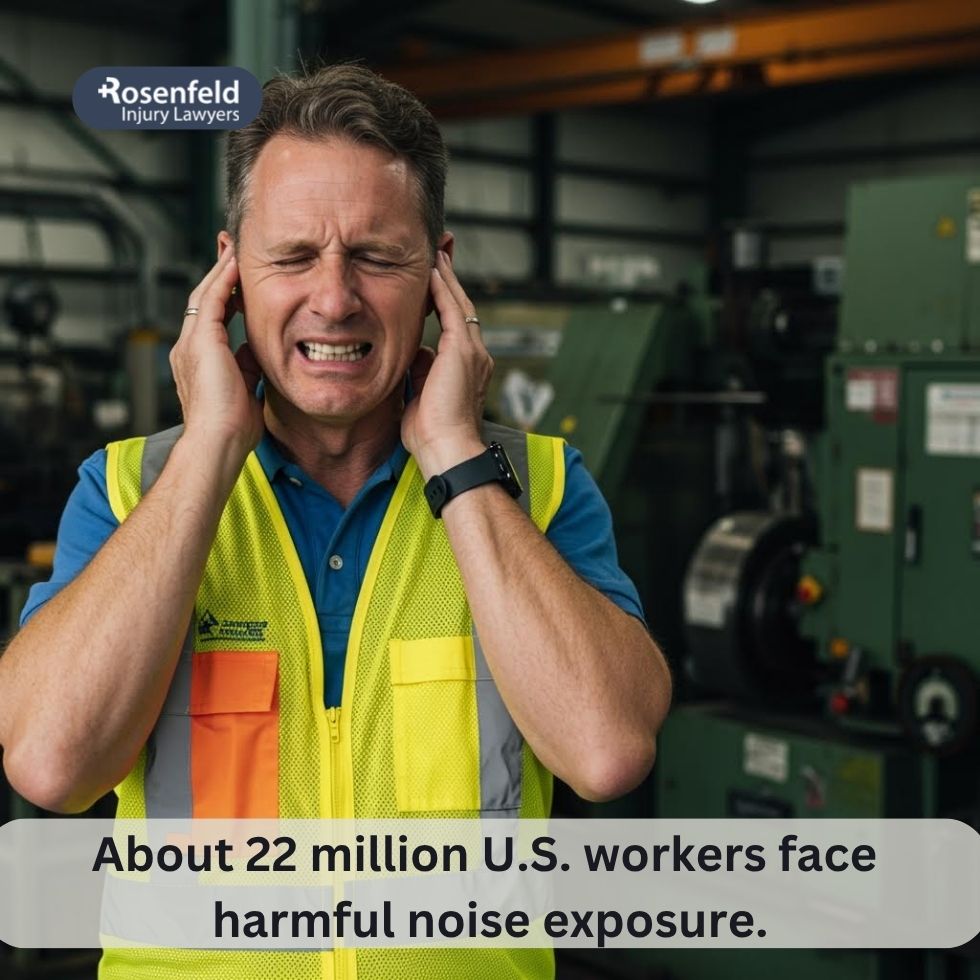
Whether you experienced a sudden, extremely loud sound or have permanent occupational hearing problems due to ototoxic chemicals, you deserve to receive benefits for your losses. At IL Work Injury Lawyer, we know what it takes to navigate the claims process and obtain wage replacement, medical costs, hearing aid expenses, disability benefits, and vocational rehabilitation reimbursements.
Our top-rated Chicago work injury law firm works on a contingency fee basis. This means you owe nothing unless we win your case. Our payment is then deducted from the total settlement amount. Additionally, we offer a free consultation so you can ask questions about the legal process and your specific case.
Contact our law firm today to schedule a free case evaluation. We represent hearing loss clients throughout Chicago and Illinois.
 Legally Reviewed By
Attorney Jonathan Rosenfeld
Content legally reviewed by Jonathan Rosenfeld The information on this page has been legally reviewed by Attorney Jonathan Rosenfeld, founder and managing partner of Rosenfeld Injury Lawyers LLC. With extensive experience representing injured workers across Illinois, Mr. Rosenfeld is dedicated to helping workplace accident victims pursue the maximum compensation available under the law. His extensive legal knowledge and commitment to client advocacy ensure that the information provided is accurate, reliable, and aligned with current legal standards.