
Experienced Attorneys
Committed to Protecting the
Rights of Injured Workers
Committed to Protecting the
Rights of Injured Workers



A farm injury can lead to different legal claims depending on the circumstances. A covered worker may have a workers’ compensation claim, while an exempt farm may face a negligence lawsuit. Defective machinery may also support a product liability claim against a manufacturer or seller. Grain bin entrapment can also result in serious injuries and may involve negligence or third-party liability. If you were injured on an Illinois farm, the right claim depends on who caused the accident and which laws apply.
We investigate potential third-party claims involving farm equipment, property conditions, contractors, and other responsible parties.
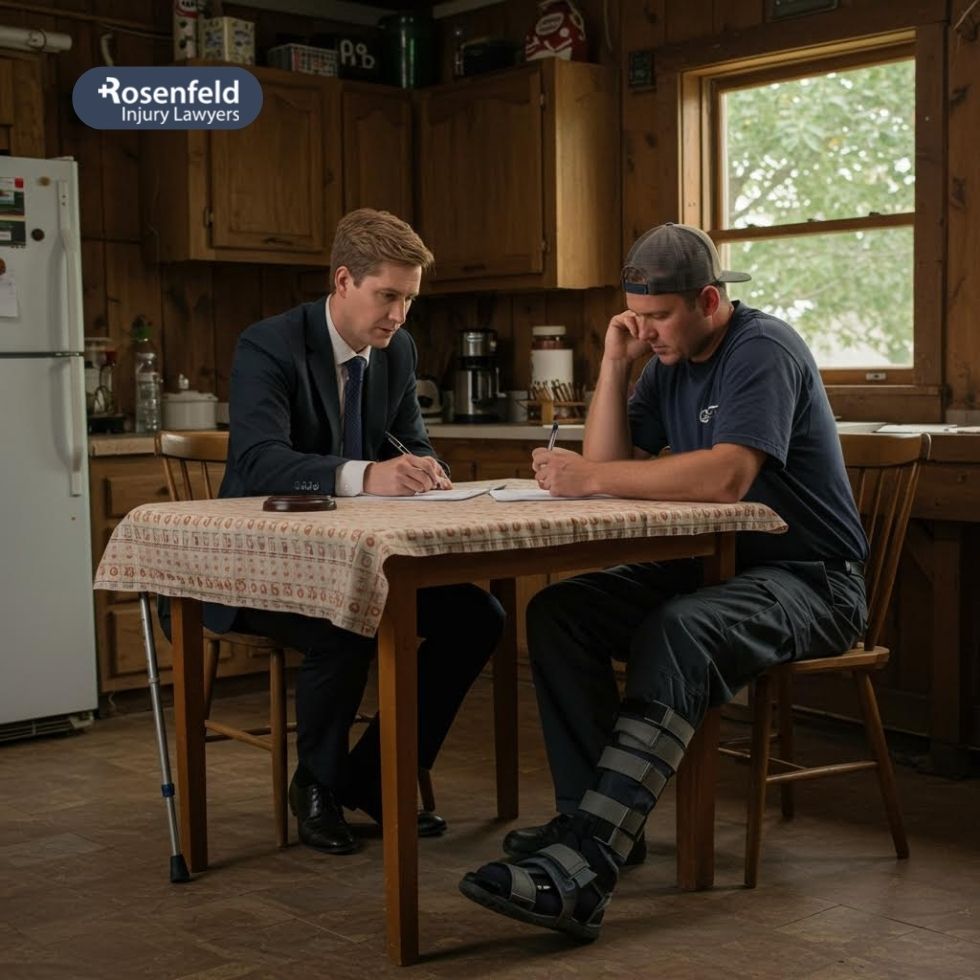
At IL Work Injury Lawyers, we have extensive experience representing farm accident victims across Illinois, including cases involving defective farm equipment, toxic exposures, and tractor rollovers. Our team understands the unique risks in the agricultural industry and fights to secure the financial compensation injured farm workers and their families deserve.
Prior results do not guarantee or predict a similar outcome. Each case is different and must be evaluated based on its facts and applicable law.
Filing a farm accident lawsuit with IL Work Injury Lawyers gives you access to a team with experience handling complex farm accident cases involving serious injuries, defective farm equipment, and employer negligence. Our attorneys have recovered over $490 million for injured farm workers and other injured clients, subject to the firm’s current results disclosures.
Recognized by Super Lawyers and having a 10/10 score on Avvo, we deliver results through aggressive advocacy and deep knowledge of the agricultural industry. When farming accidents occur, we’re here to help you pursue the compensation available under Illinois law with no upfront fees.
You generally can’t sue your employer directly due to (820 ILCS 305) Workers’ Compensation Act, but you may have a personal injury claim when a third party is at fault, or when the Workers’ Compensation Act does not apply. Potentially responsible parties include:
Even if you qualify for workers’ comp, a lawsuit lets us pursue damages that comp doesn’t cover, like pain and suffering, disfigurement, and loss of normal life.
It’s also important to know that many farm workers may not be covered by workers’ comp at all. Under 820 ILCS 305/3, an agricultural enterprise employing fewer than 400 working days of agricultural or aquacultural labor per quarter during the preceding calendar year is generally excluded from the Act, subject to the statute’s requirements. An employer may also elect coverage.
That means some injured workers on farms, especially seasonal or part-time help, may need to consider a personal injury claim when workers’ compensation does not apply. We help clients understand their legal options and pursue every available path to fair compensation.
| Situation | Claim available | Potential defendant | Fault required? |
| Farm is covered by workers’ comp | Workers’ compensation | Employer/insurer | Generally no |
| Farm is exempt from the Act | Negligence claim | Farm owner/operator | Generally yes |
| Defective equipment caused injury | Product liability claim | Manufacturer/seller | Depends on the claim |
| Another party caused the injury | Third-party claim | Contractor, property owner, supplier, or other responsible party | Generally yes |
A farm accident lawsuit isn’t limited to full-time employees. Under Illinois law, several types of injured individuals may have the right to file a personal injury lawsuit or wrongful death claim, depending on how the accident occurred and who was responsible. These may include:
Our farm accident attorneys represent clients statewide and investigate every angle to determine which parties can be held legally accountable. Whether you’re dealing with a personal injury case or seeking workers’ compensation benefits, we’ll help you pursue the compensation available under Illinois law.
Migrant and seasonal agricultural workers may have protections under the Migrant and Seasonal Agricultural Worker Protection Act (MSPA). The federal law establishes employment standards involving wages, housing, transportation, disclosures, and recordkeeping for covered workers. It also requires covered farm labor contractors to register with the U.S. Department of Labor.
H-2A workers may have additional protections under federal law and their employment terms. These can include requirements concerning wages, housing, transportation, and working conditions. Workers may also have protections against retaliation for exercising rights protected by applicable federal law.
A worker’s immigration status does not automatically determine whether an injury claim is available. The specific claim, coverage, damages, and available remedies depend on the facts and applicable law. Workers should not assume that temporary or undocumented status by itself eliminates every legal option.
When a farm labor contractor supplies workers, the contractor and farm may have overlapping responsibilities depending on the circumstances and applicable law. An injured worker should identify both the farm and the contractor when seeking legal advice about an accident.
Determining liability in a farm accident injury often involves identifying parties beyond the employer. In many personal injury claims, especially those involving serious injuries, one or more third parties may share legal responsibility. Those who can be held liable in farm worker injury claims include:
Potential liability may also involve a farm labor contractor, chemical supplier, or equipment manufacturer, depending on the cause of the injury.
Our experienced farm accident lawyers work to identify every responsible party and pursue available compensation for our clients under Illinois law.
Many farming accidents occur because of unsafe equipment, poor supervision, or a failure to follow federal safety standards. When someone suffers a farm accident injury, the path to a successful personal injury lawsuit often starts with identifying what caused the incident and who was responsible. Below are common types of farm equipment accidents and other incidents that may support a farm worker injury claim in Illinois.
Serious injuries are frequently linked to dangerous machinery that malfunctions or lacks proper safeguards. These cases often involve:
These incidents can support product liability claims or lawsuits based on negligent maintenance.
Falls are one of the leading causes of farm accident injuries, particularly when workers perform tasks at elevation without fall protection. Common hazards include:
These situations often involve OSHA violations or premises liability claims against employers or farm owners.
Grain bins and silos present life-threatening dangers when safety measures are not followed. Grain bin accidents may involve:
These cases may involve violations of federal safety rules or claims against property owners or supervisors who failed to protect workers.
The agriculture industry routinely involves hazardous chemicals. Exposure can lead to serious injuries or even long-term illness. Examples include:
Under 40 CFR Part 170, employers and chemical handlers are required to provide training and protective measures. The EPA Worker Protection Standard also establishes protections for agricultural workers and pesticide handlers exposed to agricultural pesticides. Failure to do so may result in liability for injuries.
Farm animals can cause severe or even life-threatening harm when they are not properly restrained or handled. Common incidents involve:
Farm owners or managers may be liable for failure to protect agricultural workers or visitors from known risks.
Collisions between vehicles and equipment are a frequent source of workplace accidents on farms. These include:
Liability in these cases often involves third-party drivers, vendors, or maintenance contractors responsible for traffic flow or equipment operation.
Farm accident injuries are often severe due to the dangerous nature of the work and the heavy equipment used in the agricultural industry. Some of the most common injuries seen in these cases include:
In a farm accident lawsuit, victims may be entitled to farm accident compensation for losses that may extend beyond workers’ compensation benefits, depending on the claim and responsible parties. These claims allow farm accident victims to recover compensation for the full impact of their injuries; physical, emotional, and financial. Common forms of compensation include:
Our experienced farm accident lawyers evaluate every case to determine the damages and claims available under Illinois law, especially when a third party, like a manufacturer or contractor, is at fault.
When a farm accident results in death, surviving families may have the right to file a claim under the Illinois Wrongful Death Act (740 ILCS 180/). These lawsuits help provide financial relief and accountability in the wake of a tragic loss. Recoverable damages may include:
These claims can be brought against any responsible third party, including equipment manufacturers, subcontractors, or negligent farm owners. Our farm injury lawyers help families understand their legal options and pursue available compensation.
According to Law.com‘s VerdictSearch, the average payout in farm accident lawsuits is $4,072,881, while the median award is $90,000. Farm accident settlements and verdicts range from as low as $2,077 to as high as $110,000,000.
| Measure | Figure | Source |
| Average payout | $4,072,881 | Law.com VerdictSearch |
| Median payout | $90,000 | Law.com VerdictSearch |
The substantial difference between the average and median can occur when a small number of very large cases raise the average. Individual settlements and verdicts vary based on injury severity, medical expenses, lost earning capacity, applicable workers’ compensation coverage, defective equipment, and the strength of liability evidence.
Factors that may influence the value of a claim include:
Prior results do not guarantee or predict a similar outcome. Each case is different and must be evaluated based on its facts and applicable law.
$110 Million Settlement for Farmers Over Genetically Modified Corn Contamination
In 2000, farmers filed a class action against Advanta USA and StarLink Logistics, alleging that StarLink corn, approved only for animal feed, contaminated neighboring non-GMO crops, leading to widespread product recalls and market losses. The EPA had not approved StarLink for human consumption. Plaintiffs claimed cross-pollination and improper safeguards led to export disruptions and contract cancellations. The lawsuit, which involved around 400,000 farmers, alleged negligence, consumer fraud, and nuisance. A global settlement of $110 million plus interest was reached, with $10 million reserved for those whose crops were directly contaminated.
$211,000 Settlement for Child Bitten in the Face by Dog in Bowling Brook
Five-year-old Cassandra Miller was bitten twice in the face by a 100-pound German shepherd mix while visiting a home in Bowling Brook. Her mother, Jennifer Miller, sued the homeowners for negligence. The dog attacked without provocation, leaving Cassandra with facial scars, including one under her eye that remains visible. Plaintiffs noted the scar is particularly noticeable due to her having an identical twin. Although the defense disputed the severity of the scarring, the parties settled for $211,000 before trial.
$175,000 Verdict for Shoulder Injury Caused by Loose Horses on Illinois Highway
Shaun Lievers, 28, injured his dominant shoulder while swerving to avoid loose horses that had entered Illinois State Route 159. He sued the owners, Lannie and Alice Yates, under the Domestic Animals Running at Large Act. Lievers suffered a SLAP tear and underwent arthroscopic surgery. The defense claimed the horses jumped the fence and that precautions were reasonable. The jury sided with Lievers and awarded $175,000 for medical expenses, lost wages, and reduced strength in his right arm.
Prior results do not guarantee or predict a similar outcome. Each case is different and must be evaluated based on its facts and applicable law.
Illinois farm accident claims often involve multiple layers of liability, from property owners to equipment manufacturers and labor contractors. These cases demand the insight of an experienced farm accident lawyer who understands the legal, technical, and medical aspects of agricultural injuries.
At IL Work Injury Lawyers, we know how to build strong cases by investigating OSHA violations such as those under 29 CFR 1928, securing expert testimony, and identifying all responsible parties. Whether your case is filed in Cook County Circuit Court or a rural jurisdiction elsewhere in Illinois, we prepare every case for trial and negotiate from a position of strength.
We also dig into all applicable insurance policies and contractual relationships to maximize your recovery. With so much at stake, including medical expenses, lost wages, and your future, you need legal representation from an injury lawyer familiar with complex agricultural injury claims.
According to UIC, an estimated 4,500 farm-related injuries happen each year in Illinois. The source and year for this estimate should be reviewed before publication to ensure it reflects the latest available data.
The current page also cites an agricultural fatality rate of 21.3 per 100,000 workers and 13 Illinois farming fatalities in 2023. These figures should be presented with their specific source and year and updated if newer Illinois data is available.
| Statistic | Figure | Source | Year |
| Farm-related injuries per year | ~4,500 | UIC | Verify latest available year |
| Agricultural fatality rate | 21.3 per 100,000 workers | Verify source | Verify year |
| Illinois farm fatalities | 13 | Verify source | 2023 |
Farm injury statistics provide additional information about agricultural injuries and fatalities.
Depending on the circumstances, Illinois farm injury claims may involve workers’ compensation laws, personal injury statutes, product liability rules, federal agricultural safety requirements, and other laws.
Some Illinois farm workers are excluded from mandatory workers’ compensation coverage under the agricultural exemption in 820 ILCS 305/3. The statute generally addresses agricultural enterprises employing fewer than 400 working days of agricultural or aquacultural labor per quarter during the preceding calendar year, subject to its specific requirements. Employers may also elect coverage.
When the Workers’ Compensation Act does not apply, the Act’s exclusive-remedy protections may not bar a negligence claim against the farm. Whether a direct claim is available depends on the farm’s coverage status, the employment relationship, and the facts of the accident. For more information, see workers’ compensation for farm workers.
The Illinois Workers’ Compensation Act (820 ILCS 305) provides the framework for workers’ compensation coverage and contains specific provisions concerning agricultural employment.
Under the Illinois Statute of Limitations (735 ILCS 5/13-202), injured parties generally have two years from the date of the accident to file a personal injury lawsuit. In fatal farm accidents, surviving family members have two years from the date of death to bring a wrongful death claim under the Wrongful Death Act (740 ILCS 180/). Different deadlines or exceptions may apply depending on the circumstances.
For injuries caused by defective farm equipment, claims may be brought under Illinois product liability law (735 ILCS 5/2-21). These cases often target manufacturers or distributors of unsafe machinery.
Additionally, when more than one party is responsible for an injury, the Illinois Joint Tortfeasor Contribution Act (740 ILCS 100/) allows fault to be divided among multiple negligent parties.
Federal protections may also apply to agricultural workers. The Migrant and Seasonal Agricultural Worker Protection Act establishes employment protections for covered migrant and seasonal workers, while the EPA Worker Protection Standard protects workers from occupational pesticide exposure. Pesticide and chemical exposure may involve requirements under 40 CFR Part 170.
Understanding how these laws interact is key to identifying the appropriate legal options. An experienced farm accident attorney can review the facts and applicable deadlines.
In Illinois farm accident lawsuits, defendants often try to shift blame to limit or avoid liability. A common tactic is citing Illinois Comparative Negligence Law (735 ILCS 5/2-1116) and arguing the injured person was more than 50% at fault, which would prevent any recovery. Others may raise the assumption of risk, especially for independent contractors, claiming the worker accepted known dangers.
Another frequent defense is no causation, suggesting the injuries were due to preexisting conditions or unrelated events. Property owners may argue a lack of notice about the hazard or claim it was an open and obvious danger that should have been avoided. In product liability cases, manufacturers often claim product misuse or unauthorized modifications.
Another common tactic is accusing the victim of failing to get timely treatment, known as failure to mitigate. At IL Work Injury Lawyers, we anticipate these strategies and prepare expert-backed rebuttals from the outset to protect your right to seek available compensation.
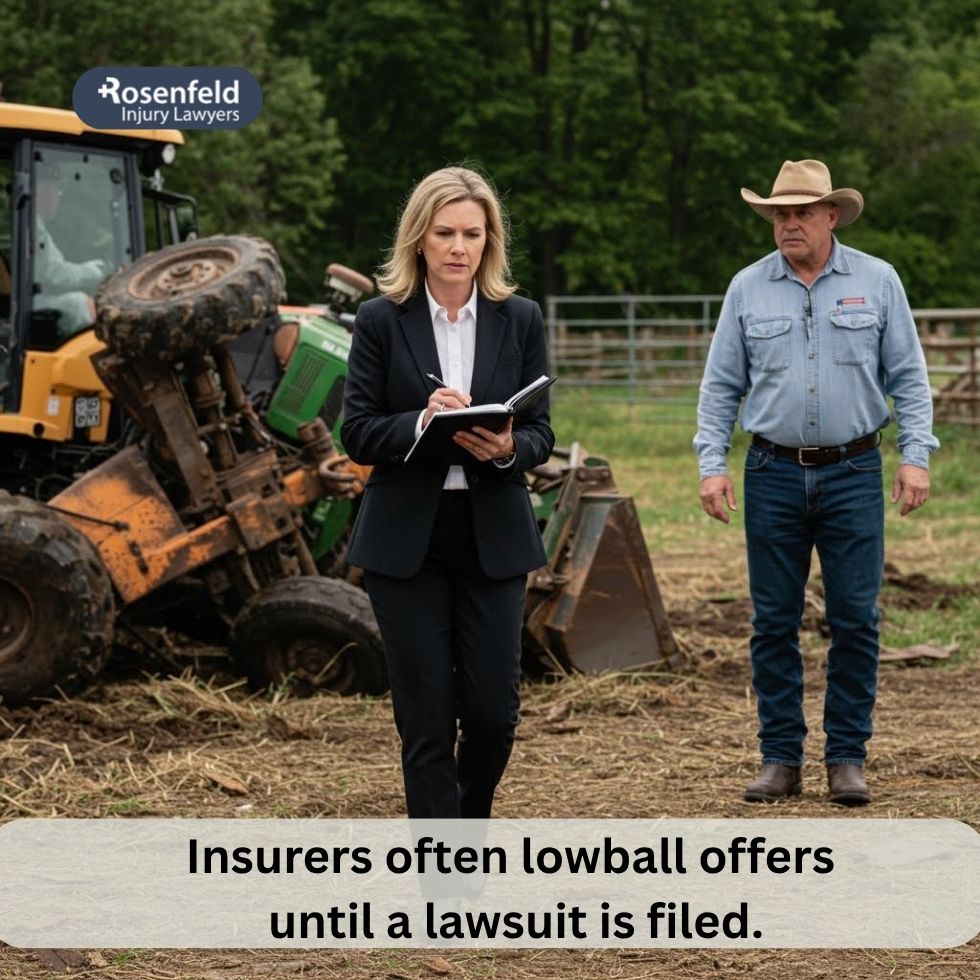
Taking the proper steps after a farm accident injury can make a significant difference in the outcome of your personal injury claim. Start by seeking medical attention and keeping detailed records of every visit, diagnosis, and recommendation.
Always file an official incident report with your employer or supervisor, and make sure to keep a copy. If you’re able, take photos of the scene, the equipment involved, and any visible injuries. Get names and contact details for any witnesses or coworkers present. Avoid giving recorded statements to insurance companies, as they may be used against you.
Hold on to pay stubs, medical bills, and a personal log of how the injury affects your daily life. Following all medical advice and treatment plans is critical to show you’re doing everything possible to heal. Most importantly, contact our experienced farm injury lawyers promptly to preserve key evidence and begin reviewing your case.
Our Illinois farm accident attorneys have the experience and resources to handle complex cases involving serious injuries, defective equipment, and third-party liability. We conduct detailed investigations into unsafe work practices, OSHA violations, and machinery failures to uncover every factor that caused your farm work related injury.
Even if you’ve already filed a workers’ comp claim, we’ll identify additional parties, such as equipment manufacturers or subcontractors, who may be held legally responsible. We work closely with medical experts, life care planners, and farm safety engineers to fully understand the long-term impact of your injuries.
Our team handles all communication with insurance companies, adjusters, and defense attorneys, so you can focus on recovery. By building strong claims backed by evidence and expert analysis, we pursue compensation through negotiation or take your case to trial when necessary. With us on your side, you won’t face the legal system alone.
You may be able to sue a farm owner when the Workers’ Compensation Act does not provide the exclusive remedy or when the owner is legally responsible as a third party. Liability depends on the circumstances, including negligence, premises conditions, equipment defects, and the injured worker’s relationship with the farm owner.
Some farm workers are covered, but Illinois has an agricultural exemption under 820 ILCS 305/3. An agricultural enterprise employing fewer than 400 working days of agricultural or aquacultural labor per quarter during the preceding calendar year may fall outside mandatory coverage, subject to the statute’s requirements.
If an agricultural employer was exempt from mandatory coverage, a personal injury claim may be available depending on the facts. If coverage was required but not provided, additional legal issues may arise. Review the farm’s labor days, coverage status, election of coverage, and the circumstances of the accident.
A missing rollover protective structure may be relevant to a claim involving a tractor rollover, particularly if another party had a legal duty concerning the equipment. OSHA’s agricultural tractor standard addresses rollover protective structures in specified circumstances. Review the facts surrounding the equipment and accident before determining liability.
Immigration status does not automatically determine whether an injured worker has an available injury claim. Migrant and seasonal agricultural workers may have protections under federal law, and H-2A workers have additional employment protections. The specific claim, coverage, damages, and available remedies depend on the facts.
A personal injury claim generally has a two-year limitations period under 735 ILCS 5/13-202, although exceptions and different deadlines may apply. Wrongful death claims and claims involving governmental entities can involve additional rules. The applicable deadline should be confirmed based on the facts of the case.
If you or a loved one was seriously hurt in a farm accident, don’t assume workers’ compensation is your only option. Our experienced work accident attorneys are ready to review your case for free and help you pursue the full recovery Illinois law allows on a contingency fee basis. We serve clients across rural and urban counties, from Cook to Champaign to McLean. Call today for a free initial consultation.
 Legally Reviewed By
Attorney Jonathan Rosenfeld
Content legally reviewed by Jonathan Rosenfeld The information on this page has been legally reviewed by Attorney Jonathan Rosenfeld, founder and managing partner of Rosenfeld Injury Lawyers LLC. With extensive experience representing injured workers across Illinois, Mr. Rosenfeld is dedicated to helping workplace accident victims pursue the maximum compensation available under the law. His extensive legal knowledge and commitment to client advocacy ensure that the information provided is accurate, reliable, and aligned with current legal standards.