
Experienced Attorneys
Committed to Protecting the
Rights of Injured Workers
Committed to Protecting the
Rights of Injured Workers



Farm accident statistics in Illinois reveal that agriculture remains one of the most hazardous industries in the state. Every year, workers are seriously injured or killed in incidents involving machinery, transportation, and unsafe working conditions. These agricultural accident statistics highlight the ongoing risks faced by farmers, ranchers, and agricultural workers across the state.
At IL Work Injury Lawyer, we’re committed to helping injured farm workers and their families pursue the compensation they deserve. If you’ve been hurt on the job, our Chicago farm injury lawyer team is here to fight for your rights and guide you through every step of the legal process involving Illinois agricultural injury claims and farm workplace accidents.
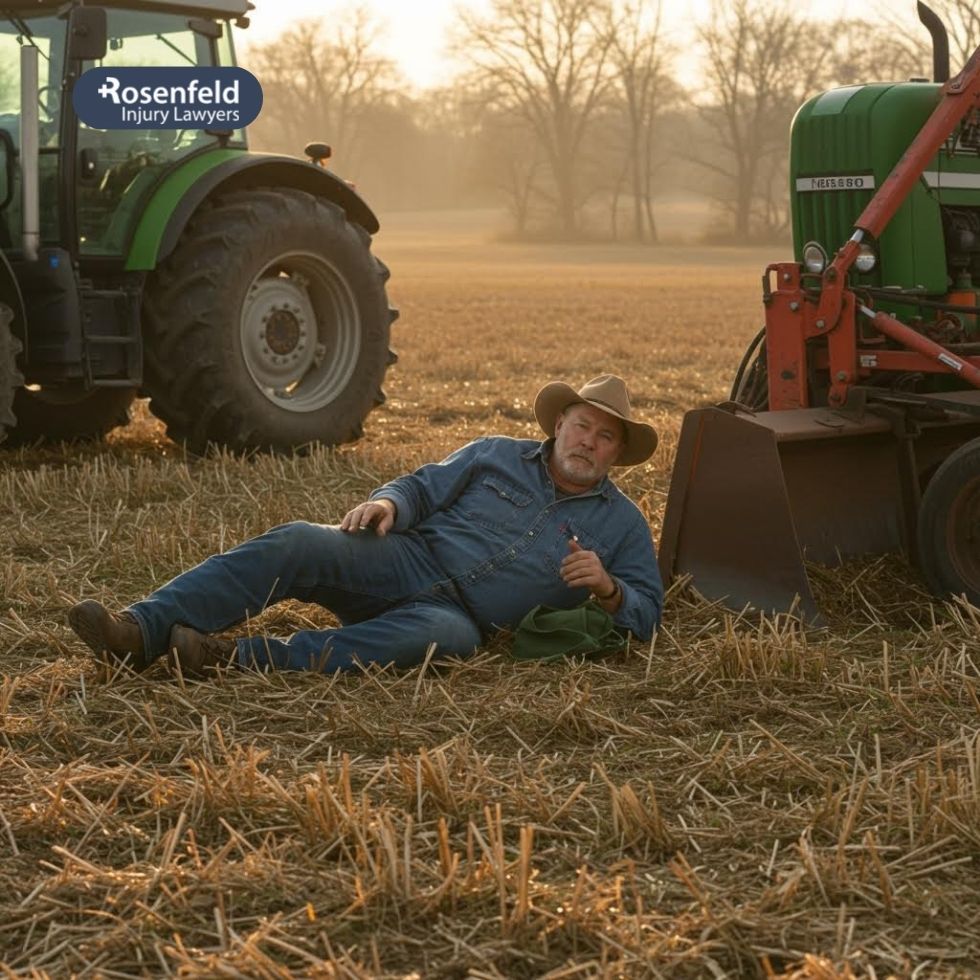
Research by the Illinois Department of Public Health (IDPH) revealed that farmers, ranchers, and other agricultural managers accounted for 11 of the 158 fatal occupational injuries reported in Illinois in 2019, roughly 7% of all workplace deaths. The corresponding figures for other farming, fishing, and forestry occupations were 4 and 2.5%.
Industry overview data revealed that the agriculture, forestry, fishing, and hunting sector accounted for 15 of the 158 fatal workplace accidents in Illinois, 9.5% of all fatal occupational injuries that year. Within this group, crop production was responsible for 12 deaths, or 7.6%, highlighting the high-risk nature of seasonal and machinery-intensive farm work.
These Illinois farm accident statistics demonstrate the dangers associated with agricultural workplace accidents, especially those involving heavy equipment, seasonal labor, and unsafe working conditions.
Of the 15 fatal farm accidents reported in Illinois’ agriculture, forestry, fishing, and hunting sector, contact with objects and equipment accounted for 33.3% of deaths. This aligns with long-standing trends where unsafe or outdated farm equipment and machinery play a major role in fatal agricultural accident injuries.
Although other industries like construction and transportation had more serious total fatal accidents, the agriculture industry consistently ranks among the most dangerous due to the smaller workforce size and the severity of incidents, reinforcing the need for stronger farm safety regulations and agricultural worker safety measures in rural areas.
According to the University of Illinois, the state’s agriculture industry has the highest worker death rate of any sector, at 21.3 deaths per 100,000 workers. That’s significantly higher than other major industries like construction or manufacturing.
Between 1999 and 2023, there were multiple years where Illinois saw over 30 farm-related deaths, with peaks in 1999 and 2010 when 35 fatalities were recorded. Even in more recent years, fatal farm accident fatalities have remained a serious concern, with 15 reported in 2023 alone.
Workers aged 65 and over experienced the highest number of fatalities (181), followed closely by those aged 45–64 (173 fatalities). Even younger workers and children were affected, with 72 deaths among 25-44-year-olds, and 41 among those aged 15–24. There were four fatal farm accidents involving children under 5, and 18 among children aged 5–14.
According to NIOSH (the National Institute for Occupational Safety and Health established by the Occupational Safety and Health Act of 1970), youth injuries on U.S. farms have declined over time, but the numbers remain concerning.
In 2001, an estimated 29,227 youth under age 20 were injured on farms, with the majority (22,144) being household youth, typically children of farm owners or workers. By 2014, the total dropped to 11,942, including 7,469 household youth and 4,473 non-household youth.
While this downward trend reflects some improvement in agricultural safety, thousands of children and teens still face serious risks from farm equipment accidents, often due to lack of supervision, age-inappropriate tasks, or unsafe farm equipment.
The causes behind these fatalities span a wide range of high-risk situations, most of which are preventable. These agricultural accident statistics show that farm equipment accidents and farm machinery injuries continue to be major contributors to serious and fatal agricultural incidents.
Between 2015 and 2019, an estimated 62,079 people were treated in emergency departments across the U.S. for agricultural injuries, according to data from the National Electronic Injury Surveillance System (NEISS). These agricultural injury statistics demonstrate the significant number of farm worker injuries requiring emergency medical care.
The most frequent diagnoses included broken bones (fractures), open wounds, and amputations, which are common outcomes of severe agricultural accident injuries.
In a 2023 study examining injury outcomes among different occupations, farmers stood out in several important areas. Nearly all injured farmers (98.4%) were classified as residents rather than visitors at the time of injury, reflecting the reality that most agricultural injuries happen where people live and work, on the farm itself.
While alcohol was a factor in just 2% of injuries among farm workers, these incidents still pose serious risks, particularly when combined with heavy equipment or long work hours.
The study also highlighted how severe these nonfatal injuries can be. Only 61.2% of injured farmers were discharged directly from the emergency department, while 36.3% required hospital admission, and 6% ultimately died from their injuries.
In the dataset, 96.1% of farm injuries were accidental, with the leading injury mechanisms being motor vehicle collisions (10.2%), blunt force trauma (16.1%), cuts or penetrating injuries (20.9%), and falls or slips (26.4%).
These findings emphasize the risks associated with rural workplace accidents, farm machinery injuries, and unsafe agricultural environments.
Injuries sustained in farm accidents often require serious medical treatment, reflecting the physically dangerous nature of farm work. According to the same study, 22.1% of injured farmers required surgery, with over 4% needing it within 24 hours and nearly 6% within 48 hours.
ICU admissions were also notable, with 3.8% of injured farmers requiring intensive care. While the overall mortality rate for farmers remained low at 0.7%, the need for urgent care highlights the severity of many nonfatal injuries resulting from farm accidents. Procedures within the first 72 hours were especially common, suggesting that the health impacts of agricultural trauma injuries are immediate and intense.
National farm accident statistics for 2022 show that the agriculture, forestry, fishing, and hunting sector continues to rank among the most dangerous in the U.S. According to the Bureau of Labor Statistics (BLS), this industry experienced 417 fatal occupational injuries, a significant share of the 5,486 total deaths reported across all private industries.
These national agricultural accident statistics demonstrate why farming remains one of the highest-risk occupations for fatal workplace injuries.
Within the broader agriculture industry, several subcategories stand out for their high rates of fatalities and the types of hazards involved. With 123 fatal injuries, animal production and aquaculture ranked the highest among all agriculture-related sectors, according to the Bureau of Labor Statistics. Many of these incidents involved animal handling, vehicle collisions, and equipment hazards.
The breakdown includes:
Crop production ranked second, with 111 deaths. This category covers a range of farming operations, often involving fieldwork, machinery, and long seasonal hours, such as:
Forestry and logging came in third, with 63 fatalities. This sector remains hazardous due to falling trees, rough terrain, and large equipment. Logging alone accounted for 59 deaths, including 41 from contact with objects or equipment.
Support activities for agriculture and forestry ranked fourth, with 41 fatal injuries. These roles often involve contract labor, equipment operation, and field prep, such as:
While Illinois continues to face challenges with farm accidents and fatal injuries, a number of public and private initiatives have worked to improve agricultural safety in Illinois. These efforts aim to reduce both fatal and nonfatal occupational injuries by addressing the most dangerous aspects of the agricultural industry.
Data from the Purdue University PACSID database shows that grain bin incidents remain a major issue in the agriculture industry, despite years of safety campaigns. In 2010, Illinois recorded 59 grain entrapments, the highest number in the past two decades. Although there was a dip in the following years, the problem hasn’t gone away. In fact, the number of entrapments rose again to 42 in 2022, suggesting that progress has stalled.
These grain bin accident statistics highlight the continued need for stronger farm safety programs, proper training, and improved safety practices for agricultural workers.
Programs like the Grain Handling Safety Coalition, formed in Illinois with support from the University of Illinois, have launched training programs and outreach efforts targeting both farmers and agricultural workers.
Despite these efforts, more work needs to be done. The steady or rising numbers in recent years suggest that research and safety protocols may not be reaching all corners of the agricultural industry, especially among smaller or family-operated farms.
Addressing this ongoing risk requires continued investment in health programs, safety infrastructure, and education. Stronger enforcement of farm safety regulations, especially regarding farm equipment safety, machinery operation, and confined spaces, could significantly reduce these avoidable accidents.
When injuries and illnesses occur on the job, many farmers and agricultural workers are left navigating complex legal and financial challenges, often without access to traditional workers’ compensation. These incidents don’t just affect the injured individual; they also take a serious toll on family members, finances, and even long-term mental health.
Workers injured in Illinois agricultural accidents may face significant medical expenses, lost wages, and long-term recovery challenges. Understanding available legal options after a farm workplace injury can help injured workers protect their rights.
At IL Work Injury Lawyer, we help injured farm workers take the right next steps toward fair compensation and accountability. If you or someone you love has been hurt in a farm accident, contact a Chicago work injury attorney today for guidance and support.
Agricultural accident statistics show that farming remains one of the most dangerous industries in the United States. Workers face risks from farm equipment accidents, tractor rollovers, transportation incidents, grain bin entrapments, and other workplace hazards.
Illinois farm accident statistics show that agricultural workers continue to experience serious injuries and fatalities every year. Farming involves multiple hazards, including heavy machinery, livestock, transportation equipment, and unsafe working conditions.
Common causes of agricultural workplace accidents include tractor crashes, machinery failures, grain bin incidents, falls, vehicle collisions, electrocution, and livestock-related injuries.
Farm accidents can result in serious injuries, including fractures, amputations, traumatic injuries, burns, spinal injuries, and fatalities. Many farm worker injuries require emergency medical treatment, hospitalization, or long-term care.
Depending on the circumstances of the accident, injured agricultural workers may have legal options to pursue compensation for medical expenses, lost income, and other damages. A Chicago agricultural injury attorney can review the details of a case and explain available options.
Farm equipment accidents are often severe because agricultural machinery is large, powerful, and frequently used in unpredictable environments. Lack of maintenance, missing safety guards, and improper training can increase the risk of serious injuries.
Farmers can improve safety by following agricultural safety guidelines, maintaining equipment, providing proper worker training, using protective equipment, and following workplace safety standards.
 Legally Reviewed By
Attorney Jonathan Rosenfeld
Content legally reviewed by Jonathan Rosenfeld The information on this page has been legally reviewed by Attorney Jonathan Rosenfeld, founder and managing partner of Rosenfeld Injury Lawyers LLC. With extensive experience representing injured workers across Illinois, Mr. Rosenfeld is dedicated to helping workplace accident victims pursue the maximum compensation available under the law. His extensive legal knowledge and commitment to client advocacy ensure that the information provided is accurate, reliable, and aligned with current legal standards.