
Experienced Attorneys
Committed to Protecting the
Rights of Injured Workers
Committed to Protecting the
Rights of Injured Workers



The latest forklift accident statistics show that 84 workers died in 2024 in incidents involving forklifts, order pickers, or powered platform trucks, according to BLS-based National Safety Council data. The latest detailed nonfatal data show 25,110 DART cases in 2023–2024. Tip-overs, struck-by incidents, and other powered industrial truck events can cause serious injuries.
According to national forklift accident statistics, thousands of workers suffer injuries every year, many of them severe enough to require hospitalization or long-term recovery.
In Illinois, these risks are heightened in busy industrial areas where forklift operators are often under pressure to meet tight deadlines, increasing the chances of common forklift accidents such as tip-overs, falling loads, or pedestrian collisions.
Our forklift accident lawyers represent injured workers for anything from serious injuries like broken bones to fatal cases. We fight to hold employers accountable when poor training, inadequate safety measures, or violations of occupational safety standards lead to preventable accidents.
By understanding the most common forklift accidents and the numbers behind them, you can better recognize the risks, demand safer workplaces, and know your rights if you or a loved one is hurt. Consult our Illinois work injury lawyers today.
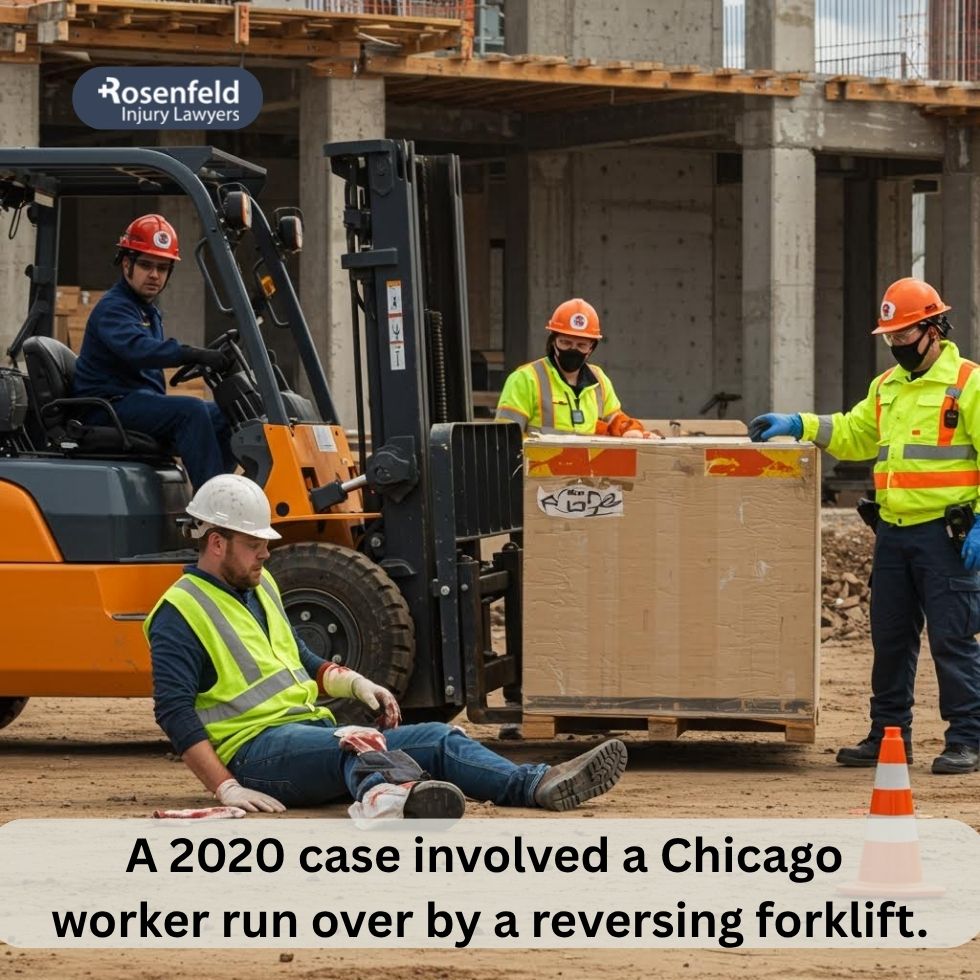
The latest federal data distinguish fatal forklift incidents from nonfatal injury estimates. BLS reports fatal injuries annually, while detailed DART injury estimates are now published for two-year periods.
| Figure | Value | Source | Year |
| Forklift-related deaths | 84 | BLS/NSC Injury Facts | 2024 |
| DART cases involving forklifts, order pickers, or platform trucks | 25,110 | BLS/NSC Injury Facts | 2023–2024 |
| DAFW cases included in DART total | 15,460 | BLS/NSC Injury Facts | 2023–2024 |
| Previous reported forklift-related deaths | 67 | BLS/NSC Injury Facts | 2023 |
| OSHA Powered Industrial Truck citations | More than 2,400 | OSHA | FY 2024 |
| OSHA penalties for the standard | More than $8 million | OSHA | FY 2024 |
The 2024 fatality figure includes forklifts, order pickers, and powered platform trucks, so it should not be presented as a count of conventional forklifts alone.
The latest available BLS-based data show 84 work-related deaths involving forklifts, order pickers, or powered platform trucks in 2024. The latest detailed nonfatal estimate covers 2023–2024 and includes 25,110 DART cases, including 15,460 cases involving days away from work.
Replace the existing sentence stating that around 75 to 100 workers are killed annually and that the average is 87 deaths. The older wording should not remain alongside the current data.
Also remove the existing OSHA.com citation and replace it with an official OSHA or BLS source. OSHA.com is not the official Occupational Safety and Health Administration website.
| Period | Forklift-related deaths | Nonfatal DART cases | Source |
| 2021–2022 | 143 total | 24,960 | BLS |
| 2023 | 67 | — | BLS/NSC |
| 2024 | 84 | — | BLS/NSC |
| 2023–2024 | — | 25,110 | BLS/NSC |
BLS changed its Occupational Injury and Illness Classification System beginning with 2023 data and also changed detailed nonfatal reporting from annual to biennial estimates beginning in 2021. Because of these methodological changes, the figures should not be treated as a perfectly comparable annual series.
OSHA also reported that its Powered Industrial Truck Standard ranked sixth among all cited standards and second in general industry in fiscal year 2024, with more than 2,400 citations and more than $8 million in penalties.
Illinois OSHA investigation records provide a separate view of serious forklift-related incidents investigated by OSHA offices across the state. These investigation records should not be treated as a complete count of all forklift accidents or injuries occurring in Illinois, because OSHA does not investigate every workplace incident.
| OSHA Area Office | Incidents investigated | Fatalities | Period |
| Chicago North | 6 | 1 | 2020–2024 |
| Chicago South | 26 | 6 | 2020–2024 |
| Fairview Heights | 4 | 0 | 2020–2024 |
| Naperville | 8 | 2 | 2020–2024 |
| Peoria | 17 | 3 | 2020–2024 |
These figures come from the existing page’s OSHA investigation review and should be retained only after the underlying OSHA search has been rechecked and documented. OSHA’s current Illinois office directory confirms the Chicago North, Chicago South, Fairview Heights, Naperville, and Peoria offices.
OSHA’s accident database also contains Illinois forklift-related investigations from 2024 and later, but individual investigations are not equivalent to a statewide accident count.
Forklift incidents can affect workers through lost workdays, job restrictions, transfers, and other consequences recorded in occupational injury data. The latest BLS-based data show 25,110 DART cases involving forklifts, order pickers, and powered platform trucks during 2023–2024, including 15,460 cases involving days away from work.
Keep the existing discussion of productivity below this paragraph, but remove the outdated 2023-only and 2021–2022 comparisons where they conflict with the current BLS classification and reporting periods.
| Cost or impact measure | Figure | Source | Year |
| DART cases | 25,110 | BLS/NSC Injury Facts | 2023–2024 |
| DAFW cases | 15,460 | BLS/NSC Injury Facts | 2023–2024 |
| OSHA Powered Industrial Truck citations | More than 2,400 | OSHA | FY 2024 |
| OSHA penalties for Powered Industrial Truck citations | More than $8 million | OSHA | FY 2024 |
Do not add an “average direct cost per incident,” indirect-cost multiplier, or average total cost unless a current authoritative source specifically calculates those figures for forklift incidents. The available OSHA/BLS sources reviewed do not provide a reliable national average cost per forklift incident.
Forklift injuries can range from strains and contusions to fractures, crush injuries, amputations, and traumatic injuries requiring substantial time away from work. BLS reports 25,110 DART cases involving forklifts, order pickers, and powered platform trucks during 2023–2024.
| Injury measure | Current data | Source/period |
| DART cases | 25,110 | BLS, 2023–2024 |
| DAFW cases | 15,460 | BLS, 2023–2024 |
The existing percentages for bruises, soreness, sprains, fractures, lacerations, multiple traumatic injuries, and amputations should be retained only if the underlying BLS table is identified and linked. Otherwise, remove those percentages rather than presenting them as current national figures.
Older OSHA research identified forklift overturns as the largest category in a historical review of fatal forklift incidents. OSHA’s 1998 Powered Industrial Truck rule cited BLS data showing that forklift overturns accounted for 24% of 170 fatal forklift accidents reviewed from 1991–1992. Because this is historical data, it should not be presented as a current accident rate.
| Accident type | Documented historical share | Data period/source |
| Forklift overturned | 24% of fatal accidents reviewed | BLS data cited by OSHA, 1991–1992 |
| Worker struck by material | 17% | BLS data cited by OSHA, 1991–1992 |
| Worker struck by forklift | 14% | BLS data cited by OSHA, 1991–1992 |
| Worker fell from forklift | 14% | BLS data cited by OSHA, 1991–1992 |
| Worker pinned between objects | 11% | BLS data cited by OSHA, 1991–1992 |
These historical percentages should not be presented as 2024 or 2026 national statistics. Current federal sources provide updated fatality counts but do not establish a comparable current percentage for each accident type.
Historical federal data identified overturns as the largest category among the fatal forklift incidents reviewed by OSHA. Current OSHA investigation records continue to document fatal tip-over incidents, but they do not establish a current national percentage.
For a detailed discussion of contributing hazards, see what causes forklift accidents.
Pedestrians can suffer fatal injuries when struck, run over, or pinned by a powered industrial truck. OSHA’s current accident database includes recent fatal investigations involving workers struck by forklifts, including warehouse and industrial settings.
Remove the existing “36% of forklift deaths” statement unless the client can provide the underlying dated source. The commonly repeated 36% figure is not a current BLS 2024 statistic.
OSHA investigation records continue to document fatal incidents involving falling loads and powered industrial vehicles. For example, an OSHA investigation involving a December 2024 fatality described a worker crushed by a falling powered industrial vehicle load.
Falls from powered industrial trucks remain documented in OSHA fatality investigations. OSHA recorded a December 2024 fatal incident involving a worker who fell from a powered industrial vehicle and was subsequently run over.
Combustion-powered forklifts can expose workers to carbon monoxide and other emissions in enclosed or poorly ventilated areas. OSHA investigation and citation records have documented carbon monoxide hazards associated with powered industrial truck operations.
Forklift accident data does not capture every workplace event. OSHA investigation records represent incidents that came to the agency’s attention, while BLS injury estimates cover reportable occupational injuries within the scope of its statistical programs. Near-misses and incidents that are not reported or do not meet reporting criteria may never appear in either dataset.
An OSHA citation can still be relevant to an injured worker’s case. An investigation may document the equipment involved, the circumstances of the incident, cited safety standards, witness information, or other facts that help establish what happened. Review OSHA records alongside medical records, employment records, photographs, witness statements, and other evidence, rather than treating them as proof of legal liability on their own.
In many workplace forklift injury cases, workers’ compensation may provide benefits for an eligible employee injury. Depending on who caused or contributed to the incident, a separate third-party claim may also be possible. Workers can learn more about filing a forklift accident lawsuit and how third-party claims differ from workers’ compensation.
Settlement information depends on several factors, including the nature and severity of the injury, medical treatment, lost income, applicable insurance, liability, and the type of claim. For a discussion of settlement-related issues, see forklift accident settlements.
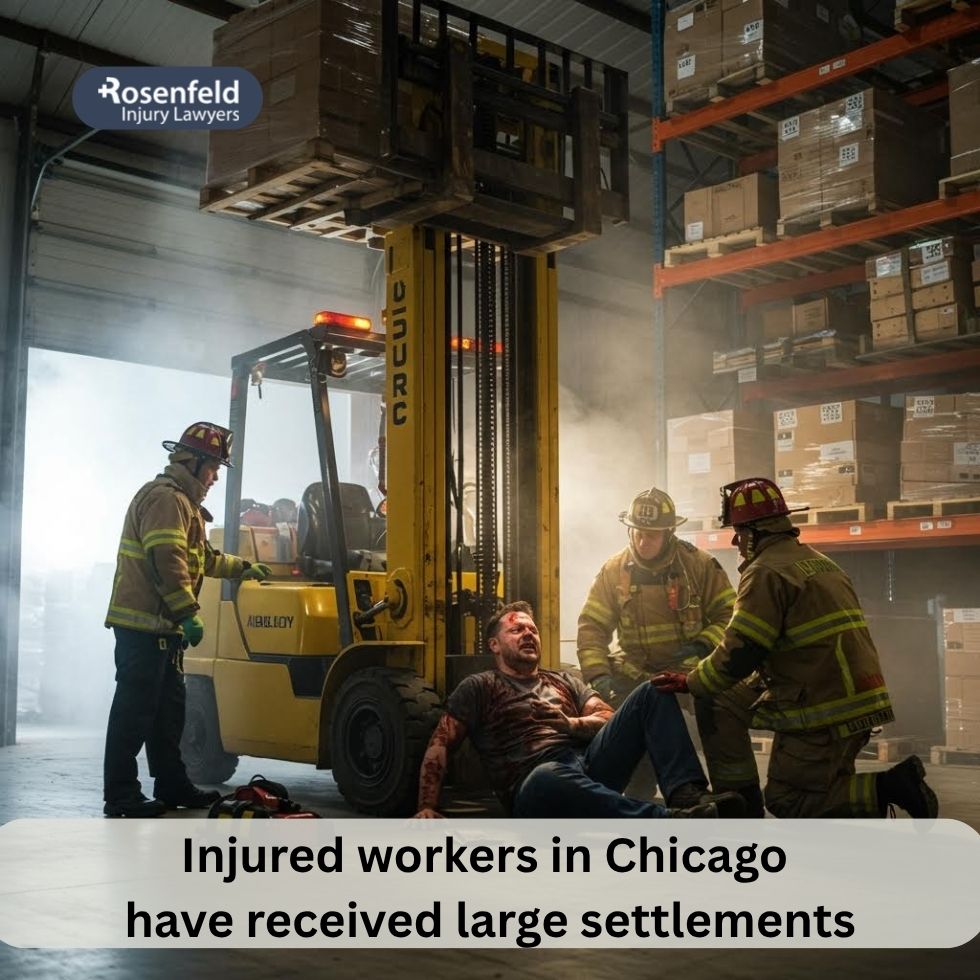
Forklift operators and employers must follow applicable workplace safety requirements when powered industrial trucks are used. OSHA forklift regulations under the Powered Industrial Truck Standard, 29 CFR 1910.178, remain a key part of federal workplace safety requirements. OSHA reported that the standard generated more than 2,400 citations and more than $8 million in penalties during fiscal year 2024.
Operators should exercise extreme caution, especially when navigating near rear wheels, around many cars, or in tight spaces where the risk of personnel falling is higher. Training, equipment inspections, and compliance with applicable safety requirements are important parts of reducing forklift-related hazards. For Illinois-specific operator-training requirements, see our forklift training information.
The existing references to “many cars,” “personnel falling,” and forklifts accounting for productivity gains should be removed because they are either unclear or not directly relevant to a statistics-focused page.
For Illinois-specific operator-training requirements, link to the existing operator-training page where appropriate.
There is no single current federal figure for all forklift accidents. BLS reports specific categories of occupational injuries rather than every incident involving a forklift. The latest detailed estimate covers 25,110 DART cases involving forklifts, order pickers, and powered platform trucks during 2023–2024.
BLS-based data show 84 work-related deaths involving forklifts, order pickers, or powered platform trucks in 2024. Fatality data are reported annually, unlike detailed nonfatal DART data, which are now reported over two-year periods.
Historical OSHA analysis identified forklift overturns as the largest category in its review of fatal forklift incidents. OSHA cited BLS data showing that overturns represented 24% of 170 fatal forklift accidents reviewed from 1991–1992. This historical figure should not be treated as a current national percentage.
A current BLS percentage for pedestrian involvement is not provided in the latest 2024 forklift fatality summary. The commonly cited 36% figure appears in older secondary sources and should not be presented as a current 2024 national statistic without a dated primary source.
The latest fatality data increased from 67 deaths in 2023 to 84 in 2024, but the figures should be interpreted with caution because BLS changed its occupational injury classification system beginning with 2023 data. Detailed nonfatal data also shifted to biennial reporting beginning in 2021.
This page uses data from the U.S. Bureau of Labor Statistics (BLS) Census of Fatal Occupational Injuries and Survey of Occupational Injuries and Illnesses, OSHA accident investigation records and enforcement data, and National Safety Council Injury Facts. The latest fatality data are from 2024, while the latest detailed BLS nonfatal forklift data cover 2023–2024.
Forklift-related fatality figures include the BLS/NSC category covering forklifts, order pickers, and powered platform trucks. DART refers to days away from work, job restriction, or transfer, while DAFW refers to days away from work. OSHA investigation figures represent investigations recorded in OSHA’s accident database and should not be interpreted as a complete count of all workplace forklift incidents.
BLS introduced an updated Occupational Injury and Illness Classification System beginning with 2023 data, creating a break in the historical series. Comparisons between earlier and newer data should therefore be made cautiously.
 Legally Reviewed By
Attorney Jonathan Rosenfeld
Content legally reviewed by Jonathan Rosenfeld The information on this page has been legally reviewed by Attorney Jonathan Rosenfeld, founder and managing partner of Rosenfeld Injury Lawyers LLC. With extensive experience representing injured workers across Illinois, Mr. Rosenfeld is dedicated to helping workplace accident victims pursue the maximum compensation available under the law. His extensive legal knowledge and commitment to client advocacy ensure that the information provided is accurate, reliable, and aligned with current legal standards.