
Experienced Attorneys
Committed to Protecting the
Rights of Injured Workers
Committed to Protecting the
Rights of Injured Workers



Jones Act coverage applies to any seaman who spends at least 30% of their working time aboard a vessel or fleet of vessels under common ownership, operating in navigable waters. If you were hurt while working aboard a boat, tugboat, barge, or commercial fishing vessel, understanding your Jones Act coverage is the first step toward pursuing one of the Jones Act claims that can recover lost wages, medical costs, and pain and suffering.
At IL Work Injury Lawyer, we help injured maritime workers across Chicago and Illinois understand who is covered under the Jones Act and how to protect their legal rights after a serious on-the-water injury.
Our Chicago Jones Act attorneys have years of experience representing crew members, deckhands, engineers, and other qualifying seamen, ensuring they receive the full compensation they deserve for medical treatment, lost income, and long-term care.
Whether your injury occurred on Lake Michigan, the Calumet River, or any other navigable waterway, we have the knowledge and resources to guide you through the claims process from start to finish.
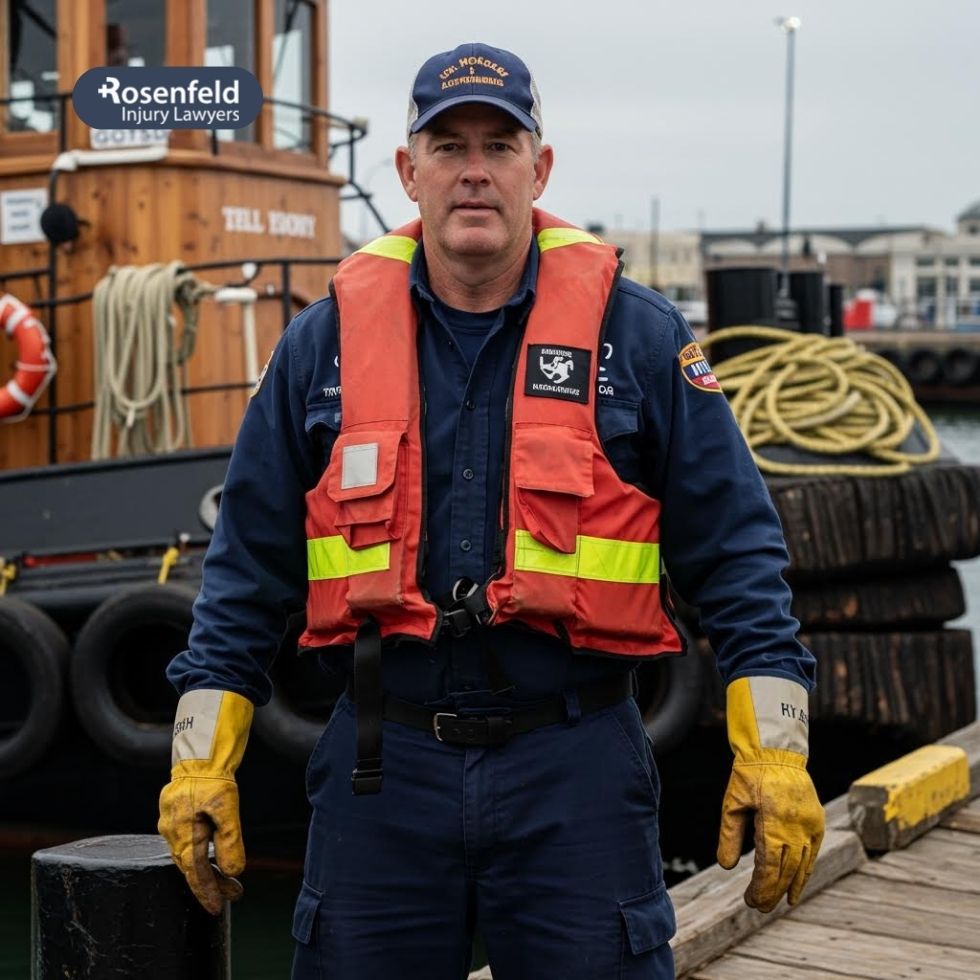
The Jones Act, 46 U.S.C. § 30104, is part of the Merchant Marine Act of 1920. This federal law protects qualifying seamen injured in the service of a vessel operating in navigable waters.
Unlike traditional workers’ compensation programs, which bar lawsuits against an employer, the Jones Act allows eligible workers to bring a negligence lawsuit, pursue a jury trial, and recover damages that include lost wages, medical expenses, future medical care, and pain and suffering.
Because both the Jones Act and Harbor Workers’ Compensation protect maritime workers in different ways, knowing where you fall is essential to maximizing your recovery.
To have Jones Act coverage, an injured worker generally has to meet four requirements:
Meeting all four generally means you qualify for Jones Act coverage and can pursue a claim directly against your employer or the vessel owner, rather than being limited to standard workers’ compensation.
Courts use a two-part test to decide whether someone qualifies as a jones act seaman. Both parts have to be true; meeting one without the other is not enough. This is sometimes called the Chandris test, after the Supreme Court case that established it.
Duration: the 30% rule. You generally need to spend at least 30% of your total working time in the service of a vessel or fleet of vessels. This is measured over the course of your employment, not just the day of the injury.
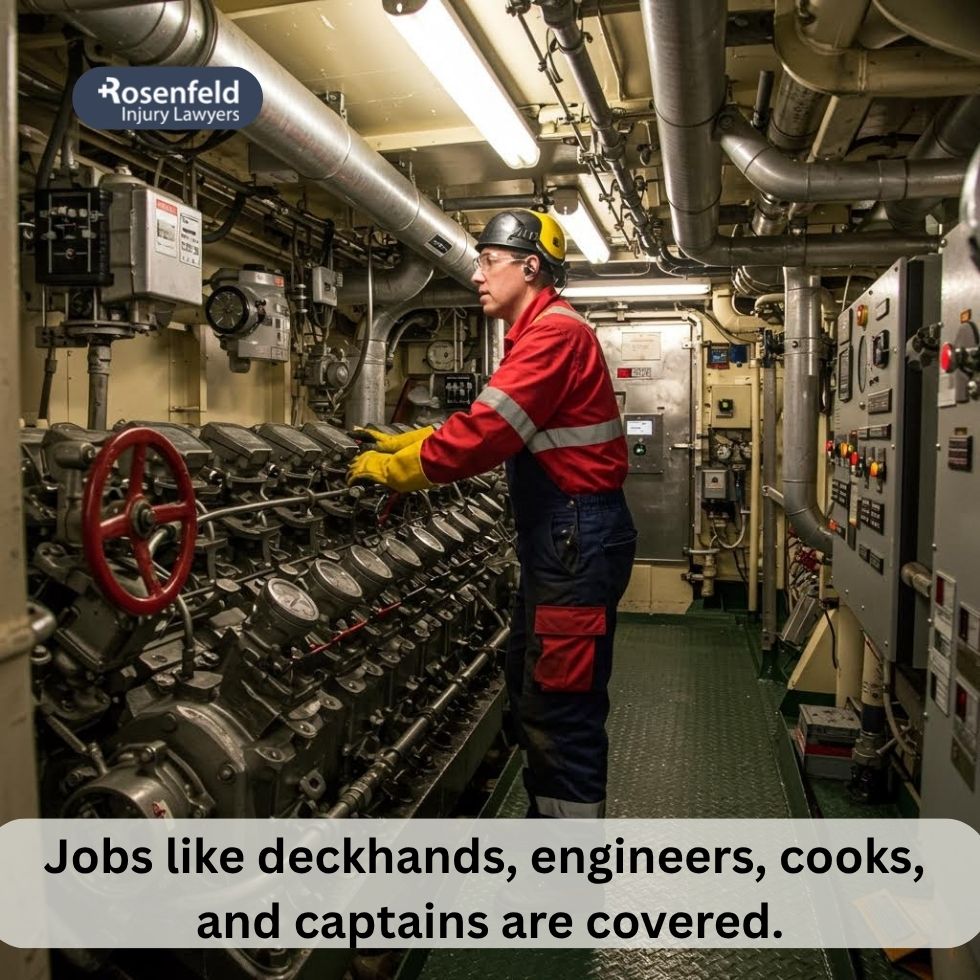
Nature of duties. Your work also has to contribute to the vessel’s function or to accomplishing its mission. Deckhands, engineers, cooks, and officers typically qualify, and even certain cruise ship personnel may qualify if the ship operates in covered waters.
A fleet of vessels under common ownership matters because many maritime workers move between several boats owned or controlled by the same company. If those vessels share ownership and you split your time among them in a similar role, your time can be combined to meet the 30% threshold, even if you never spent 30% of your time on any single boat.
If you meet these Jones Act qualifications, you are often considered a seaman under maritime law and gain protections that go beyond those offered by state-level workers’ compensation.
Most contractors do not qualify under the act, but courts will examine the actual nature of your employment. If you spend significant working time working aboard a vessel and meet the other Jones Act qualifications, you may still be protected.
Qualifying as a seaman does not mean every injury has to happen while you’re out on the water. Courts have long held that Jones Act coverage can extend to injuries that happen on the dock, in a shipyard, or during shore leave, as long as you were still acting in the service of your vessel at the time.
Common examples include:
The key question is not where the injury happened, but whether you were still performing duties connected to your role as a seaman. If you were between assignments and had returned home, or your connection to the vessel had otherwise ended, a Jones Act claim becomes harder to support, you may instead need to look at state workers’ compensation or the Longshore and Harbor Workers’ Compensation Act.
The Harbor Workers’ Compensation Act (commonly called the LHWCA), 33 U.S.C. § 901 et seq., is designed for maritime employees who don’t meet the Jones Act qualifications for example, longshoremen, shipbuilders, harbor construction crews, and others who work around vessels but not as part of the ship’s crew.
| Jones Act | Longshore & Harbor Workers’ Act | |
| Who qualifies | Seamen meeting the 30% rule and vessel-connection test | Longshoremen, harbor workers, shipbuilders not assigned to a vessel’s crew |
| Fault standard | Requires proof of employer negligence | No-fault — benefits owed regardless of fault |
| What it pays | Lost wages, medical costs, pain and suffering, and potentially punitive damages | Medical treatment, rehabilitation, and partial wage replacement only |
| Forum | Negligence lawsuit with the right to a jury trial | Handled administratively through the U.S. Department of Labor |
Jones Act claims give an injured seaman the ability to seek compensation in court directly from their employer or the vessel owner, including maintenance and cure, lost earnings, future care, and damages for emotional harm something the Harbor Act does not provide.
If you fail the 30% test, you may still have options. Workers who don’t meet Jones Act qualifications may still be able to bring workers’ compensation claims under the Longshore Act or Illinois state law, depending on where the injury happened and the nature of the work.
Common seamen’s injuries include broken bones from slips on deck, head trauma from falling equipment, back injuries from heavy lifting, and severe harm from machinery malfunctions. If you developed any of these medical conditions due to being injured on the job and you meet the seaman test, you may qualify for a Jones Act lawsuit.
In many cases, compensation includes the full amount of lost wages you would have earned had you not been injured, reimbursement for all related medical costs, and coverage for any future medical care you are expected to need. The Jones Act also allows recovery for non-economic damages, things like pain and suffering and mental anguish that recognize the personal toll of a maritime injury.
Some cases also include a claim for unseaworthiness which means the vessel itself, its equipment, or its crew was not reasonably fit for their intended use, separate from a straightforward negligence claim.
In situations where an employer or vessel owner willfully fails to meet their legal obligations, courts may also award punitive damages as both compensation and a deterrent against similar conduct in the future.
Actual Jones Act settlement amounts vary widely depending on the severity of the injury, lost earning capacity, and whether the employer’s negligence was clear-cut.
A jones act injury attorney can review the specifics of your case and give you a realistic sense of what your claim may be worth.
Under maritime law, maintenance and cure benefits are owed to an injured worker regardless of fault. “Maintenance” covers basic living expenses like housing and food, while “cure” pays medical bills and care until you reach maximum medical improvement.
If the insurance company or employer refuses to pay, you may be entitled to punitive damages. These benefits are separate from the broader damages available in a Jones Act claim.
Filing a Jones Act claim is different from a standard workers’ compensation case, and knowing the right steps can make a major difference in your recovery.
Start by promptly reporting your injury to your employer while the details are still fresh, including when and where it happened, the vessel you were on, and the conditions that contributed to the accident. Then seek immediate medical attention, even for injuries that seem minor, and make sure your doctor’s records note that the injury happened while you were working aboard a vessel in navigable waters.
For a full walkthrough of the process from gathering evidence to meeting the filing deadline, you should understand Jones Act claims.
Be mindful of the Jones Act statute of limitations. Under 46 U.S.C. § 30106, you typically have three years from the date of injury to file. Acting quickly preserves crucial evidence and gives your legal team time to prepare a strong case for the compensation you deserve.
You generally need seaman status, a connection to a specific vessel or fleet, at least 30% of your working time spent aboard that vessel, and a vessel that is “in navigation” on navigable waters.
It can, as long as your time aboard the vessel or fleet meets the 30% threshold when measured across your employment, not just a single trip or shift.
Often, yes. If you were still acting in the service of your vessel, loading cargo, crossing a gangway, or running a ship-related errand, an injury on a dock or in a shipyard can still fall under Jones Act coverage.
Most contractors don’t qualify, but courts look at the actual nature of your work. If you spend significant time aboard a vessel and meet the other qualifications, you may still be covered.
It depends on whether you meet seaman status. Seamen generally pursue Jones Act claims; other maritime workers typically fall under the Longshore Act or state workers’ compensation instead.
Yes. Under 46 U.S.C. § 30106, you generally have three years from the date of injury to file a Jones Act claim.
If you or a loved one was injured while working aboard a vessel in Illinois or on the Great Lakes, the Jones Act may give you the right to significant compensation beyond standard workers’ compensation benefits. In the most serious cases, including fatal maritime accident claims, surviving family members may have their own right to bring a claim.
At IL Work Injury Lawyer, we handle these cases on a contingency fee basis, meaning you pay nothing unless we win for you. Contact a Chicago work accident lawyer today for a free consultation and let our team fight for the justice and recovery you deserve.
 Legally Reviewed By
Attorney Jonathan Rosenfeld
Content legally reviewed by Jonathan Rosenfeld The information on this page has been legally reviewed by Attorney Jonathan Rosenfeld, founder and managing partner of Rosenfeld Injury Lawyers LLC. With extensive experience representing injured workers across Illinois, Mr. Rosenfeld is dedicated to helping workplace accident victims pursue the maximum compensation available under the law. His extensive legal knowledge and commitment to client advocacy ensure that the information provided is accurate, reliable, and aligned with current legal standards.