



6 Most Common Causes of Farm Accidents (and What They Mean for Your Legal Rights)


Agriculture remains one of the most physically demanding and dangerous industries in the country, and Illinois farms are no exception. Heavy machinery, grain storage hazards, and long hours in extreme weather combine to make certain injuries far more common than others. Understanding the most common causes of farm accidents is the first step toward recognizing when an injury could have been prevented, and what legal options might be available afterward.
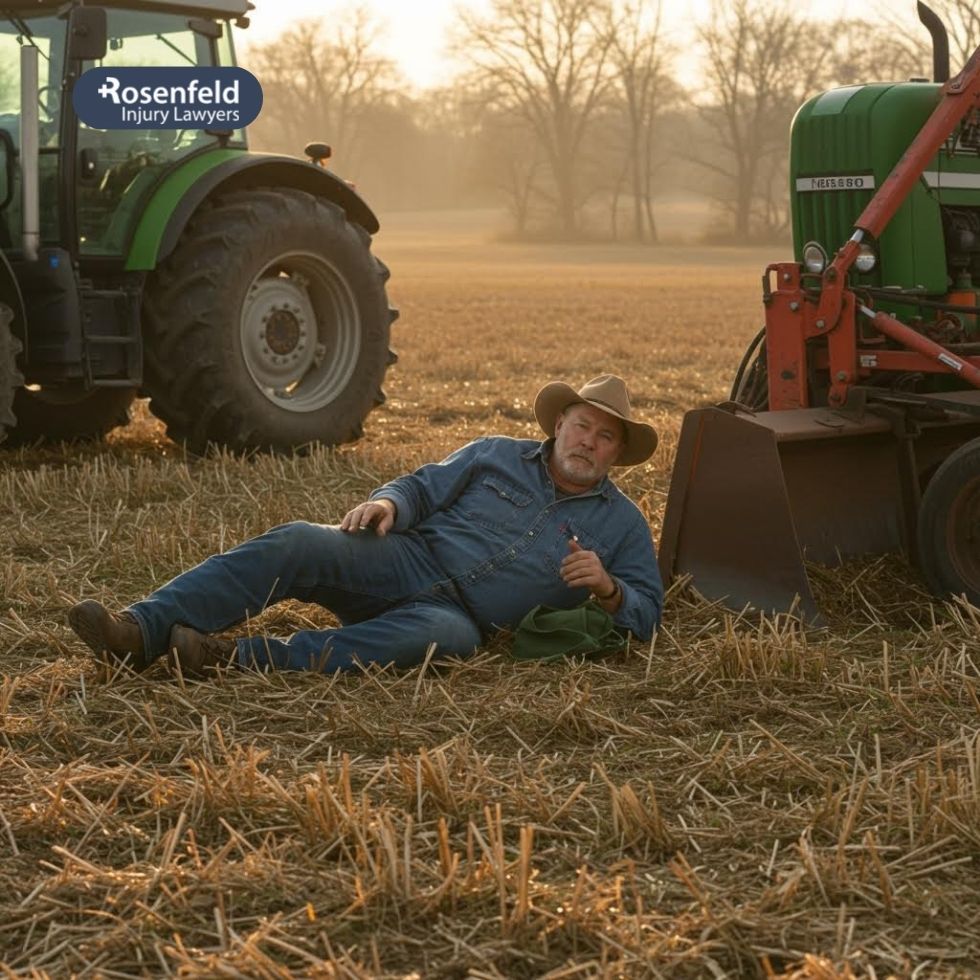
Tractor Rollovers and Run-Overs: The Leading Cause of Farm Fatalities
Tractor rollovers remain the single leading cause of death on American farms, accounting for a significant share of all fatal farm accidents. Rollovers typically happen on uneven or sloped ground, when a tractor is overloaded, or when an implement is attached above the drawbar in a way that changes the machine’s center of gravity. A close second is workers being run over after falling off a moving tractor, often because the machine lacked an operator presence system to stop it automatically.
Rollover protective structures, combined with seatbelt use, dramatically reduce the risk of death in these accidents. Yet, a large share of tractors on American farms still operate without this protection installed or properly used.
Grain Bin Engulfment and Suffocation
Few farm hazards are as sudden or as deadly as grain bin engulfment. Moving grain behaves like quicksand, and a worker who becomes trapped can be pulled under in seconds, unable to free themselves once grain reaches their knees. Roughly three dozen workers become trapped in grain bins each year, and more than half of those incidents prove fatal. A dangerous phenomenon called bridging, where grain hardens on the surface while leaving space below, can also cause a worker to fall through into a life-threatening pocket suddenly.
Machinery Entanglement
Augers, combines, hay balers, and power take-off shafts all pose serious entanglement risks. PTO shafts in particular spin at extremely high speeds, capable of catching loose clothing or a limb almost instantly, often before a worker has any chance to react. Missing or damaged safety guards are behind the majority of these entanglement injuries, and the resulting harm frequently includes amputation or other permanent disability.
Falls From Height
Farm work regularly requires climbing onto equipment, silos, barn roofs, and grain bins, often several feet or more off the ground. A fall from even a modest height can result in serious head, neck, or spinal injuries, particularly when landing on hard or uneven surfaces. Falls are especially common during maintenance work, roof repairs, and loading operations where fall protection isn’t consistently used.
Animal-Related Injuries
Working around livestock carries its own set of risks. Animals can kick, trample, or charge unexpectedly, especially when startled or handled improperly. These incidents frequently result in fractures, crush injuries, and blunt force trauma, and they remain one of the more unpredictable categories among the most common causes of farm accidents.
Chemical Exposure and Heat Stress
Pesticide and fertilizer exposure during mixing or application can cause both acute poisoning and long-term health issues, particularly when protective equipment is inadequate or hoses and sprayers malfunction. Heat stress is another significant risk, especially for workers laboring outdoors for long hours during summer months, and it can escalate quickly from dehydration to heat stroke without proper hydration breaks and monitoring.
Why Farm Accident Claims Work Differently in Illinois
One of the most important things injured farm workers in Illinois need to understand is that agricultural employment isn’t always covered by standard workers’ compensation the way most other jobs are. Illinois law exempts agricultural employers from mandatory workers’ comp coverage if their operation totals fewer than 400 working days of labor per quarter in the prior calendar year. This exemption disproportionately affects seasonal, part-time, and migrant farm workers.
If workers’ comp doesn’t apply to your situation, that doesn’t mean you’re without options. You may be able to pursue a third-party personal injury claim instead, which requires showing that another party, such as an equipment manufacturer, a negligent coworker, or the farm owner, was responsible for the accident. Illinois follows a modified comparative negligence rule, meaning you can still recover damages as long as you weren’t more than 50% at fault for the accident. In some cases involving multiple responsible parties, Illinois law also allows you to pursue claims against more than one party at the same time.
What to Do After a Farm Accident
If you’re injured on a farm, a few steps can protect both your health and your legal options. Seek medical attention immediately, report the accident to whoever oversees the operation, and document the scene, equipment, and any visible injuries with photos if you’re able. Because coverage rules for farm workers can be complicated, it’s worth having your specific situation reviewed to determine whether workers’ comp, a third-party claim, or both apply to your case.
Frequently Asked Questions
Does workers’ comp cover me if I work on a small family farm?
It depends on the farm’s total labor hours. Farms under the 400 working-days-per-quarter threshold aren’t required to carry workers’ comp coverage.
What if I was partly responsible for my own farm accident?
Under Illinois law, you can still recover damages in a third-party claim as long as you weren’t more than 50% at fault.
Can I sue the manufacturer of defective farm equipment?
Yes, if a design or manufacturing defect contributed to your injury, a product liability claim may be available separate from any workplace claim.
Are migrant or seasonal farm workers protected under Illinois law?
They’re subject to the same coverage rules as other agricultural workers, which means many fall outside mandatory workers’ comp coverage.
What if more than one party contributed to my farm accident?
Illinois allows claims against multiple responsible parties, with fault apportioned among them under state law.
Protecting Yourself After a Farm Injury
The most common causes of farm accidents- tractor rollovers, grain bin engulfment, machinery entanglement, falls, animal injuries, and chemical or heat exposure- share a common thread: many of them are preventable with proper safety measures and equipment maintenance. When prevention fails, understanding your legal options is essential, especially given how differently agricultural injuries are treated under Illinois law.
If you or a loved one has been hurt in a farm accident, we’re ready to help you sort out whether workers’ comp, a third-party claim, or both apply to your situation. Reach out for a free consultation to discuss what happened.
 Legally Reviewed By
Attorney Jonathan Rosenfeld
Content legally reviewed by Jonathan Rosenfeld The information on this page has been legally reviewed by Attorney Jonathan Rosenfeld, founder and managing partner of Rosenfeld Injury Lawyers LLC. With extensive experience representing injured workers across Illinois, Mr. Rosenfeld is dedicated to helping workplace accident victims pursue the maximum compensation available under the law. His extensive legal knowledge and commitment to client advocacy ensure that the information provided is accurate, reliable, and aligned with current legal standards.