



Grain Bin Entrapment in Illinois: How Fast It Happens and What Families Can Recover


A worker climbs into a grain bin to break up a clog. Thirty seconds later, the grain has swallowed him to the waist. By the time help arrives, it is often too late. This is the grim reality behind grain bin entrapment deaths in Illinois, where agricultural confined-space incidents remain a serious safety concern. Families left behind are often shocked by how quickly an entrapment can happen and how much confusion follows about who may be responsible.
At Illinois Work Injury Lawyer, we have watched flowing grain act less like a solid and more like quicksand. Understanding the mechanics of an entrapment and the legal options available afterward can make a real difference for grieving families trying to hold someone accountable. Contact us for a free consultation if your family has been affected.
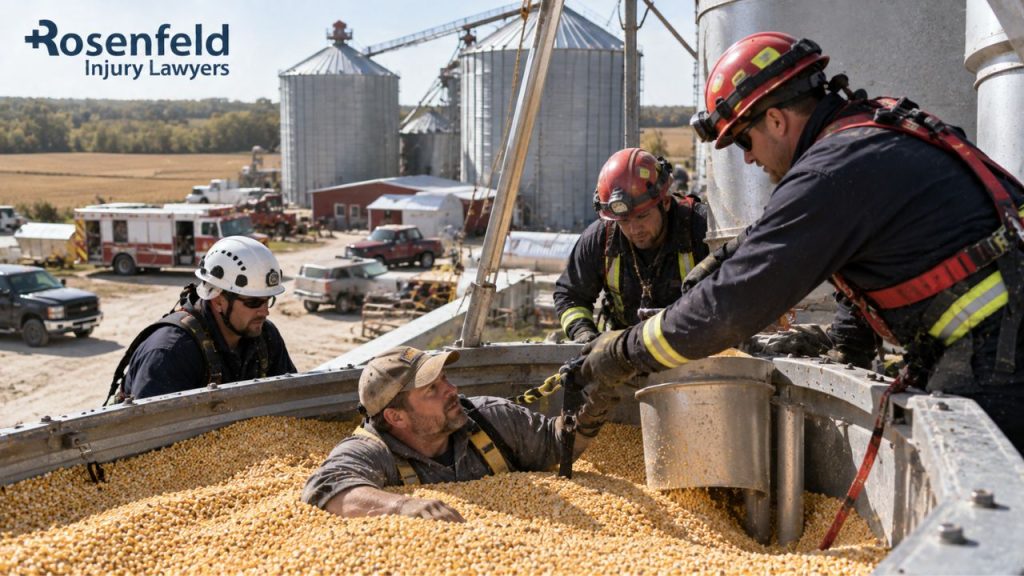
The Physics Behind Grain Bin Entrapment
Grain does not behave like sand on a beach. When an auger pulls corn or soybeans from the bottom of a bin, the surface grain funnels downward, creating a cone that can pull a worker under with it. Within seconds, a person may sink to their knees, where the pressure of surrounding grain can make escape extremely difficult. As grain rises, it compresses around the body and can restrict chest movement, making breathing difficult before full submersion occurs. A trapped leg may require hundreds of pounds of force to free. Complete submersion can happen within seconds, leaving little time for rescue without specialized equipment.
Why Illinois Grain Bin Entrapment Deaths Keep Happening
Illinois is a major corn-producing state, and grain storage structures are common across its rural communities. Agricultural confined-space incidents have been documented for decades, with Illinois among the states reporting numerous cases. Several hazards repeatedly contribute to grain bin deaths:
- Out-of-condition grain: Wet, moldy, or crusted grain can create hidden air pockets that collapse beneath a worker.
- Running augers: Entering while an auger operates can quickly pull a worker under the grain.
- Missing safety equipment: Without appropriate harnesses, lifelines, or other protective equipment, escape and rescue become more difficult.
- No outside observer: Entering without someone monitoring from outside can delay equipment shutdown and emergency response.
These hazards can turn routine grain handling into a potentially fatal situation within seconds.
Illinois Grain Bin Entrapment Deaths and the Data Behind Them
The numbers tell a sobering story. Agricultural confined-space incidents, including grain entrapments, have been documented across Illinois and other farming states. Many of these cases involve workers who may not have received adequate training or safety precautions before entering a bin.
Grain bin entrapment deaths in Illinois can become especially concerning during harvest season, when bins are full and workers may face pressure to keep grain moving quickly. That urgency can make shortcuts around safety procedures especially dangerous.
Who Can Be Held Responsible
Understanding liability is often the first step toward preventing future grain bin entrapment deaths in Illinois. Responsibility depends heavily on the specific facts of the case. Several parties may share responsibility, including:
- The farm or grain elevator operator, if it did not provide proper lockout procedures, harnesses, or training.
- Equipment manufacturers, if a bin was designed without adequate rescue tubes, ladders, or safety features.
- Third-party contractors, such as bin cleaning or maintenance crews, if their negligence contributed to the accident.
Our firm investigates every angle of a grain silo accident to identify every party who may bear responsibility, since a farm’s insurance alone may not cover the full extent of a family’s losses.
What Families Can Recover After a Grain Bin Entrapment Death
Families dealing with a grain bin entrapment death in Illinois may have several potential avenues for compensation, depending on the worker’s employment status and the cause of the accident.
Workers’ Compensation Death Benefits
Covered employees may qualify for workers’ compensation death benefits, including wage-based benefits and burial or funeral expenses.
Wrongful Death Claims
If a third party’s negligence contributed to the death, surviving family members may pursue a wrongful death claim for losses such as lost income and companionship.
Product Liability and Third-Party Lawsuits
Defective equipment or negligent contractors may support a separate farm accident lawsuit, including claims involving a grain auger.
The potential recovery depends on the facts, evidence, and parties involved. Families can also review our farm accident settlements.
Steps to Take After a Grain Bin Accident
- Preserve any harness, lockout tags, or safety equipment involved in the incident.
- Request incident reports from OSHA or local emergency responders.
- Identify any witnesses who were present at the time.
- Avoid speaking with insurance adjusters before consulting an attorney.
- Reach out to an experienced farm accident lawyer as soon as possible.
Frequently Asked Questions
A person can sink to their knees within seconds and become fully submerged in as little as 20 to 60 seconds once grain begins flowing.
Yes, depending on the circumstances, families may pursue workers’ compensation death benefits, a wrongful death claim, or both.
Responsibility can fall on the farm, equipment manufacturers, or third-party contractors, depending on what caused the accident.
In many cases, yes. Covered agricultural employees may be eligible for death benefits through Illinois workers’ compensation.
Deadlines vary by claim type, so consult an attorney quickly to protect your family’s legal rights.
Talk to an Illinois Farm Accident Attorney Today!
Grain bin entrapment deaths in Illinois are preventable, and no family should have to face the aftermath of a grain bin tragedy alone. Our team at IL Work Injury Lawyer understands the technical and legal complexities behind these cases, and we are ready to help you pursue the accountability your family deserves. Contact us today for a free, no-obligation consultation.