



What to Do After a Construction Accident at Work in Illinois


What to do after a construction accident at work comes down to five moves: get medical care, report the injury, document the scene, avoid insurer statements, and call a lawyer. Illinois law gives you 45 days to notify your employer, but sooner is safer. Acting fast protects both your health and your workers’ compensation claim.
What Should You Do Right After the Accident?
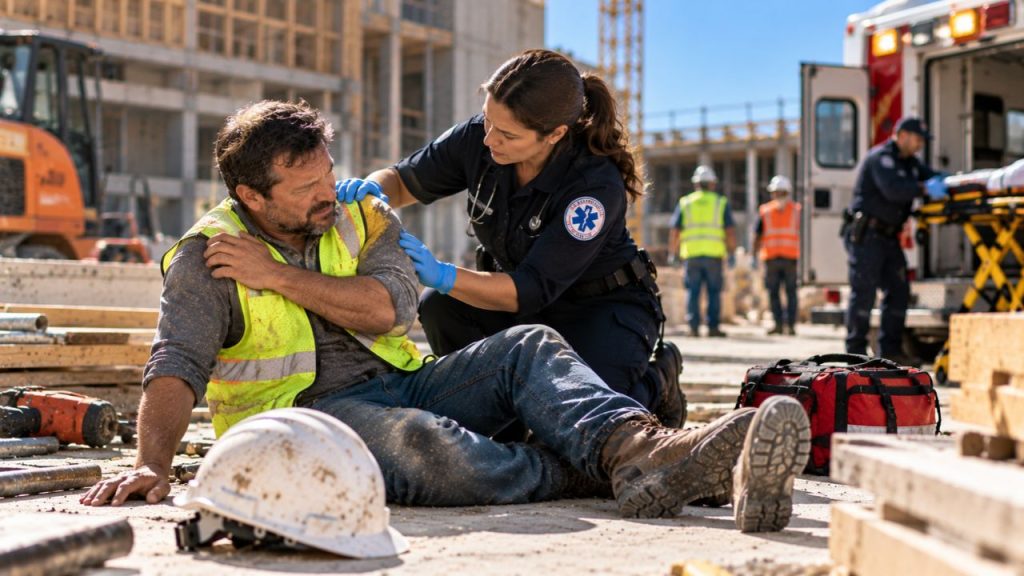
Move to a safe spot and call 911 if anyone is seriously hurt. Get medical care, even if you feel fine. A medical record ties your injury to the job.
Adrenaline can hide pain for hours. Head, neck, and back injuries can show up days later. Tell the doctor the injury happened at work, so the bill goes to workers’ compensation instead of your health insurance.
Read about workers’ compensation medical care before you pick a provider.
How Soon Must You Report a Construction Injury?
Illinois law requires you to notify your employer as soon as practicable, and no later than 45 days after the accident. Report it the same day when you can.
The rule sits in section 6 of the Illinois Workers’ Compensation Act, 820 ILCS 305/6. Oral notice counts, but a written note gives you proof. Include the date, time, place, and what happened. Tell your own employer first, then the site supervisor or foreman. Our guide to workers’ compensation for construction workers in Illinois explains how a claim works on a job site.
Employers have reporting duties too. Federal OSHA rules require covered employers to report a work-related death within 8 hours. A hospital admission, amputation, or loss of an eye must be reported within 24 hours. The OSHA construction safety regulations set the standards for job sites.
What Evidence Should You Gather at the Scene?
Take photos and video of the hazard, your injury, and the equipment involved. Get names and phone numbers for witnesses. Ask for a copy of the incident report.
- Photograph missing guardrails, uncovered holes, unsecured ladders, and loose debris. OSHA requires fall protection at heights of six feet or more in construction, so a missing guardrail matters.
- Keep damaged gear, such as a torn harness or a cracked ladder rung, if you can.
- List coworkers and subcontractors who saw what happened.
- Save medical bills, mileage records, and pay stubs.
Stay off social media. Insurance companies review posts, and one active-looking photo can be used to question your injury.
Who Pays After a Construction Accident?
Your employer’s workers’ compensation insurance usually pays medical bills and part of your lost wages, no matter who caused the accident. If another company caused the injury, you may also have a third-party claim.
Illinois workers’ compensation is a no-fault system. The workers’ compensation benefits include medical care, disability payments, and vocational rehabilitation. They do not pay for pain and suffering. A third-party claim can.
Possible targets include general contractors, subcontractors, property owners, and equipment makers. For example, a scaffolding company that left a platform unsecured could be liable for your fall. You generally cannot sue your own employer on top of a workers’ compensation claim. Learn how the construction accident lawsuit process in Illinois works.
What Mistakes Can Hurt Your Claim?
Waiting to report, skipping treatment, and talking to insurers alone cause the most trouble. Each one gives the other side a reason to dispute your claim.
Most mistakes happen in the first days, when people are unsure what to do after a construction accident at work.
- Missing the 45-day notice window.
- Stopping treatment early or ignoring your doctor’s plan.
- Giving a recorded statement to an insurance adjuster.
- Signing a medical release without reading it.
How Long Do You Have to File a Claim?
You generally have three years from the accident to file with the Illinois Workers’ Compensation Commission, or two years after your last benefit payment, whichever is later. The 45-day notice is a separate, earlier deadline.
Knowing what to do after a construction accident at work also means knowing these dates. Missing them can end your right to benefits, even for a real injury. See the workers’ compensation statute of limitations for details.
A third-party injury lawsuit generally has a two-year limit under 735 ILCS 5/13-202. A wrongful death claim also has a two-year limit from the date of death. Families facing a loss can read about fatal construction accident claims in Illinois.
When Should You Call a Lawyer?
Call a construction accident lawyer once you are medically stable, and before you sign anything or speak with an insurer. Early help protects evidence and deadlines.
Job sites involve many companies. Employers, general contractors, and insurers may all point fingers at each other, or at you. A construction accident lawyer can preserve site evidence, follow your claim with the Commission, and identify every liable party.
Construction Accident FAQs
Yes. Report every injury, even minor ones. Symptoms can worsen later, and a missing report gives the insurer a reason to deny your claim.
Generally yes. Illinois lets injured workers pick their own doctor, though some employer programs set limits. Ask about those limits before you switch.
You can still receive workers’ compensation, because the system does not depend on fault. A third-party lawsuit award shrinks by your share of fault.
No. Illinois law prohibits retaliation against workers who file a claim. If you face discipline or termination, speak with a lawyer quickly.
Usually not through workers’ compensation, because independent contractors are generally excluded. They may still sue a negligent third party and a misclassified worker may qualify as an employee.
Get Help With Your Construction Injury Claim
Hurt on a job site? Contact Illinois Work Injury Lawyer to request a free consultation. We handle workers’ compensation and third-party construction injury claims from our Chicago office, and you owe no fee unless we recover compensation. If you are unsure what to do after a construction accident at work, reach out today and we will walk you through your options.
 Legally Reviewed By
Attorney Jonathan Rosenfeld
Content legally reviewed by Jonathan Rosenfeld The information on this page has been legally reviewed by Attorney Jonathan Rosenfeld, founder and managing partner of Rosenfeld Injury Lawyers LLC. With extensive experience representing injured workers across Illinois, Mr. Rosenfeld is dedicated to helping workplace accident victims pursue the maximum compensation available under the law. His extensive legal knowledge and commitment to client advocacy ensure that the information provided is accurate, reliable, and aligned with current legal standards.