



What Is the Jones Act? A Plain-English Guide for Illinois River and Great Lakes Workers


What is the Jones Act? It is a federal law, part of the Merchant Marine Act of 1920, that lets injured seamen sue their employer for negligence. It covers crew members working on vessels in navigable waters, including the Great Lakes and the Illinois River. Claims go to a jury and have a three-year deadline.
Below, we explain who qualifies, what you can recover, and which deadlines matter most.
Who Counts as a Seaman?
A seaman is a worker who helps a vessel do its job and spends a real share of work time aboard it. Courts often use about 30 percent of your time on a vessel as a rough benchmark.
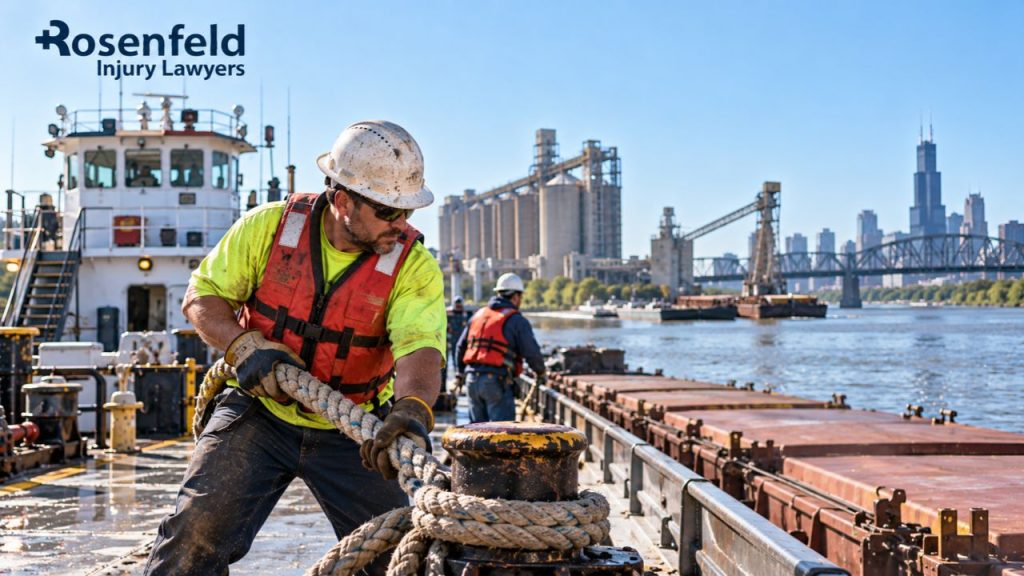
Many workers ask, “What is the Jones Act, and does it cover my job?” Your job title matters less than where you actually work. A deckhand on a towboat pushing barges up the Illinois River usually qualifies. So can crew on cargo ships crossing Lake Michigan. A worker who rarely leaves the dock often does not.
The vessel must also move on navigable waters. In Illinois, that includes the Chicago River, the Illinois River, and Lake Michigan. Our guide on who qualifies as a seaman walks through the test in more detail.
Which Illinois Waterways Are Covered?
Any navigable waterway used for commerce can support a claim. In Illinois, that includes Lake Michigan, the Chicago River, the Illinois River, and the Mississippi River.
Tugboat crews, dredge crews, and cargo ship deckhands all work these routes. Locks and dams add risk, because equipment failures and collisions can hurt a crew in seconds. Smaller rivers still count if vessels use them to move goods.
How Is It Different From Workers’ Compensation?
Illinois workers’ compensation pays benefits no matter who caused the accident. The Jones Act is a negligence claim, so you must show your employer or a co-worker was at fault.
Seamen generally fall outside the state system. Warehouse, factory, and other land-based workers usually rely on Illinois workers’ compensation instead. Railroad workers have a third path, which we cover on our page on railroad worker claims under FELA. Congress modeled the Jones Act on that law.
The tradeoff is simple. A Jones Act case asks more of you on fault. In return, courts apply a relaxed causation standard, and you can ask a jury for damages that go beyond lost wages.
What Can an Injured Seaman Recover?
A seaman can seek compensation for lost wages, lost earning capacity, medical costs, pain and suffering, and emotional distress. Jones Act claims may involve three separate remedies: negligence, unseaworthiness, and maintenance and cure.
Value depends on injury severity, lost income, and fault, which is why Jones Act settlements vary so widely. Common harm includes herniated discs, fractures, burns, and crush injuries. See the list of injuries covered by the Jones Act.
What Is Maintenance and Cure?
Maintenance and cure pays for daily living costs and medical care while you recover. Your employer owes it no matter who was at fault.
It usually stops once you reach maximum medical improvement. Some employers cut it off early, so keep every receipt for rent, food, and treatment.
What Is Unseaworthiness?
Unseaworthiness is a claim against the vessel owner when the ship or its gear is unsafe. Think of a cracked gangway, a frayed winch line, or a deck with no fall protection.
This claim is usually filed in the same case as the negligence claim. A deckhand hurt in one of the many barge accidents on Illinois waterways may have all three remedies.
How Long Do You Have to File?
You generally have three years from the injury date to file a Jones Act lawsuit. Federal law sets that deadline in 46 U.S.C. § 30106.
The Supreme Court has also held that a state court cannot shorten it. Even so, do not wait. Crews rotate, logs get lost, and vessels move on. Our page on the Jones Act statute of limitations explains how the clock works. Families facing a death at work should also read about wrongful death claims after fatal maritime accidents.
What Should You Do After a Maritime Injury?
Report the injury, get medical care, and document everything. Those steps protect your health and your claim. Acting early makes it easier to find witnesses and vessel records before crews scatter.
- Tell your captain or employer right away, and ask for a copy of the incident report.
- Get treated and follow your doctor’s plan.
- Photograph the spot, the equipment, and the weather. Write down crew names.
- Save every bill and every living expense receipt.
- Do not give recorded statements to an insurer without a lawyer.
Jones Act FAQs
It is a federal law that lets injured seamen sue their employer for negligence. A jury in state or federal court can hear the case.
Yes, if you crew a vessel on navigable waters like Lake Michigan and meet the seaman test. Land-based dock work often does not qualify.
Often yes. Deckhands who spend much of their time on a barge or towboat usually meet the seaman test, though each case turns on its facts.
Maintenance and cure pays for medical care and living costs during recovery, regardless of fault. A negligence claim can add compensation for future medical needs.
Yes, if you are a seaman and your employer’s negligence helped cause your injury. You must prove that negligence and file within three years.
Ready to Talk Through Your Options?
If a vessel injury has put your health and paycheck at risk, speak with a Jones Act attorney at IL Work Injury Lawyer. We work on a contingency fee basis, so you owe nothing unless we recover compensation.
Contact us today to request a free consultation, and we will review what happened and how much time you have left. If you are still asking, “What is the Jones Act and does it cover my injury?” we can help you find out.
 Legally Reviewed By
Attorney Jonathan Rosenfeld
Content legally reviewed by Jonathan Rosenfeld The information on this page has been legally reviewed by Attorney Jonathan Rosenfeld, founder and managing partner of Rosenfeld Injury Lawyers LLC. With extensive experience representing injured workers across Illinois, Mr. Rosenfeld is dedicated to helping workplace accident victims pursue the maximum compensation available under the law. His extensive legal knowledge and commitment to client advocacy ensure that the information provided is accurate, reliable, and aligned with current legal standards.