



What Is the Average Construction Accident Settlement in Illinois?


The average construction accident settlement in Illinois depends heavily on the injury and who is at fault, but data from Chicago-area jury verdicts shows serious cases often settle well above $1 million. Settlement value depends on medical costs, lost income, and how clearly you can prove negligence.
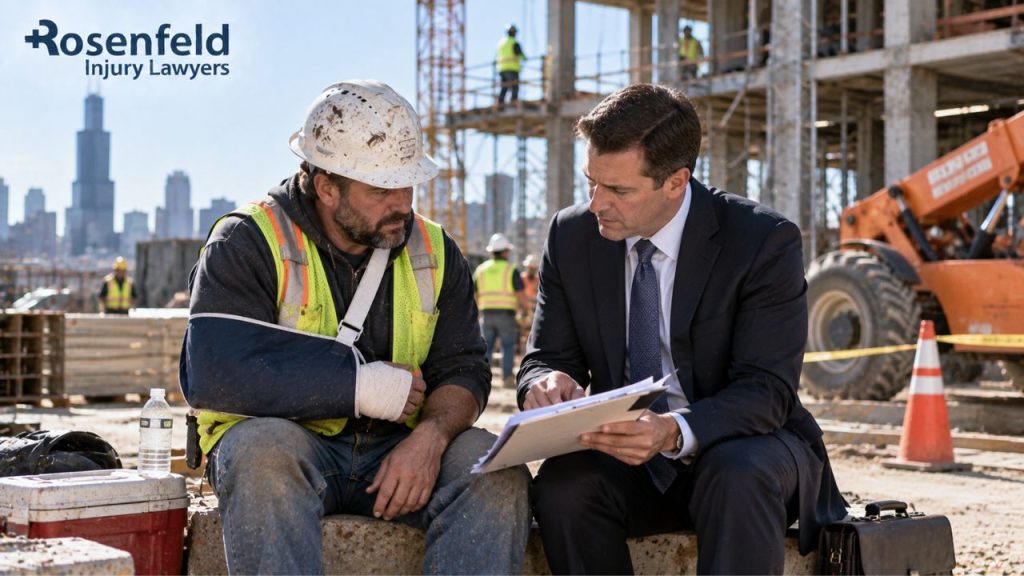
Illinois Construction Accident Settlement Amounts
No single number applies to every case. According to Law.com’s Verdict Search, construction accident settlements in the Chicago area have averaged over $2.5 million, with a median closer to $1.35 million.
Those figures cover a wide range of outcomes. Workers’ compensation benefits are generally more limited because they do not include damages such as pain and suffering, while a successful third-party claim may provide additional compensation for those losses. Catastrophic construction injuries can result in substantially higher damages when they involve permanent disability, extensive medical treatment, or significant future income loss.
What Factors Affect a Construction Accident Settlement Amount?
Settlement value comes down to a handful of specific factors, not a formula. The most significant include:
- Severity of the injury: Traumatic brain injuries, spinal cord damage, and amputations tend to produce higher settlements because of lifetime care costs.
- Lost earning capacity: A worker who can no longer return to their trade will generally recover more than someone who heals fully.
- Strength of the liability evidence: Photos, witness statements, and OSHA citations all strengthen a claim.
- Insurance policy limits: Available insurance coverage can significantly affect how much compensation a defendant can realistically pay.
- Evidence and venue: The strength of the evidence, applicable law, and the circumstances of the case can all influence settlement negotiations and potential trial outcomes.
How Does Liability Affect Settlement Value in Illinois?
Liability in Illinois construction cases usually runs through two separate paths. Workers’ compensation is a no-fault system, so an injured worker does not need to prove anyone was careless to receive benefits.
A third-party claim may arise under Illinois construction negligence law when a contractor or property owner retained sufficient control over the work to owe a duty of reasonable care. When a third-party claim is available, an injured worker may pursue it alongside workers’ compensation benefits, potentially recovering for losses not covered by workers’ compensation.
What Types of Construction Accidents Lead to the Highest Settlements?
Falls from height are consistently among the most costly claims in Illinois. Injuries from roof falls and unsecured scaffolding often involve permanent disability, which raises both medical and wage-loss damages.
Struck-by incidents, such as falling tools or crane loads, and electrocutions also tend to settle high, since these accidents frequently cause traumatic brain injuries or death. Cases that result in a fatal construction accident generally carry the highest settlement values because they include funeral costs, loss of future income, and the loss of companionship for surviving family.
What Compensation Can Injured Construction Workers Recover?
Workers’ compensation covers medical treatment and provides wage-replacement and disability benefits subject to Illinois law and applicable benefit limits. It does not include pain and suffering.
A third-party personal injury claim can add compensation for pain and suffering, loss of normal life, and the full value of lost future earnings. Reviewing Illinois workers’ compensation benefits alongside a possible third-party claim is the only way to determine a case’s full value.
How Long Do I Have to Settle a Construction Accident Claim in Illinois?
Illinois law sets firm deadlines. You must generally file a personal injury lawsuit within two years of the accident, while you must file a workers’ compensation claim within three years of the injury or two years after the last benefit payment, whichever is later. Missing these windows can end the construction accident lawsuit process before it starts, regardless of how strong the case is.
Do I Need a Lawyer to Get a Fair Settlement?
Insurers are not motivated to offer full value on their own. An attorney who understands OSHA regulations, Illinois liability law, and local jury trends can identify every responsible party and negotiate from a position of strength rather than accepting the first number offered.
If you were hurt on an Illinois job site, understanding the average construction accident settlement in Illinois is only the starting point. Contact IL Work Injury Lawyer today for a free consultation to find out what your specific case may be worth. Our team can review the circumstances of your accident, explain your legal options, and help you understand which sources of compensation may be available. You do not have to navigate the claims process alone.
Frequently Asked Questions
A fair settlement covers all medical expenses, lost income, and, in third-party cases, pain and suffering. The right number depends on injury severity and how clearly you can prove liability, so no fixed average applies to every case.
No. Illinois workers’ compensation only covers medical bills, a portion of lost wages, and disability benefits. Pain and suffering is only recoverable through a third-party personal injury lawsuit against a negligent party other than your employer.
Settlements are calculated by adding up medical costs, lost wages, and future earning loss, then factoring in pain and suffering if a third-party claim applies. Liability strength and available insurance coverage also directly affect the final number.
Yes, if someone other than your employer contributed to the accident. You can pursue a third-party claim against a negligent contractor, property owner, or equipment manufacturer while still receiving your workers’ compensation benefits.
Personal injury claims generally have a two-year deadline. Workers’ compensation claims generally have three years, or two years after the last compensation payment, whichever is later.
 Legally Reviewed By
Attorney Jonathan Rosenfeld
Content legally reviewed by Jonathan Rosenfeld The information on this page has been legally reviewed by Attorney Jonathan Rosenfeld, founder and managing partner of Rosenfeld Injury Lawyers LLC. With extensive experience representing injured workers across Illinois, Mr. Rosenfeld is dedicated to helping workplace accident victims pursue the maximum compensation available under the law. His extensive legal knowledge and commitment to client advocacy ensure that the information provided is accurate, reliable, and aligned with current legal standards.