



Tractor Rollovers and ROPS: Why Most Farm Deaths Were Preventable


A tractor rollover can kill an operator in seconds, yet a rollover protective structure paired with a seat belt prevents most of those deaths. The National Institute for Occupational Safety and Health, known as NIOSH, calls that pairing the best defense. Too many tractors still lack it, so preventable crush deaths keep happening on farms.
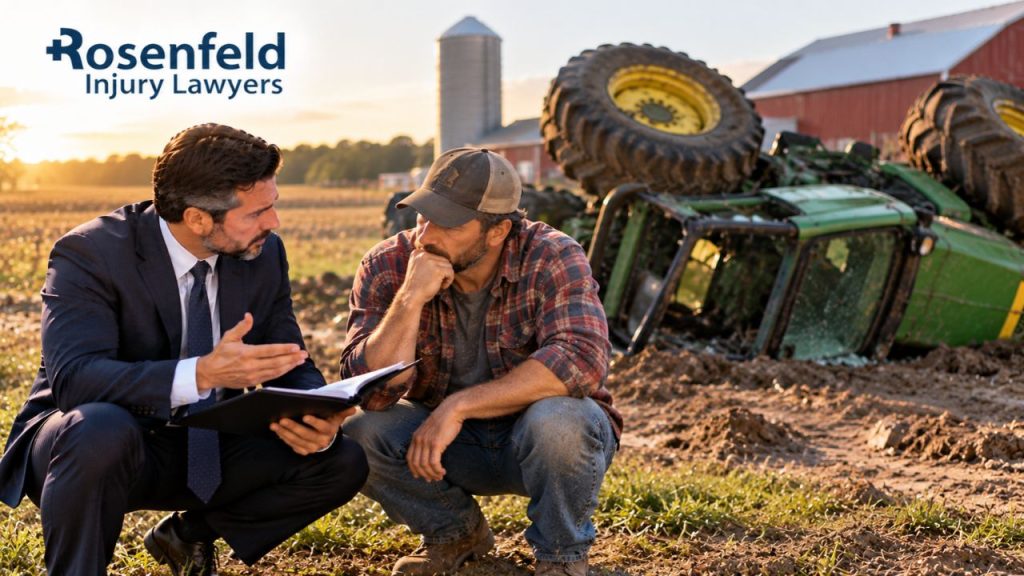
What Is ROPS on a Tractor?
ROPS stands for rollover protective structure. It is a roll bar, frame, or crush-proof cab that creates a safe zone around the driver when a tractor overturns. A seat belt keeps the driver inside that zone.
Without the belt, a driver can be thrown clear and then pinned under the machine. NIOSH saw this pattern in its review of the research. In the United States, the only deaths tied to rollovers of ROPS-equipped tractors happened when drivers were not belted in.
Why Do Tractors Roll Over?
Tractors roll over because they sit high and carry weight at the front or the back. Slopes, sharp turns, uneven ground, and speed can push that balance past the point of recovery.
Two overturn types cause most of the harm:
- Rear overturns happen when the front end lifts and the tractor flips backward, often on a climb or while pulling a load.
- Side overturns happen on turns, ditch banks, or soft edges, especially at speed.
Poor maintenance, untrained operators, and overloaded equipment add risk. Our page on Tractor Rollover Accidents in Illinois explains these causes in more detail.
How Many Farm Deaths Could ROPS Prevent?
Nearly all rollover deaths, according to NIOSH. A 1993 NIOSH report found that nearly all tractor overturn deaths were preventable with ROPS, which first became available as optional equipment in 1971.
A Nebraska study cited in that report shows the gap. Of 250 people in unprotected rollovers, 40 percent died. Among operators whose tractors had ROPS, the death rate was 2 percent.
Yearly counts vary by source. A later NIOSH review put tractor rollover deaths at roughly 200 a year across the country. You can also read our Illinois agricultural accident statistics for related figures.
Why Do So Many Tractors Still Lack ROPS?
Because ROPS began as optional equipment, and many older tractors never received it. NIOSH also found that a significant share of tractors built after 1985 have had their ROPS removed.
Low clearance in dairy barns and orchards is a known problem, and NIOSH has called for collapsible ROPS built for those spaces. Cost and availability slow retrofits too. NIOSH developed a cost-effective ROPS for four older tractor models that had no commercial option.
What Does OSHA Say About Rollover Protection?
The Occupational Safety and Health Administration addresses this in its agricultural tractor rule, 29 CFR 1928.51. The rule covers rollover protective structures and seat belts on tractors that employees operate.
When a farm ignores that rule, the choice can become central evidence in a legal claim. Standards only set the floor, though. Safe habits matter every day: buckle up, avoid steep slopes, and slow down before turning.
What Are the Warning Signs of an Unsafe Tractor?
A tractor is unsafe when it has no roll bar or cab, a missing or broken seat belt, or a ROPS that was cut, removed, or bent. Any of these leaves the operator exposed in an overturn.
Check for these signs before you climb on:
- No roll bar, frame, or crush-proof cab above the seat.
- A seat belt that is missing, frayed, or never used.
- A ROPS that was removed, cut down, or left folded.
- A ROPS that survived an earlier overturn. Nebraska Medical Center experts advise replacing it after any overturn.
- Slope work, such as mowing a bank, on a machine without ROPS. NIOSH counts that among the riskier tasks.
What Can Families Do After a Tractor Rollover?
You can pursue workers’ compensation, a third-party claim, or both, depending on who was involved. Workers’ compensation is a no-fault system, so blame does not decide if benefits apply.
Illinois law excludes certain agricultural employment from workers’ compensation coverage, depending on the employer, the amount and type of agricultural labor, and the worker’s circumstances, as our guide to workers’ compensation for farm workers in Illinois explains. If coverage does not apply, or if someone other than the employer caused the harm, a farm accident lawsuit may be possible. Equipment makers, property owners, and contractors are common targets.
When a rollover kills a worker, a family may have more than one path. Read about fatal farm accident claims and Illinois workers’ compensation death benefits to see how those routes differ.
Illinois sets strict filing deadlines for injury and workers’ compensation claims, so ask a lawyer early. These steps protect a claim:
- Get medical care right away.
- Do not repair, sell, or scrap the tractor.
- Photograph the slope, the tractor, the roll bar, and the seat belt.
- Write down witness names and what each person saw.
- Report the injury to the employer or farm owner.
Tractor Safety FAQs
Yes. NIOSH says a rollover protective structure works best with a seat belt, because the belt keeps the operator inside the protected zone during an overturn.
Often, yes. NIOSH has promoted retrofits and developed cost-effective ROPS for some older models, but availability varies, so owners should ask a dealer or manufacturer.
Do not repair, sell, or scrap it. Keep the tractor and its safety parts as they are, so experts can inspect what happened.
It depends on the facts. Property owners, equipment makers, maintenance providers, and contractors can share responsibility, while employers are usually handled through workers’ compensation.
Yes, in many cases. Families may seek workers’ compensation death benefits, a wrongful death claim against third parties, or both, depending on who was at fault.
Need Help After a Farm Rollover?
A farm rollover can upend a family in seconds, and the legal questions that follow are hard to sort out. Illinois Work Injury Lawyer handles farm accident claims across the state and can review what happened and explain your options. Schedule a free consultation today to talk through your tractor rollover claim.
 Legally Reviewed By
Attorney Jonathan Rosenfeld
Content legally reviewed by Jonathan Rosenfeld The information on this page has been legally reviewed by Attorney Jonathan Rosenfeld, founder and managing partner of Rosenfeld Injury Lawyers LLC. With extensive experience representing injured workers across Illinois, Mr. Rosenfeld is dedicated to helping workplace accident victims pursue the maximum compensation available under the law. His extensive legal knowledge and commitment to client advocacy ensure that the information provided is accurate, reliable, and aligned with current legal standards.