



Who Is Liable for a Scaffolding Accident?


A scaffolding collapse or fall rarely has a single, obvious culprit. Between the general contractor overseeing the project, the subcontractor who erected the scaffold, and the company that supplied the equipment, figuring out who is liable for a scaffolding accident often requires untangling several overlapping relationships before anyone pays a dime.
Here’s how Illinois law actually approaches these cases, and why the answer usually involves more than one responsible party.
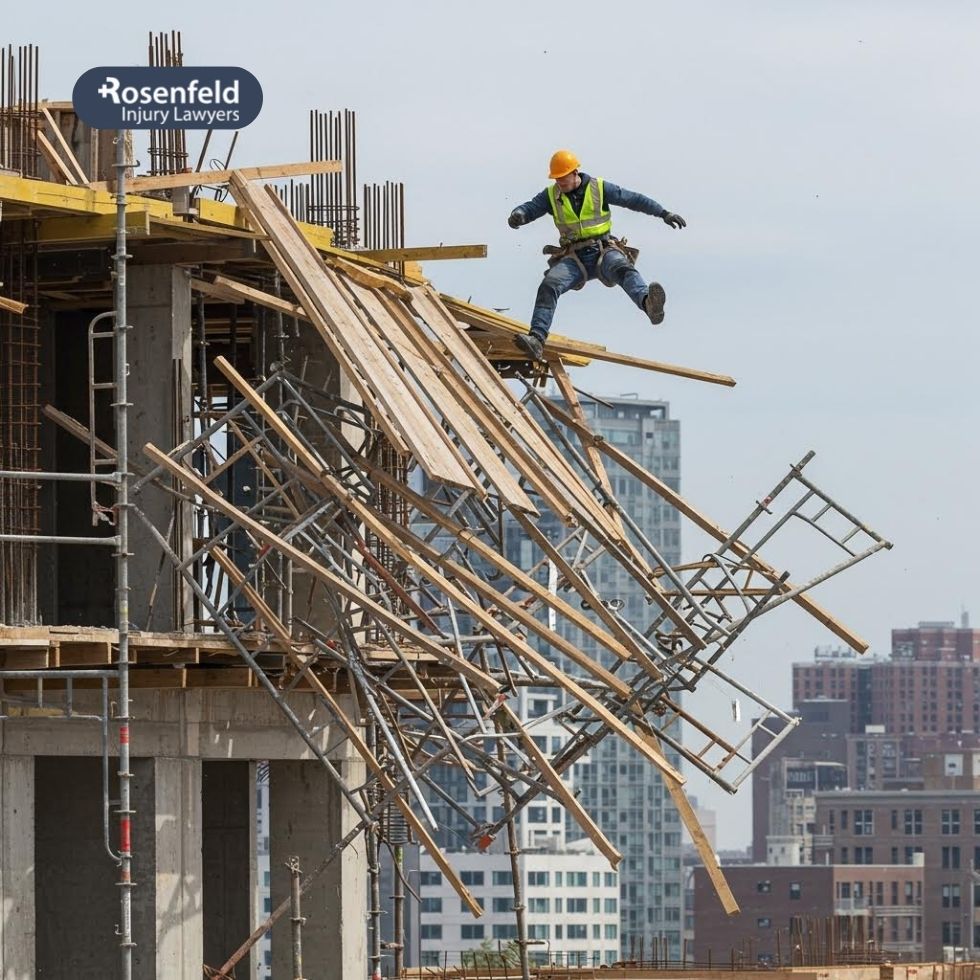
Scaffolding Accidents Are Rarely a Single-Party Problem
Most people assume that if you’re hurt at work, your own employer is automatically to blame. On a construction site, that assumption often falls apart. A general contractor typically hires multiple subcontractors to handle different parts of a project, so the company responsible for a hazard is often not the injured worker’s employer at all. A painter might fall because a separate scaffolding subcontractor failed to install proper guardrails, even though the painter’s own employer did nothing wrong.
This layered structure is exactly why scaffolding accidents so often involve claims against more than one party at once.
The General Contractor’s Responsibility
General contractors typically oversee the entire job site, coordinate the various trades, and hold ultimate responsibility for site safety. If a general contractor retained authority to direct how work was performed, had the power to stop unsafe work, or was responsible for approving scaffold setup, that level of control can make them liable when something goes wrong, even if they didn’t personally erect the scaffold.
The Scaffolding Subcontractor or Erector
The company or crew that physically assembled the scaffold carries significant responsibility for whether it was built to code. Missing guardrails, improperly secured planks, inadequate base support, and skipped inspections are common failures that point directly back to the erector’s work. If a scaffold collapses because it wasn’t assembled according to OSHA’s scaffolding standard, this is often where the investigation starts.
The Property Owner
Property owners retain certain safety duties even when they’ve hired outside contractors to manage the work. If an owner knew about a hazardous condition and failed to address it, or exercised meaningful control over how the work was performed, they can share liability alongside the contractors on site.
Equipment Manufacturers and Rental Companies
When a scaffold fails due to a defective component rather than improper assembly, the company that manufactured or rented the equipment may bear responsibility instead. This shifts the case toward a product liability claim, separate from the negligence claims typically brought against contractors and property owners.
How Illinois Law Determines Liability Today
Illinois once had a law called the Structural Work Act, commonly known as the Scaffold Act, which made it easier to hold contractors and owners liable for scaffolding injuries. That law was repealed in 1995, and scaffolding accident claims are now evaluated under ordinary negligence principles instead.
The key legal concept courts apply today is called the retained control doctrine. Under this standard, a general contractor or property owner can be held liable if they kept meaningful control over safety on the job site, such as the authority to stop unsafe work, approve safety procedures, or direct how tasks were performed. Simply having a presence on site isn’t enough on its own. Courts look closely at what authority was actually written into the contracts and exercised in practice.
Because workers’ compensation generally prevents you from suing your own employer directly, Illinois law specifically allows injured workers to pursue third-party claims against other companies on the job site, such as the general contractor or a different subcontractor, in addition to a standard workers’ comp claim.
What If You’re Partly at Fault
Illinois follows a modified comparative fault rule, meaning you can still recover compensation as long as you weren’t more than 50% responsible for your own accident. If you’re found partially at fault, your compensation is reduced by that percentage rather than eliminated. This matters especially in scaffolding cases, since defendants often try to shift blame onto the injured worker for how they were using the equipment.
How to Identify Every Liable Party
Determining exactly who is liable for a scaffolding accident usually requires a thorough investigation, including contracts between the general contractor and subcontractors, scaffold inspection records, any OSHA citations issued, witness statements, and an expert evaluation of how the scaffold was assembled or maintained. Because more than one party can share responsibility, and because Illinois’ two-year statute of limitations for personal injury claims applies, it’s important to begin this investigation as early as possible.
Frequently Asked Questions
Can I sue my own employer for a scaffolding accident?
Generally no, since workers’ comp is your exclusive remedy against your own employer, but you can pursue claims against other parties on the site.
What if more than one company shares the blame?
Illinois law allows claims against multiple responsible parties, with fault apportioned among them based on each party’s role in the accident.
Does it matter if I wasn’t wearing safety equipment?
It could factor into a comparative fault analysis, but it doesn’t automatically bar your claim unless your fault exceeds 50%.
How long do I have to file a scaffolding accident claim in Illinois?
Generally, two years from the date of the injury, though your workers’ comp claim against your own employer follows a separate timeline.
Can I get workers’ comp and pursue a third-party claim at the same time?
Yes. Illinois law specifically allows both, and pursuing a third-party claim can result in significantly higher total compensation.
Getting to the Bottom of What Happened
Because scaffolding accidents rarely trace back to a single cause, determining liability often requires a careful review of contracts, safety records, and how the scaffold was actually built and maintained. Getting this right can significantly affect what compensation you’re able to recover beyond a standard workers’ comp claim.
If you were injured in a scaffolding accident, we can help investigate every party who may share responsibility and pursue the full compensation available to you. Reach out for a free consultation to discuss what happened.
 Legally Reviewed By
Attorney Jonathan Rosenfeld
Content legally reviewed by Jonathan Rosenfeld The information on this page has been legally reviewed by Attorney Jonathan Rosenfeld, founder and managing partner of Rosenfeld Injury Lawyers LLC. With extensive experience representing injured workers across Illinois, Mr. Rosenfeld is dedicated to helping workplace accident victims pursue the maximum compensation available under the law. His extensive legal knowledge and commitment to client advocacy ensure that the information provided is accurate, reliable, and aligned with current legal standards.