



OSHA Ladder Safety Rules on Illinois Job Sites and What a Violation Means for Your Claim


OSHA ladder safety requirements control how construction ladders are built, set up, inspected, and climbed. A violation does not decide your right to workers’ compensation. It can strengthen a claim against a negligent third party, and in fatal falls it can shape workers’ comp death benefits and wrongful death options.
A worn rung or a bad angle can end a career. Here is what the rules require and what a violation can mean.
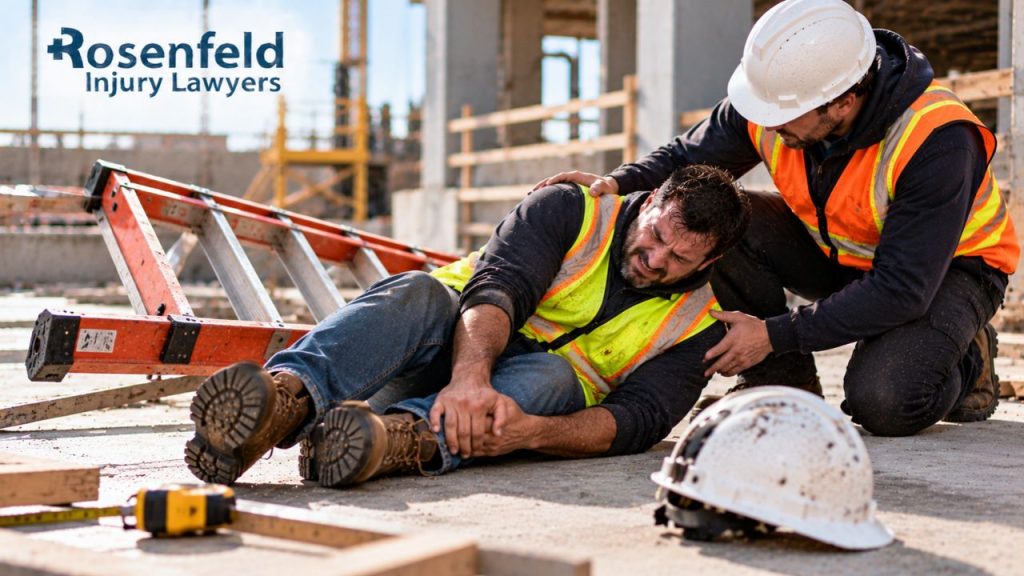
What Do OSHA Ladder Safety Requirements Say?
Federal standard 29 CFR 1926.1053 sets the rules for construction ladders. It covers strength, rung spacing, setup angle, footing, inspection, and safe climbing. Employers must also train workers under 29 CFR 1926.1060.
These rules come up most often after a fall:
- Side rails on a portable ladder must reach at least 3 feet above the landing. If they don’t, tie off the ladder at the top.
- Rungs on portable ladders sit 10 to 14 inches apart.
- A leaning ladder should sit at about a 1:4 angle. That means roughly 1 foot out for every 4 feet up.
- Ladders need stable, level footing, or they must be secured.
- Secure or barricade ladders in doorways or walkways.
- Workers should maintain three points of contact when climbing a ladder.
- Ladders near live electrical equipment need nonconductive side rails.
A competent person must inspect ladders regularly for visible defects. A damaged ladder gets a Do Not Use tag and is removed from service until it is repaired. These rules fall under the broader OSHA construction safety regulations that Illinois contractors must follow.
What Signs Show a Ladder Was Unsafe?
Bent rails, missing rungs, a shaky base, or a ladder too short for the landing all point to a violation. Missing training and overloaded ladders are warning signs too. Photos of these details can matter later.
Picture a roofer climbing to an eave on a ladder that stops flush with the edge. The 3-foot extension is gone, so there is nothing to grab at the top. That is a setup failure, not bad luck.
Other red flags include:
- A ladder placed in a walkway with no barricade
- Rungs slick with oil or grease
- No record of ladder training
Many of these cases involve ladder fall accident claims. Others start with a roof fall accident.
Does an OSHA Violation Help My Claim?
Yes, but not the way many people expect. Workers’ comp pays without proof of fault, so you do not need a violation to qualify. A violation matters most when someone other than your employer caused the fall.
Your Workers’ Comp Claim
Illinois workers’ compensation is a no-fault system. You must show you were hurt while working. Benefits include medical care and a share of lost wages. Learn how workers’ compensation for construction workers in Illinois works.
A Claim Against a Third Party
A third-party claim targets someone other than your employer. That could be a general contractor, property owner, ladder rental company, or manufacturer. Here, a violation of OSHA ladder safety requirements becomes useful evidence.
Still, a violation is evidence, not automatic proof. You must show the other party owed a duty, failed it, and caused your harm. A third-party construction accident lawsuit generally must be filed within two years.
How Do Workers Comp Death Benefits Work After a Fatal Fall?
Families of workers killed on the job can claim workers’ comp death benefits. Illinois death benefits are calculated under statutory rules that depend on the surviving spouse, children, and other eligible dependents. A separate wrongful death claim may also exist.
Bureau of Labor Statistics figures for 2023 show falls caused 39.2% of construction worker deaths nationwide. A fatal ladder fall can lead to both claims. Comp does not require proof of fault. A wrongful death claim does.
Evidence such as OSHA findings, employment records, and witness statements can matter. Read more about fatal construction accident claims in Illinois.
What Should You Do After a Ladder Fall?
Get medical care first. Then report the fall to your employer within 45 days. Photograph the ladder and the scene, and keep every record.
- See a doctor and follow the treatment plan.
- Report the fall in writing so a record exists.
- Photograph the ladder, its base, the landing, and any missing guards.
- Do not repair, return, or discard the ladder before anyone inspects it.
- Write down witness names and phone numbers.
- Ask for the incident report. You can also request OSHA inspection records through a Freedom of Information Act request.
Illinois allows three years from the accident, or two years after the last payment, to file a workers’ comp claim, whichever is later.
Get a Clear Answer Before Deadlines Pass
A short call can show whether you have a comp claim, a third-party claim, or both. At IL Work Injury Lawyer, a free consultation costs nothing, and you pay fees only if we recover compensation. Our Chicago construction accident attorney team can review the ladder, the site, the OSHA ladder safety requirements, and the paperwork with you.
Ladder Safety and Claim FAQs
Standard 29 CFR 1926.1053 governs construction ladders. It covers strength, rung spacing, setup angle, secure footing, inspection, and removal of damaged ladders. Workers must be trained to use them.
Yes. Illinois workers’ compensation is no-fault, so you can receive benefits even if you caused the fall, as long as it happened while you were working.
No. A citation shows unsafe conditions, but it does not automatically prove liability. The facts and the legal claim decide how much weight it carries.
Yes, when the fall happened on the job. Families may also have a wrongful death claim against a negligent third party.
The violation can support a third-party claim. It does not replace workers’ compensation. A violation of OSHA ladder safety requirements is evidence, not automatic proof.
 Legally Reviewed By
Attorney Jonathan Rosenfeld
Content legally reviewed by Jonathan Rosenfeld The information on this page has been legally reviewed by Attorney Jonathan Rosenfeld, founder and managing partner of Rosenfeld Injury Lawyers LLC. With extensive experience representing injured workers across Illinois, Mr. Rosenfeld is dedicated to helping workplace accident victims pursue the maximum compensation available under the law. His extensive legal knowledge and commitment to client advocacy ensure that the information provided is accurate, reliable, and aligned with current legal standards.