



Who Is Responsible for a Crane Accident?


Crane accidents tend to be catastrophic, and figuring out who is responsible for a crane accident rarely comes down to a single culprit. Between the crane operator, the rigging crew, the general contractor, and sometimes the manufacturer of the equipment itself, these cases usually involve tracing the accident back through several layers of responsibility before any real answer emerges.
Understanding the most common causes of crane accidents is often the fastest way to understand who’s likely to be on the hook.
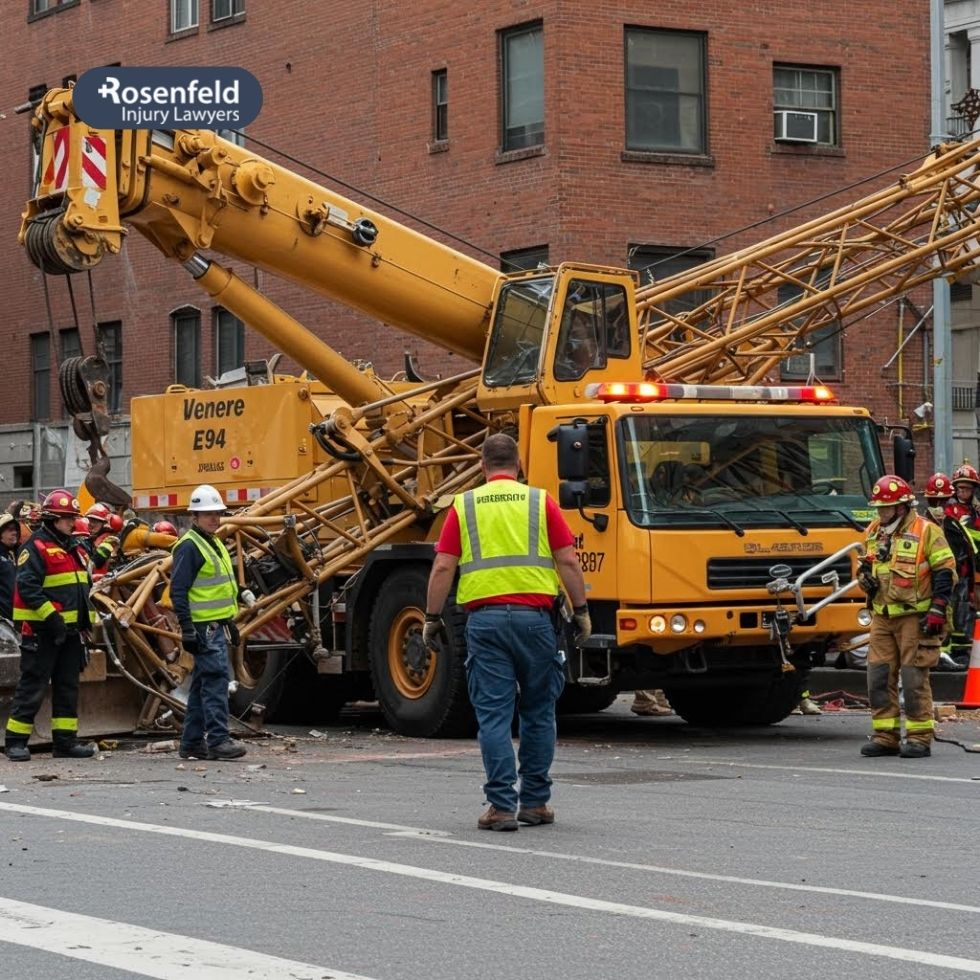
Crane Accidents Rarely Have Just One Cause
Cranes are heavily regulated precisely because so much can go wrong at once. A single lift often involves an operator, a signal person, a rigging crew, and a supervisor confirming ground conditions and load capacity, all coordinating under strict federal safety standards. When something fails, it’s often a combination of a procedural shortcut and a missed check, which is exactly why these cases usually implicate more than one party.
Common Crane Accident Causes and Who They Point To
Operator Error and Inadequate Certification
Federal regulations require crane operators to be trained, evaluated, and certified for the specific type of equipment they’re operating. When an accident traces back to an uncertified or inadequately trained operator, liability typically points to both the operator and the employer who allowed them to run the crane without proper qualification.
Improper Rigging
Loads that shift, swing unexpectedly, or fall during a lift often point to rigging errors, such as using the wrong slings, miscalculating the load’s weight, or failing to secure it properly. This kind of failure typically falls on the rigging crew or the company responsible for that portion of the work.
Exceeding Load Capacity
Every crane has a rated capacity that depends on boom angle, radius, and configuration. When a crane tips over or a component fails because a load exceeded these limits, responsibility often falls on whoever approved the lift, which can include a site supervisor or general contractor who signed off on the job without verifying the load calculations.
Mechanical Failure and Deferred Maintenance
Cranes that haven’t been properly inspected or serviced can fail without warning, regardless of how skilled the operator is. When maintenance records reveal skipped inspections or ignored defects, liability often shifts toward the crane’s owner, a maintenance contractor, or in some cases the manufacturer if a design or manufacturing defect was involved.
Improper Setup on Unstable Ground
Cranes require specific ground conditions to operate safely, and setup crews are required to assess site and ground bearing conditions before a lift begins. When a crane sinks, shifts, or tips because of inadequate ground preparation, this often points back to whoever was responsible for evaluating and preparing the site.
Contact With Power Lines
Federal rules require cranes to maintain safe clearance from power lines, and in many cases prohibit any part of the equipment or load from passing beneath a line unless it’s been confirmed de-energized. When a crane accident involves electrocution from power line contact, liability can extend to the general contractor for failing to coordinate proper clearance, as well as the crane operator’s employer.
The Role of OSHA Crane Standards in Assigning Fault
Federal crane regulations under 29 CFR 1926 Subpart CC set detailed requirements covering operator certification, signal person qualifications, rigging standards, assembly and disassembly procedures, and power line safety. While a citation under these rules doesn’t automatically determine civil liability, evidence that a party violated a specific safety requirement is often central to proving negligence in a crane accident case.
How Illinois Law Handles Shared Liability
Because crane accidents typically involve multiple companies working on the same site, Illinois courts often apply the same retained control principles used in other construction injury cases, looking at which party had authority over safety decisions and the power to stop unsafe work. Illinois’ modified comparative fault rule also applies, allowing you to recover compensation as long as you weren’t more than 50% responsible for the accident, with your award reduced proportionally if you share some fault.
If your own employer wasn’t the party responsible for the crane accident, you may be able to pursue a third-party claim against the responsible company in addition to a standard workers’ compensation claim, potentially recovering damages that workers’ comp alone doesn’t provide.
What to Do After a Crane Accident
If you’re involved in a crane accident, prioritize medical treatment first, then work to preserve evidence as quickly as possible. Crane accident investigations rely heavily on inspection records, certification documents, load charts, and rigging plans, all of which can be difficult to obtain once a company has time to review and control the narrative. An attorney can request these records early and, if necessary, bring in an engineer to reconstruct exactly what went wrong.
Frequently Asked Questions
Can I sue the crane operator directly if they made a mistake?
Usually claims are pursued against the operator’s employer or the company responsible for the crane rather than the individual worker.
What if the crane was rented from a separate company?
The rental company may share liability, particularly if the crane had a mechanical defect or wasn’t properly maintained before being provided for the job.
Does it matter if I work for a different subcontractor than the crane operator?
Yes, this often opens the door to a third-party claim against the operator’s employer in addition to your own workers’ comp benefits.
How is fault determined when several companies were involved in the lift?
Investigators typically examine contracts, safety responsibilities, and inspection records to determine which party controlled the specific failure that caused the accident.
What if the crane accident involved a fatality?
Family members may be able to pursue a wrongful death claim against the responsible parties in addition to any workers’ comp death benefits available.
Getting to the Bottom of a Crane Accident
Determining who is responsible for a crane accident usually requires digging into certification records, maintenance logs, and the specific chain of command on site. Because so many parties are typically involved in a single lift, a thorough investigation is often the only way to identify every source of compensation available.
If you were injured in a crane accident, we can help investigate what happened and determine which parties should be held accountable. Reach out for a free consultation to discuss your case.
 Legally Reviewed By
Attorney Jonathan Rosenfeld
Content legally reviewed by Jonathan Rosenfeld The information on this page has been legally reviewed by Attorney Jonathan Rosenfeld, founder and managing partner of Rosenfeld Injury Lawyers LLC. With extensive experience representing injured workers across Illinois, Mr. Rosenfeld is dedicated to helping workplace accident victims pursue the maximum compensation available under the law. His extensive legal knowledge and commitment to client advocacy ensure that the information provided is accurate, reliable, and aligned with current legal standards.