



Hay Baler Injuries: The Most Common Ways Farm Workers Lose a Hand or Arm


A hay baler hand injury often happens in seconds. A glove, sleeve, or bare hand gets pulled into a moving belt, chain, or rotating shaft, and the machine does not stop on its own.
These machines move fast and apply tremendous force, which is why hay baling season brings a real risk of severe lacerations, crush injuries, and amputation for Illinois farm workers. These injuries are common among farm workers.
Understanding how these accidents happen and what legal options exist afterward can help you protect your health and your financial future.
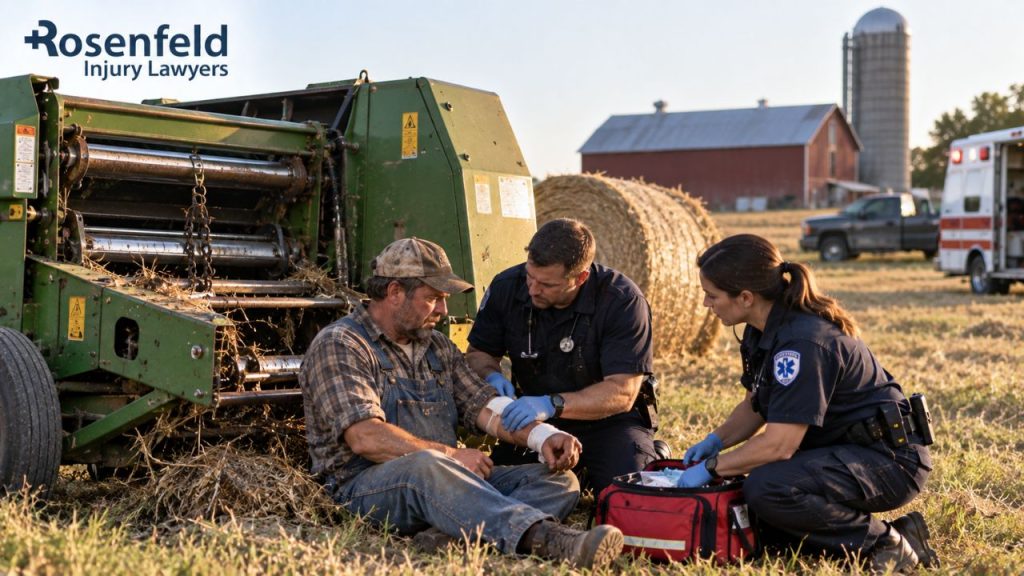
How Do Hay Balers Cause Hand and Arm Injuries?
Hay balers cause hand and arm injuries mainly through moving parts that operate faster than a worker can react. The pickup reel, belts, plunger, and knotting mechanism all run at high speed whenever the baler is engaged.
Most injuries happen when a worker tries to clear jammed hay, adjust twine, or free a stuck belt without fully shutting down the machine first. Loose clothing, gloves, or hair can catch on a moving part and pull an arm into the mechanism before the operator has time to pull back. Once something is caught, a baler applies continuous force, so a minor entanglement can turn into a serious crush injury or amputation within seconds.
What Is PTO Entanglement and Why Is It So Dangerous?
PTO entanglement happens when clothing, hair, or a limb catches on the rotating power take-off shaft that drives the baler. This is one of the most severe causes of hay baler hand injuries on Illinois farms because the shaft can spin at several hundred revolutions per minute.
Once entanglement begins, there is often no time to shut the machine off before serious harm occurs. A missing or damaged driveline guard is often why a worker’s sleeve or glove gets caught in the first place.
What Other Baler Components Put Hands and Arms at Risk?
Beyond the PTO shaft, several other parts of a hay baler create entanglement and crush hazards for hands and arms.
- Pickup Mechanism: Tines rotate quickly to gather hay off the ground and can pull in a hand reaching to clear a blockage.
- Plunger and Bale Chamber: The compacting plunger exerts enormous force and has caused severe crush injuries when workers reach inside to clear jams.
- Knotter and Twine Wrapper: Fast-moving arms tie each bale and can trap fingers or a hand during adjustment.
- Belts and Pulleys: Exposed belts can catch gloves or sleeves, drawing an arm toward the pulley before a worker can react.
Who May Be Liable for a Hay Baler Accident?
Liability for a hay baler accident depends on what caused the entanglement or crush injury. Several parties can potentially be held responsible.
- The farm or employer, if it failed to maintain the baler, remove worn shields, or train workers on safe shutdown procedures, may be liable, which may support a workers’ compensation claim.
- The equipment manufacturer, if a missing, defective, or poorly designed safety guard contributed to the accident, which may support a product liability claim.
- A third-party contractor or dealer, if improper repair or maintenance work left the machine unsafe to operate.
What Compensation Can You Recover After a Hay Baler Hand Injury?
Compensation after a hay baler hand injury depends on whether you pursue a workers’ compensation claim, a third-party lawsuit, or both. Each path covers different types of losses.
A workers’ compensation claim for farm workers can cover medical treatment, prosthetics, lost wages, and vocational rehabilitation if you cannot return to your previous job. A third-party claim may add compensation for pain and suffering and loss of enjoyment of life.
How Can Farm Workers Prevent Hay Baler Injuries?
Preventing a hay baler hand injury starts with treating every jam or malfunction as a reason to fully shut down the machine before touching it.
- Disengage the PTO and turn off the engine before clearing hay, adjusting twine, or freeing a stuck belt.
- Keep all manufacturer-installed guards and shields in place, and report damaged guards immediately.
- Avoid loose clothing, dangling drawstrings, and unsecured long hair around moving parts.
- Follow the equipment manufacturer’s operating manual and any applicable OSHA agricultural operations standards.
Injured by a Hay Baler? Talk to an Illinois Farm Accident Lawyer
A hay baler hand injury can permanently change how you work and provide for your family. If you or a loved one was hurt while operating or working near a hay baler, our attorneys can help you understand your workers’ compensation and personal injury options.
Contact us today for a free consultation to discuss your hay baler hand injury claim.
Frequently Asked Questions
Seek emergency medical care right away, since crush and entanglement injuries can worsen quickly without treatment. Report the accident to your employer as soon as possible and, if you are able, document the scene and the machine involved before it is repaired or moved.
In most cases, yes, because Illinois workers’ compensation is a no-fault system that covers injuries that occur in the course of employment. Farms that average more than 400 working days per quarter generally must carry this coverage under the Illinois Workers’ Compensation Act.
Liability can fall on the employer if there is a problem with equipment maintenance or training. The manufacturer could also be liable if the safety guards are defective. A third-party repair company might be responsible if they did not service the equipment properly.
You generally have three years to file a workers’ compensation claim and two years to file a personal injury lawsuit, though you must report the injury to your employer within 45 days. Missing these deadlines can permanently bar your right to compensation.