



Fell Off a Roof at Work? Learn About Your Compensation Options


A roof fall can cause serious injuries in seconds, leaving you facing medical bills, missed work, and an uncertain recovery. If you fell off a roof at work, compensation may be available through workers’ compensation benefits or, in some cases, a third-party claim.
Understanding your legal options can help you protect your rights after a workplace fall. Below, we explain the compensation you may pursue, important deadlines, and steps that can strengthen your claim under Illinois law.
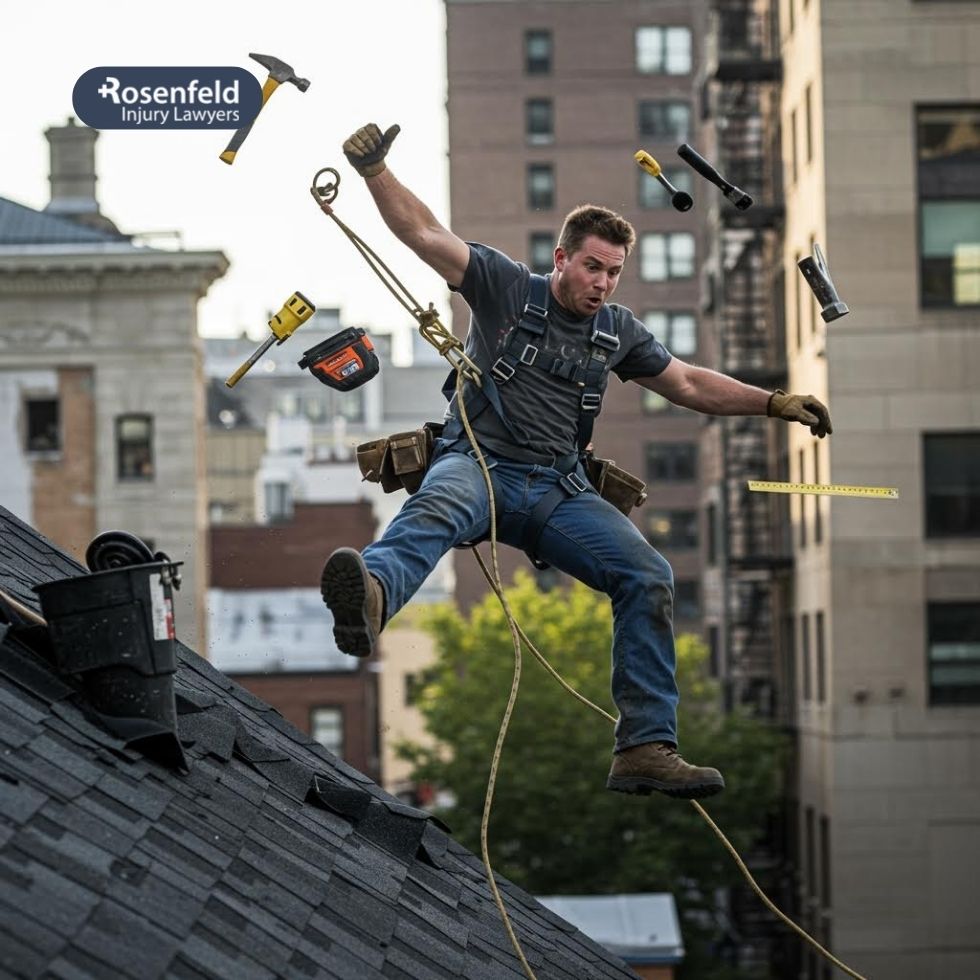
Why Roof Falls Happen So Often
Roof work is one of the most dangerous jobs in construction. Workers face slippery surfaces, unstable footing, and heights that leave little room for error. Common causes include unsecured ladders, missing guardrails, defective harnesses, and skipped safety protocols. Weather also plays a role, since rain, ice, and debris can turn a roof into a hazard zone. You can read more about how these accidents happen on our page dedicated to roof fall accidents.
Fell Off a Roof at Work Compensation: Your Two Main Paths
When you get hurt on the job, you generally have two routes toward financial recovery. Understanding both helps you make informed decisions about your claim.
Workers’ Compensation Benefits
Illinois workers’ compensation is generally a no-fault system, so you do not need to prove your employer was negligent. You generally must show that your injury arose out of and in the course of your employment. Workers’ compensation can cover:
- Medical treatment related to your fall
- A portion of your lost wages while you recover
- Disability benefits if your injury limits your ability to work
- Vocational rehabilitation if you cannot return to your previous role
You can learn more about how these benefits work on our workers’ compensation page.
Third-Party Liability Claims
Workers’ compensation does not usually allow you to sue your employer directly. However, if someone other than your employer contributed to your fall, you may have grounds for a third-party claim. This could include a general contractor, a property owner, an equipment manufacturer, or a subcontractor. Third-party claims can provide compensation that workers’ comp does not cover, such as pain and suffering.
What Compensation Can Cover After a Roof Fall
The value of your claim depends on the severity of your injuries and the circumstances of your accident. Roof falls often lead to serious harm, including broken bones, spinal cord damage, and traumatic brain injuries. Depending on your case, compensation may address:
- Emergency and ongoing medical care
- Lost income and reduced future earning capacity
- Physical therapy and rehabilitation costs
- Pain and suffering, in eligible third-party claims
- Funeral and burial expenses and other wrongful-death damages, when applicable
If you lost a loved one to a workplace fall, our page on fatal construction accidents explains what surviving family members may be entitled to recover.
Steps to Take After You Fall Off a Roof at Work
What you do in the hours and days after your fall can affect your ability to recover compensation. Consider these steps.
- Get medical attention right away – Even if you feel fine, some injuries take time to show symptoms. A prompt medical record also links your injury to the workplace accident.
- Report the incident to your employer – Illinois generally requires workers to notify their employer of an accident within 45 days. Reporting the injury as soon as possible can help protect your claim.
- Document the scene – Take photos of the roof, any broken equipment, weather conditions, and anything else that may have contributed to your fall.
- Gather witness information: –Coworkers who saw the accident can provide valuable statements later in your claim.
- Avoid giving statements to insurance adjusters without guidance: –Insurers often look for ways to reduce payouts, so it helps to have someone reviewing communications on your behalf.
Common Injuries From Roof Falls
Falls from height often lead to serious, long-lasting injuries. These may include fractures, spinal injuries, and head trauma. If you suffered a brain injury or a broken bone, your medical needs may extend well beyond initial treatment, which is why accurately calculating future costs matters for your claim.
Deadlines Matter in Roof Fall Cases
Illinois places strict time limits on workplace injury claims. A workers’ compensation claim generally must be filed within three years of the accident, or within two years of your last workers’ comp payment, whichever comes later. Third-party personal injury lawsuits generally have a two-year statute of limitations in Illinois, although exceptions may apply. Missing these deadlines can prevent you from recovering compensation after a workplace roof fall, even if you have a strong claim.
How We Can Help After a Roof Fall
At IL Work Injury Lawyer, we focus on helping injured workers understand their rights and pursue every available source of compensation. We review the details of your accident, identify all responsible parties, and work to build a claim that reflects the full extent of your losses. If your fall involved unsafe conditions on a construction site, our page on construction accidents covers additional hazards workers commonly face.
If you fell off a roof at work, compensation may be available through more than one path, and you do not have to sort through it alone. Contact us today for a free consultation to discuss your case and learn how we can help you move forward.
Frequently Asked Questions
Can I get compensation if the roof fall was partly my fault?
Yes. Workers’ compensation is generally a no-fault system, so your own mistake does not automatically prevent you from receiving benefits. A third-party claim may involve different rules regarding fault and liability.
Does workers’ compensation cover all my medical bills?
It typically covers reasonable and necessary treatment related to your injury, though coverage details can vary by case.
What if my employer says I was not covered?
Coverage disputes happen, but most employees are covered. It helps to have your situation reviewed carefully.
Can I be fired for filing a workers’ compensation claim?
Illinois law generally prohibits an employer from retaliating against an employee for exercising rights under the Workers’ Compensation Act. If you believe you experienced retaliation, consider speaking with an attorney promptly.
How long does a roof fall claim usually take?
Timelines vary based on injury severity, evidence, and whether the claim is contested or settled early.
 Legally Reviewed By
Attorney Jonathan Rosenfeld
Content legally reviewed by Jonathan Rosenfeld The information on this page has been legally reviewed by Attorney Jonathan Rosenfeld, founder and managing partner of Rosenfeld Injury Lawyers LLC. With extensive experience representing injured workers across Illinois, Mr. Rosenfeld is dedicated to helping workplace accident victims pursue the maximum compensation available under the law. His extensive legal knowledge and commitment to client advocacy ensure that the information provided is accurate, reliable, and aligned with current legal standards.