



Carpal Tunnel vs. Cubital Tunnel: Why the Difference Matters for Your Illinois Workers’ Comp Claim


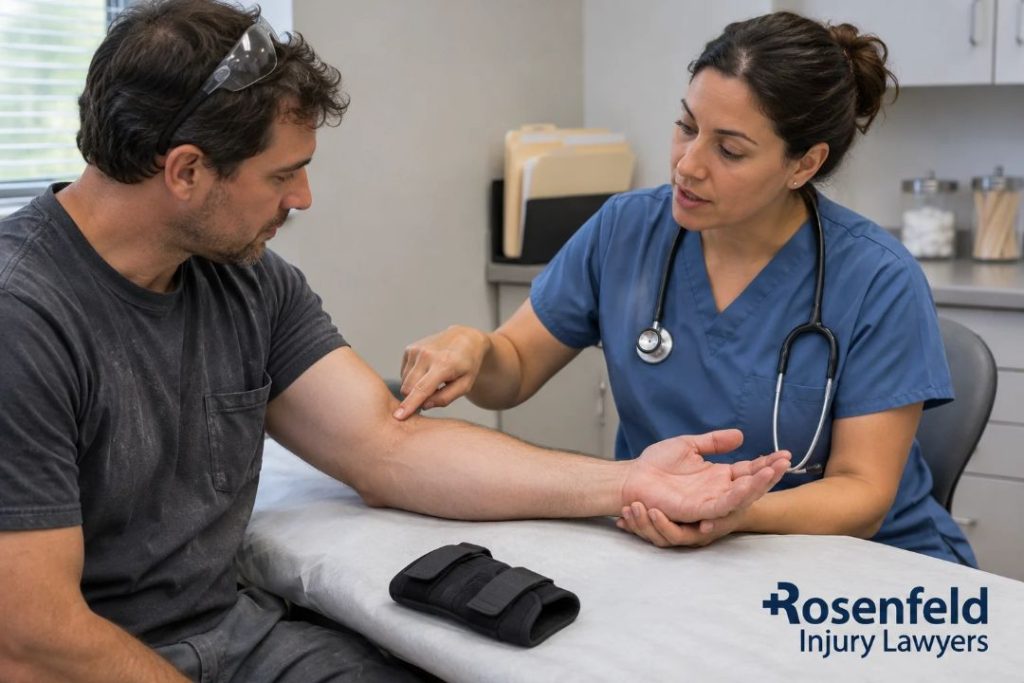
Carpal tunnel vs cubital tunnel comes down to which nerve is pinched and where. Carpal tunnel syndrome squeezes the median nerve at the wrist. Cubital tunnel syndrome squeezes the ulnar nerve at the elbow. Both cause numbness, tingling, and weak grip, but in different fingers. In Illinois, the diagnosis can also change how a workers’ comp claim is rated.
Carpal Tunnel vs. Cubital Tunnel: The Key Differences
Carpal tunnel hits the thumb, index, and middle fingers and starts at the wrist. Cubital tunnel hits the little finger and half of the ring finger and starts at the elbow. A doctor confirms which one you have with an exam and a nerve test.
| Feature | Carpal tunnel syndrome | Cubital tunnel syndrome |
| Nerve | Median | Ulnar |
| Where it is pinched | Wrist | Inside of the elbow, near the funny bone |
| Fingers affected | Thumb, index, middle, and part of the ring finger | Little finger and part of the ring finger |
| Worse when | Wrist is bent or gripping, and at night | Elbow stays bent, you lean on it, and at night |
| Weakness | inch and grip, thumb muscles may shrink | Grip and fine finger control, small hand muscles may shrink |
| Typical first treatment | Wrist splint, activity changes, injection | Elbow pad or night splint, less pressure on the elbow |
| Surgery if needed | Carpal tunnel release | Cubital tunnel release or ulnar nerve transposition |
| Illinois comp schedule | Hand, with a statutory cap | Can be argued as arm, a larger schedule |
Medical details here follow AAOS OrthoInfo guidance and a 2017 review in the Journal of the American Academy of Orthopedic Surgeons. Only a doctor can diagnose either condition.
People also search for cubital tunnel vs carpal tunnel. The idea is the same. Find the nerve first, because each one has its own path and its own treatment. The carpal tunnel vs cubital tunnel split also matters for your paperwork later.
Which Fingers Tell You Which Nerve Is Involved?
Numbness in the thumb, index, and middle fingers points to the median nerve at the wrist. Numbness in the little finger and half the ring finger points to the ulnar nerve at the elbow. Only a doctor can confirm it.
Carpal tunnel symptoms often wake you at night. Many people shake out the hand to get feeling back. Over time, pinch and grip get weaker.
Cubital tunnel symptoms often show up in the hand more than the elbow. Bending the elbow stretches the nerve and reduces its blood supply, so symptoms worsen in that position. Long calls with a bent elbow can set it off.
Here is a quick self-check. Note which fingers tingle and what position triggers it. The ring finger can be split between the two nerves, so note both sides. When you compare carpal tunnel vs. cubital tunnel symptoms, that finger pattern is your best clue.
See a doctor promptly for constant numbness, shrinking hand muscles, or dropping things. Untreated nerve pressure can cause lasting damage.
Which Work Tasks Can Cause Each Condition?
Carpal tunnel often comes from forceful or repeated wrist and hand work. Cubital tunnel often comes from keeping the elbow bent or pressing it against hard surfaces. Many jobs involve both movements. In the carpal tunnel vs. cubital tunnel question, job tasks are the missing piece.
Carpal tunnel from work can follow tasks like these:
- Forceful or repeated gripping and pinching
- Bent-wrist work, such as scanning, typing, and mouse use
- Vibrating hand tools
- Meatpacking, poultry processing, and assembly line work
- Repeated use of hand tools
Cubital tunnel from work can follow tasks like these:
- Holding the elbow bent for long periods, as with headsets or overhead reaching
- Leaning an elbow on a hard bench, desk, or truck window ledge
- Repeated elbow bending and straightening, such as hammering, pulling, or lifting
- A blow to the inside of the elbow
- A past elbow fracture
Warehouse injuries often show how jobs that mix gripping with reaching can load both nerves. Both conditions can fall under repetitive strain injury claims.
Here is an illustrative example. A warehouse picker scans all shift with a bent wrist and rests an elbow on a cart rail between picks. That worker could develop both conditions.
Diabetes, thyroid problems, pregnancy, and arthritis can raise nerve risk. They do not automatically rule out a work claim.
Can You Have Carpal Tunnel and Cubital Tunnel at the Same Time?
Yes. Both conditions can affect the same arm, often in workers whose jobs combine gripping with elbow bending. A doctor has to test both nerves to know.
Some surgeons describe a double crush idea. It says a nerve squeezed in one spot may become more sensitive to pressure in a second spot. Doctors still debate how much it matters.
If symptoms continue after a carpal tunnel release, ask whether they checked the ulnar nerve too. The neck is another place a nerve can be pinched.
How Do Doctors Tell Them Apart?
Doctors combine your history, a hand exam, and nerve testing. A nerve conduction study with EMG can show which nerve is affected and where.
- Your history and finger pattern
- Tinel’s sign, a tap over the nerve at the wrist or elbow
- Phalen’s test for carpal tunnel, and the elbow flexion test and Froment’s sign for cubital tunnel
- A nerve conduction study and EMG to find the pinch and gauge how severe it is
- Sometimes an ultrasound scan
The nerve test report becomes strong evidence in a comp claim. It names the nerve and the site.
Why Does the Difference Matter in Illinois?
Illinois often pays for lasting injuries as a percentage loss of use of a listed body part. Your diagnosis can decide which body part is used and whether a cap applies. Carpal tunnel has a cap. Cubital tunnel is not named in it. So the carpal tunnel vs. cubital tunnel label can change the value of a claim.
That is how permanent partial disability benefits work for many hand and arm injuries.
Carpal Tunnel: The Hand Schedule and the 15% Cap
For accidents on or after June 28, 2011, carpal tunnel from repetitive or cumulative trauma is rated on a 190-week hand, not the usual 205. The award cannot exceed 15% loss of use of the hand. With clear and convincing evidence, it can reach 30%. The rule sits in Section 8 of the Workers’ Compensation Act, 820 ILCS 305/8. For coverage basics, read whether carpal tunnel is covered by workers’ comp in Illinois.
Cubital Tunnel: An Elbow Injury, Often Outside the Cap
The cap’s wording refers to carpal tunnel syndrome. It does not name cubital tunnel. The ulnar nerve is pinched at the elbow, so cubital tunnel workers’ comp claims can be argued as loss of use of the arm, a larger schedule of 253 weeks. The Commission decides each case on the medical proof. Our guide on how Illinois values hand and arm injuries explains the schedule.
When You Have Both
Each condition should be diagnosed, named, and tied to your job tasks in the records. Separate hand and arm awards, or one combined award, depends on your facts. If both arms are affected, each side is rated on its own.
How Do You Get the Diagnosis Right in Your Records?
Getting carpal tunnel vs. cubital tunnel right in your records is the most useful step you can take. Make sure they name the exact nerve, the exact site, and the job tasks behind it. If an elbow problem is recorded only as carpal tunnel, your claim may be valued under the carpal tunnel cap.
- Describe every symptom location: fingers, wrist, forearm, and elbow.
- Ask whether the nerve test checked both the median and ulnar nerves.
- Ask your doctor to write down your tasks, such as elbow bending, leaning, and gripping, and how each links to the condition.
- Report symptoms to your employer within 45 days of when you knew they were work-related. This is the 45-day notice rule.
- Keep copies of the nerve test and any surgery note that names the nerve treated.
For repetitive trauma, Illinois looks at when the injury and its link to work became plainly apparent. The Illinois Supreme Court explained this in Durand v. Industrial Commission in 2006, a carpal tunnel case.
FAQ
Carpal tunnel pinches the median nerve at the wrist. Cubital tunnel pinches the ulnar nerve at the elbow. Each one numbs different fingers.
Neither is worse by default. They involve different nerves. Either can cause muscle wasting and lasting weakness if ignored, so get tested early.
The little finger and half of the ring finger go numb. The ulnar nerve supplies feeling to those fingers, and symptoms often worsen with the elbow bent.
Yes, if work caused or worsened it. Your records should name the diagnosis, the nerve, and the job tasks involved.
By its wording, no. The cap names carpal tunnel syndrome only. How a cubital tunnel claim is rated depends on the medical proof.
Talk to Us About Your Wrist or Elbow Symptoms
If your hands or elbows hurt because of your job, get both nerves tested first. Then talk with us at IL Work Injury Lawyer. We offer a free consultation, and you owe no fee unless we recover compensation for you. Call 312-757-7348 or visit our page for a carpal tunnel workers’ compensation lawyer in Chicago. A clear answer on carpal tunnel vs. cubital tunnel can protect your claim.
This article shares general information. It is not medical or legal advice.
 Legally Reviewed By
Attorney Jonathan Rosenfeld
Content legally reviewed by Jonathan Rosenfeld The information on this page has been legally reviewed by Attorney Jonathan Rosenfeld, founder and managing partner of Rosenfeld Injury Lawyers LLC. With extensive experience representing injured workers across Illinois, Mr. Rosenfeld is dedicated to helping workplace accident victims pursue the maximum compensation available under the law. His extensive legal knowledge and commitment to client advocacy ensure that the information provided is accurate, reliable, and aligned with current legal standards.