



Table Saw and Circular Saw Injuries at Work: Who Can Be Held Liable Beyond Your Employer


A table saw injury at work can cause severe cuts, nerve damage, fractures, or permanent amputation in a matter of seconds. In Illinois, an injured worker may be entitled to workers’ compensation benefits through their employer, but the employer is not always the only party responsible.
Depending on how the accident happened, a defective saw manufacturer, equipment rental or maintenance company, general contractor, subcontractor, property owner, or another third party may also share liability.
Understanding who caused or contributed to the accident is important because a third-party claim may provide compensation that workers’ compensation does not cover, including damages for pain and suffering.
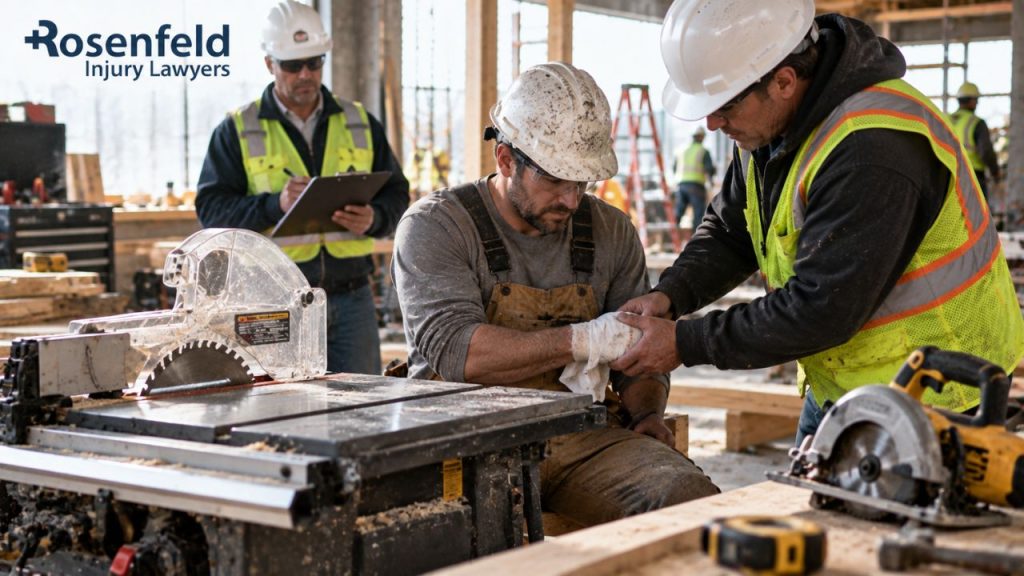
What Does Workers’ Compensation Cover After a Table Saw Injury at Work?
Illinois workers’ compensation generally provides benefits to employees who suffer a workplace injury while performing job-related duties. Because the system is generally no-fault, an injured worker may qualify for benefits even when the accident resulted from their own mistake, a coworker’s actions, or unsafe working conditions.
Depending on the injury, workers’ compensation may cover necessary medical care, including emergency treatment, surgery, hospitalization, physical therapy, medications, and other reasonable treatment related to the injury. If a table saw injury at work prevents you from performing your job, you may also be entitled to temporary disability benefits for a portion of your lost wages while you recover.
More serious injuries can lead to additional benefits when they cause permanent impairment or affect the worker’s ability to return to the same type of work. For example, a severe finger or hand injury may require ongoing medical treatment, rehabilitation, or prosthetic care and may permanently affect a worker’s ability to perform certain job duties.
However, workers’ compensation generally does not provide compensation for pain and suffering. That is one reason it is important to determine whether someone other than your employer may be legally responsible for the accident. A separate third-party claim may allow an injured worker to seek damages that are not available through workers’ compensation alone.
Why Workers’ Comp Alone Often Isn’t Enough
Workers’ compensation does not pay for pain and suffering, permanent disfigurement, or the full extent of lost earning capacity that a severe table saw injury at work can cause. It also bars most lawsuits against your direct employer, since workers’ comp is generally the exclusive remedy in that relationship.
That limitation is exactly why identifying other responsible parties matters. A third-party liability claim can recover damages that workers’ comp was never designed to cover, including full pain and suffering awards and compensation for how the injury has changed your daily life.
Who Can Be Held Liable Beyond Your Employer?
Several parties outside the employment relationship can share fault for a table saw or circular saw accident, depending on what caused the incident.
Tool and Equipment Manufacturers
If a saw lacked a functional blade guard, had a defective riving knife, or malfunctioned because of a manufacturing flaw, the manufacturer may be liable under product liability law. Defective safety mechanisms recur in serious blade-contact cases, especially when a guard fails to engage during normal use.
General Contractors and Subcontractors
On job sites, a general contractor or subcontractor may control the equipment, training, or safety rules involved in your injury. If their failure to properly maintain equipment or their failure to enforce safety rules played a role in causing the accident you can include them in a third-party negligence claim. This is true even if they were not your employer.
Property Owners
Under premises liability principles, a property owner who allowed a hazardous cutting station, poor lighting, or cluttered walkways near active saws may bear responsibility for a resulting construction site injury. This applies whether the property is a commercial building under renovation or a private job site.
Equipment Rental and Maintenance Companies
Rental companies and third-party maintenance providers must inspect, service, and warn about the tools they supply. If a rented or serviced saw had a known workplace safety violation, such as a guard that had been removed and never reinstalled, that company can face liability separate from your employer.
Coworkers
While workers’ comp generally protects coworkers from suits over ordinary workplace negligence, exceptions exist for intentional or grossly reckless conduct that causes a circular saw injury.
Our construction accident lawyer team regularly investigates these relationships to identify every source of recovery available to an injured worker, not just the workers’ comp claim.
Common Causes of Table Saw and Circular Saw Accidents
- Missing or disabled blade guards
- Inadequate operator training
- Defective or poorly maintained saw blades
- Improper lockout and tagout procedures
- Loss of control during a cutting task
- Crowded or unstable work areas around active saws
Talk to an Illinois Work Injury Attorney Today
A serious table saw injury at work rarely has a single cause, and it rarely involves only one responsible party. Our workers’ compensation lawyer team can help you pursue every available avenue of recovery, from your employer’s insurance coverage to third-party claims against manufacturers and contractors. Contact us today for a free consultation to discuss your table saw injury at work and the compensation you may be owed.
Frequently Asked Questions
Yes. Illinois law generally allows you to pursue workers’ compensation from your employer while filing a third-party lawsuit against a manufacturer, contractor, or other responsible party. These two claims move on tracks and are not mutually exclusive. You can go after the workers’ compensation benefits through your employer’s insurance
Responsibility for a defective table saw guard falls on the manufacturer or the retailer if a working guard was never removed or replaced.
Illinois follows a modified comparative fault rule, meaning you can still recover damages in a third-party claim as long as you are not found more than 50 percent at fault. Your compensation is reduced by your percentage of responsibility rather than eliminated entirely.
File workers’ compensation claims within three years of the accident, or two years after your last benefit payment, whichever is later. Under Illinois law, a third-party personal injury lawsuit generally has a two-year statute of limitations.