



Crushed by Skid Steer Lift Arms: How These Accidents Happen and Who Is Responsible


A skid steer lift arm crush injury often happens in seconds when an operator, mechanic, or bystander becomes trapped between the machine’s lift arms and its frame, cab, or bucket. These heavy equipment accidents occur on Illinois construction sites, farms, and industrial properties, and they frequently cause catastrophic injuries or death.
If you or someone you love was hurt by a skid steer at work, understanding how these accidents happen and who may be legally responsible is the first step toward pursuing the compensation you are owed.
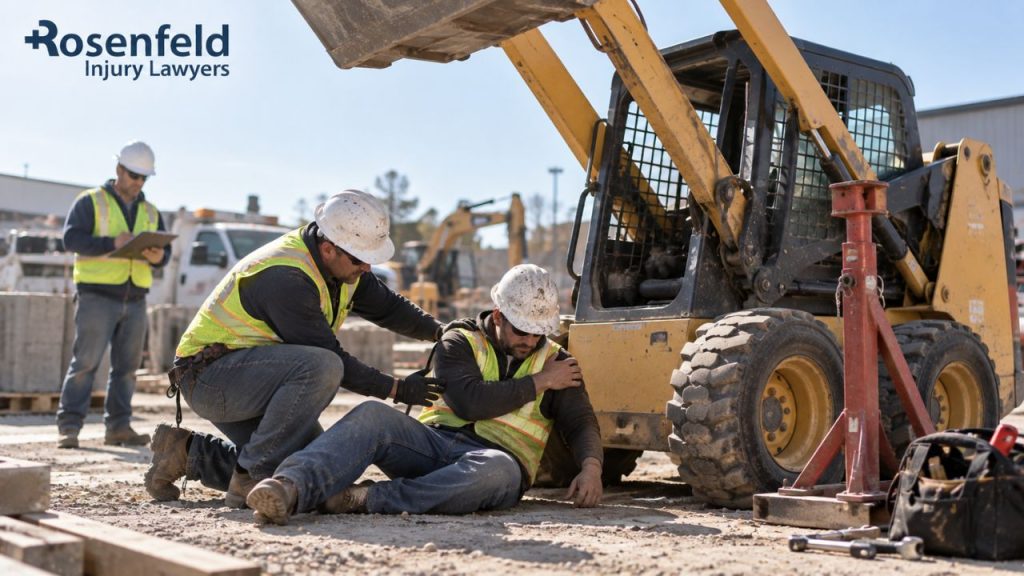
How Do Skid Steer Lift Arm Crush Injuries Happen?
A skid steer lift arm crush injury typically occurs when a worker becomes pinned between the raised or lowered lift arms and the machine’s frame. Safety researchers classify this as a caught-in/between injury, a category that also includes workers trapped beneath a descending bucket or crushed against a wall or vehicle.
A skid steer’s design places the operator’s seat directly between the lift arm pivot points, an area the National Institute for Occupational Safety and Health identifies as a lift arm pinch point. NIOSH has found that most fatal skid steer incidents involve workers pinned between the bucket and frame or between the lift arms and frame, often after a safety interlock was bypassed or a lift arm support device was skipped during servicing. Bystanders near an active machine, not just operators, face serious risks too.
What Causes Skid Steer Lift Arm Accidents?
Most skid steer crush injuries stem from a preventable safety failure. Common causes include:
- Bypassed safety interlocks, allowing the lift arms to move while the seat bar is raised
- Missing lift arm support devices during maintenance or repair
- Exiting the machine with the lift arms raised and no mechanical restraint engaged
- Defective hydraulic lines, pins, or hardware, similar to failures seen in forklift accidents
- Poor visibility while backing up, striking or pinning a bystander
- Inadequate operator training on a rented or unfamiliar machine
- Absence of a functioning rollover protective structure (ROPS) or side screens
Skid steers are common on farms and job sites, which is why our firm also handles farming accident claims involving this equipment.
Who Can Be Held Liable for a Skid Steer Crush Injury?
Liability after a skid steer accident depends on what caused the injury and who controlled the hazard. In most cases, an injured employee’s first source of recovery is a workers’ compensation claim against their employer, which is a no-fault system that does not require proof of negligence.
However, a separate third-party liability claim may also be available. Potentially responsible parties can include:
- The equipment manufacturer, if a defective interlock, pin, or hydraulic component caused the lift arms to move unexpectedly
- A rental or leasing company, if the machine was not properly inspected or maintained before use
- A general contractor or property owner, if unsafe site conditions or inadequate supervision contributed to the accident
- A coworker or subcontractor, if reckless or negligent operation caused the injury
Crush injuries involving heavy equipment often result in fractures, amputations, or fatal trauma, and our firm regularly handles bone fracture claims connected to these accidents. When a worker is killed, families may also have grounds for a fatal accident claim.
What Compensation Is Available After a Skid Steer Injury in Illinois?
Injured workers may be entitled to both workers’ compensation benefits and third-party damages, depending on the circumstances of the accident. A workers’ compensation attorney pursues medical expense coverage, temporary or permanent disability benefits, and vocational rehabilitation for clients injured by skid steers and similar equipment.
A successful third-party claim can also recover damages not available through workers’ compensation, such as full pain and suffering and lost future earning capacity.
Steps to Take After a Skid Steer Lift Arm Accident
- Seek immediate medical treatment and follow the recommended course of care
- Report the accident to your employer within 45 days to preserve your workers’ compensation rights
- Document the scene, including the machine and any visible defects
- Preserve the equipment where possible, since it may be key evidence in a product liability claim
- Avoid speaking with insurance adjusters before consulting an attorney
- Consult an experienced work injury attorney as soon as possible
How an Illinois Work Injury Lawyer Can Help
A skid steer lift arm crush injury can leave a worker facing long-term medical care, lost income, and an uncertain recovery. Our attorneys investigate the equipment involved, review maintenance and training records, and identify every party who may share responsibility for the accident. We work on a contingency fee basis, so you owe nothing unless we recover compensation on your behalf.
If you were hurt by a skid steer or other heavy equipment at work, contact an experienced work injury lawyer today for a free consultation.
Frequently Asked Questions
A skid steer lift arm crush injury occurs when a worker’s body becomes trapped between the machine’s lift arms and its frame, bucket, or cab. These injuries can cause fractures, crush trauma, amputation, or death, and they can affect operators, mechanics, and bystanders alike.
Liability can fall on an employer through workers’ compensation or on a third party such as the equipment manufacturer, a rental company, or a general contractor.
Yes. If a manufacturing or design defect, such as a failed safety interlock or a broken hydraulic pin, caused the lift arms to move unexpectedly, you may have a product liability claim against the manufacturer in addition to a workers’ compensation claim.
Yes. Illinois law requires you to report a workplace injury to your employer within 45 days, or you may forfeit your right to pursue workers’ compensation benefits.