



High-Rise Window Washing Accidents in Chicago: Who Is Liable When the Rigging Fails


Chicago’s skyline is full of glass towers, and someone has to keep those windows clean. It’s dangerous work. A high-rise window washer accident can happen in seconds when a cable snaps, a bosun’s chair tips, or an anchor point gives way hundreds of feet above the street. When rigging fails, the fall is rarely survivable without serious, life-altering injury.
If you or someone you love was hurt this way, you’re probably wondering who is responsible and what your options are. This guide covers the common causes, who can be held liable, and how to protect your right to compensation.
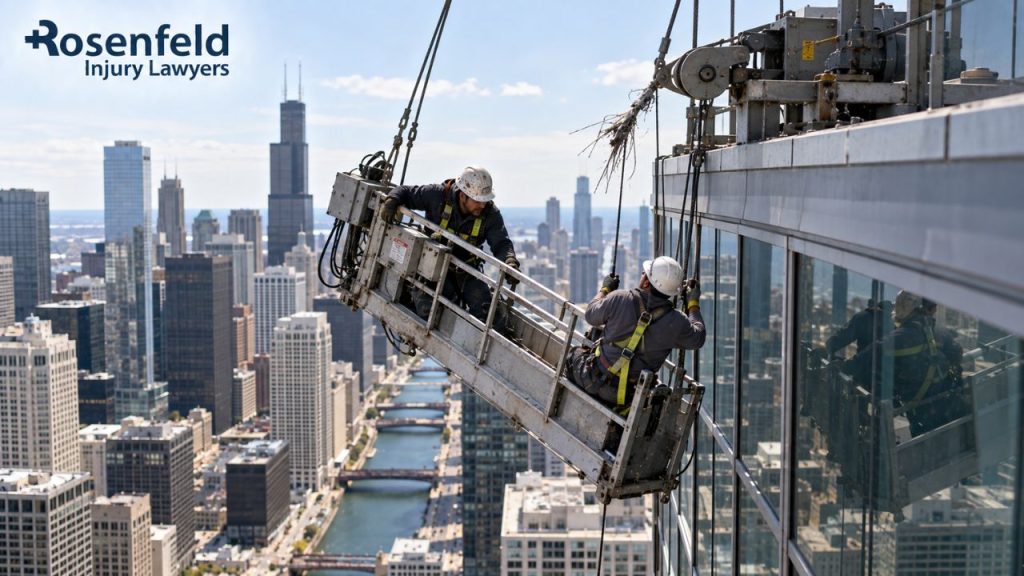
What Causes a High-Rise Window Washer Accident
Window washing on a high-rise building relies on specialized equipment: suspended scaffolds, bosun’s chairs, davits, tiebacks, and safety lines. Any weak link in that chain can turn a routine shift into a catastrophic fall.
Common causes include worn or improperly rated cables, anchor points that were never properly inspected, defective or poorly maintained davit arms, failure to use a secondary safety line, high winds that should have paused the work, and rushed jobs where safety checks got skipped to meet a deadline.
Applicable OSHA and building-safety requirements may require inspection, maintenance, and safe use of rigging systems.
Who Can Be Held Liable When Rigging Fails
A high-rise window washer accident often involves more than one responsible party. These workers are usually employed by a window washing or building maintenance company, so workers’ compensation is typically the first source of benefits. A third-party claim may also be available depending on who caused the equipment to fail.
Parties who may share liability include the building owner or property manager, if they failed to maintain rooftop anchor points; the equipment manufacturer, if a defective cable or harness caused the fall; a maintenance or inspection company, if rigging was certified as safe when it wasn’t; a general contractor, if unsafe roof conditions contributed to the failure; or a coworker, if their negligence during setup caused the rigging to fail.
Illinois follows a no-fault system for workers’ compensation, so you don’t need to prove anyone was careless to receive medical and wage benefits. A third-party lawsuit, however, does require showing that another party’s negligence played a role.
Workers’ Compensation vs Third-Party Claims for Window Washers
Most injured window washers start with a workers’ compensation claim through their employer. This covers medical treatment and a portion of lost wages, regardless of fault, but it doesn’t cover pain and suffering.
If a defective product, negligent building owner, or careless contractor contributed to the fall, you may also file a third-party lawsuit. These claims can potentially recover damages workers’ comp does not, including additional lost-income damages and pain and suffering.
Window washing accidents often overlap with construction accident cases involving multiple contractors, so sorting out liability usually takes a close look at maintenance logs and equipment history.
Common Injuries From High-Rise Window Washing Accidents
A fall from a high-rise building rarely results in minor injuries. Workers who survive rigging failures often face traumatic brain injuries, spinal cord damage, multiple broken bones, internal injuries, and severe lacerations from broken glass.
Tragically, some falls are fatal. Families who lose a loved one in a fatal construction accident may be entitled to wrongful death benefits and, in some cases, a separate civil claim against a negligent third party.
Steps to Take After a High-Rise Window Washer Accident
After a high-rise window washer accident, taking prompt steps can help protect your health, evidence, and legal rights.
- Get medical treatment: Seek medical attention immediately, even if your injuries initially seem minor.
- Report the accident: Notify your employer within 45 days, as required for your claim.
- Document the scene: If you can do so safely, photograph the equipment, rigging, and accident scene.
- Identify witnesses: Ask witnesses to record what they saw while their recollections are fresh.
- Protect your statement: Avoid giving a recorded statement to an insurance adjuster before speaking with a lawyer.
How Our Chicago Work Injury Lawyers Can Help
Rigging failure cases are technical. They often require pulling maintenance records, consulting engineers, and identifying every party who had a hand in the setup. At Illinois Work Injury Lawyer, we investigate the full chain of responsibility so you’re not left covering costs someone else caused.
We handle both workers’ compensation claims and third-party lawsuits on a contingency fee basis, so you owe nothing unless we recover compensation for you. If you were hurt in a high-rise window washer accident, contact us today for a free consultation.
Frequently Asked Questions
Yes, in some cases. If a third party’s negligence contributed to your fall, you may pursue a separate claim beyond workers’ comp benefits.
Responsibility for inspecting and maintaining window-washing rigging can depend on the building, equipment, contracts, and applicable safety requirements.
Illinois workers’ compensation is a no-fault system, so fault generally doesn’t prevent you from receiving benefits.
Illinois law requires you to report a workplace injury to your employer within 45 days to preserve your claim.
These cases often involve multiple parties and technical evidence, so experienced legal guidance helps protect the full value of your claim.
Talk to a Chicago Work Injury Lawyer Today!
A high-rise window washer accident can cause serious injuries, lost income, and uncertainty about what comes next. If you or a loved one was injured because of a rigging failure or other workplace hazard, our Chicago work injury lawyers can review your situation and explain your legal options. Contact our team today for a free consultation and guidance on pursuing available compensation.