



Cement Burns: Why Concrete Chemical Burns Get Worse Hours After You Leave the Site


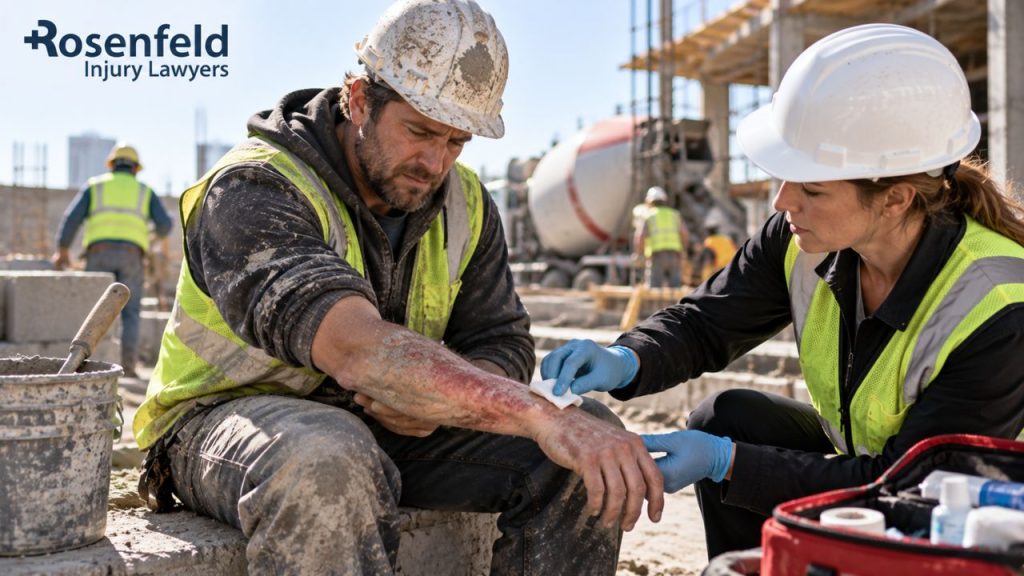
Cement burns from wet concrete can worsen hours after exposure because the highly alkaline material may continue damaging the skin even when there is little or no pain at first. A construction worker may kneel, walk, or work in wet concrete for hours without realizing the extent of the injury, then develop increasing redness, swelling, blistering, or severe pain later at home.
This delayed reaction is a key feature of caustic burns caused by Portland cement. As symptoms can appear gradually, workers may underestimate the injury and delay treatment, allowing the chemical damage to deepen and worsen.
This blog gives you an ultimate understanding of why concrete chemical burns get worse and how a lawyer can help!
What Makes Wet Concrete Caustic Enough to Burn Skin?
Wet concrete is alkaline, not acidic, and that distinction matters. Dry cement contains calcium oxide, but once you add water, it forms calcium hydroxide, a compound with a pH between 12 and 13. Human skin sits around pH 5.5, so prolonged contact with wet cement steadily breaks down the skin’s protective barrier.
Unlike a hot surface or an acid spill, an alkaline burn does not trigger an immediate pain response. The chemical works quietly beneath the surface while the worker keeps moving, keeps kneeling, and keeps finishing the job.
Why Do Cement Burns Get Worse After You Leave the Job Site?
The Occupational Safety and Health Administration has long recognized that skin contact with wet portland cement can cause serious chemical burns that develop gradually rather than instantly.
According to OSHA’s guidance on preventing skin problems from portland cement, the injury deepens the longer the material stays against the skin, particularly when it is trapped inside boots, gloves, or soaked clothing.
This means a worker can leave the site believing they are fine, only to discover blistering, hardened skin, or deep tissue damage hours later, once the alkaline exposure has had time to penetrate deeper into the skin.
What Are the Warning Signs of a Delayed Concrete Burn?
Early warning signs are easy to dismiss because they feel minor. Watch for:
- A slippery or soapy feeling on the skin where wet concrete made contact
- Gradually increasing redness, tightness, or itching
- Numbness followed by a burning sensation several hours later
- Blistering, dead skin, or a hardened patch that appears the next day
- Swelling or pain in areas where concrete was trapped against skin for a long period
The National Institute for Occupational Safety and Health has flagged this pattern, noting in NIOSH-supported guidance on wet cement exposure that continuous skin contact with wet concrete can lead to irritant contact dermatitis and worsening chemical burns, even when the material is eventually washed off.
What Should You Do Immediately After Cement Exposure?
Fast action limits how deep an alkaline burn can spread. If wet concrete contacts your skin:
- Remove contaminated clothing, boots, and gloves right away
- Rinse the affected area with clean water for an extended period
- Do not wait for pain before treating the exposure as serious
- Seek medical evaluation the same day, even if symptoms seem mild
- Report the exposure to your employer in writing
Under federal regulation 29 CFR 1926.95, employers must provide and maintain personal protective equipment for workers exposed to hazards like wet cement. When that equipment is missing, damaged, or not enforced, it can become an important part of a later injury claim.
Who Is Liable for Cement Burns From Wet Concrete?
Liability often depends on why the exposure happened in the first place. A missing pair of waterproof gloves, a lack of washing stations, or inadequate training on cement dermatitis risks can point to safety failures rather than simple bad luck.
Depending on the circumstances, responsibility may fall on an employer, a general contractor overseeing site safety, or a third party such as an equipment or concrete supplier. Our experienced construction accident lawyers regularly investigate these overlapping sources of liability to determine every avenue for compensation.
Can You File a Workers’ Compensation Claim for a Cement Burn?
Yes. In Illinois, most cement burns sustained while performing job duties qualify for workers’ compensation benefits, regardless of who caused the exposure. This can cover medical treatment, a portion of lost wages, and rehabilitation costs tied to the injury.
If a party outside your employer, such as a negligent contractor or defective equipment manufacturer, contributed to the exposure, you may also have grounds for a separate construction accident lawsuit. These claims can run alongside a workers’ comp case rather than replacing it.
Why Documentation Matters in a Delayed Injury Case
As concrete chemical burns surface hours or days after exposure, insurers sometimes question whether the injury is truly work-related. Photographing the job site, keeping the clothing you wore during exposure, and getting evaluated promptly all help establish a clear timeline between the exposure and the injury.
Our firm’s burn injury attorneys understand how to connect delayed medical evidence back to the original incident, which is often the deciding factor in whether a claim is approved or denied.
Talk to an Illinois Work Injury Lawyer About Your Cement Burn
If you developed cement burns from wet concrete on an Illinois job site, do not assume the injury will heal on its own or that it is too late to act because symptoms took time to appear. Contact our office for a free consultation to discuss your options.
Frequently Asked Questions
Symptoms from cement burns from wet concrete can take several hours to fully develop, since the alkaline reaction works beneath the skin before visible signs appear. Some workers do not notice serious blistering or tissue damage until the following day.
Yes, cement burns are classified as chemical burns because they result from the high alkalinity of wet portland cement rather than heat. Illinois workers’ compensation law generally covers them the same way as other workplace chemical exposures.
Reporting quickly is best, but delayed-onset burns are a recognized pattern in construction injuries. You should still notify your employer as soon as symptoms appear and seek prompt medical documentation.
An employer’s failure to provide or enforce the use of proper gloves and boots does not automatically bar a workers’ compensation claim, since Illinois operates under a no-fault system for these benefits.