



Am I a Seaman Under the Jones Act? Coverage for Illinois River, Mississippi, and Great Lakes Workers


You may qualify if you spend roughly 30% or more of your working time in the service of a vessel or identifiable fleet, provided your duties also contribute to the vessel’s function. This covers many deckhands, engineers, and crew members on the Illinois River, the Mississippi River, and the Great Lakes.
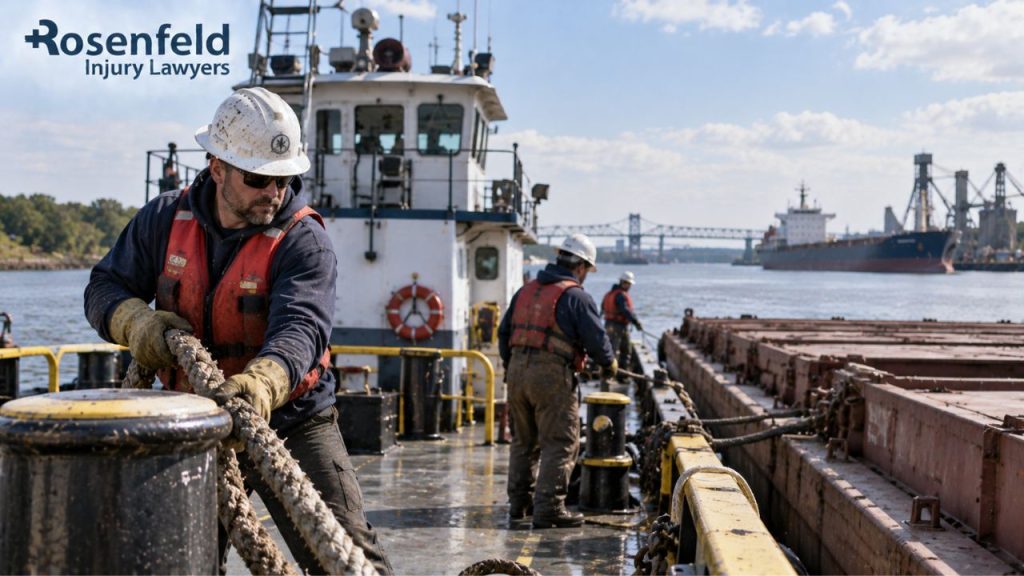
What Does It Mean to Be a Seaman Under the Jones Act?
A seaman under the Jones Act is a worker who has a substantial connection to a vessel operating on navigable waters. The connection has to be both in duration and in nature.
This standard comes from federal maritime law, specifically the Merchant Marine Act of 1920, codified at 46 U.S.C. § 30104. Courts have refined the definition over decades of case law, but the core question stays the same. Does your job put you aboard a vessel often enough, and in a way connected closely enough to its mission, that you share the same risks as the rest of the crew?
How Do I Know If I Spend Enough Time on a Vessel?
The general rule is that you need to spend roughly 30% or more of your total working time serving a vessel or an identifiable fleet of vessels under common ownership.
This is often called the duration test. It is not a strict daily count. Courts look at your overall work pattern across weeks or months.
- A deckhand who works the Mississippi River barge lines most of the year easily clears this threshold.
- A dock worker who occasionally steps aboard to help load cargo, but mostly works on land, usually does not.
- A tugboat engineer on the Illinois River who splits time between vessel maintenance and onshore repair shops may need a closer look at the records.
Does My Job Have to Contribute to the Vessel’s Mission?
Yes. Beyond time spent aboard, your duties must actually contribute to the vessel’s function, operation, or mission. This is called the nature test.
Deckhands, pilots, engineers, cooks, and mates typically satisfy this test without much dispute. Someone hired purely for a one-time land-based task who briefly boards a vessel usually does not.
Am I a seaman under the Jones Act if I work maintenance on a dredge boat that clears sediment from the Illinois River channel? A worker who maintains or operates a dredge may qualify when the dredge is a qualifying vessel, and the worker’s duties and connection to it satisfy the seaman test.
What Counts as a Navigable Waterway in Illinois?
Navigable waters generally include any waterway used, or capable of being used, for interstate or foreign commerce. In Illinois, this includes:
- Lake Michigan and its connected harbors
- The Mississippi River along the western border of the state
- The Illinois River, which links Lake Michigan to the Mississippi
- The Chicago River and its commercial waterways
Great Lakes shipping crews, Mississippi River towboat operators, and Illinois River barge hands all typically work in navigable waters that satisfy this part of the Jones Act test.
What Types of Vessels Qualify Under the Jones Act?
Not every structure on the water counts as a vessel. Courts look at whether the structure can move over water and is used, or intended to be used, for transportation.
Qualifying vessels usually include:
- Tugboats and towboats
- Barges used for cargo transport
- Dredge boats
- Cargo ships and freighters
- Some crew boats and supply vessels
Fixed platforms and permanently moored structures generally do not qualify, since they lack the mobility that defines a vessel under maritime law.
Am I a Seaman Under the Jones Act If I Work as an Independent Contractor?
Courts look past your job title and examine your actual working relationship with the vessel owner. If you function like a regular crew member, spend the required time aboard, and perform duties tied to the vessel’s mission, contractor status alone will not disqualify you.
This matters for Illinois river and Great Lakes workers hired through staffing agencies or subcontractors who perform the same tasks as directly employed crew.
What Should I Do If I’m Not Sure I Qualify?
Seaman status is often disputed in maritime injury cases, and employers sometimes argue against it to avoid Jones Act liability. Since these claims allow for maintenance and cure benefits and the right to a jury trial, employers have a financial incentive to push back.
If you were hurt while working on a barge, tugboat, or cargo vessel and you are unsure whether the Jones Act applies to your situation, document your work schedule, job duties, and the vessel’s operations as soon as possible. This record can make a real difference later.
Why Does Seaman Status Matter for Your Injury Claim?
If you qualify as a seaman, the Jones Act may let you bring a negligence claim against your employer, along with other maritime remedies that differ from traditional workers’ compensation. This can include lost wages, past and future medical costs, and pain and suffering, which are not typically available under a no-fault workers’ comp system.
Workers who do not meet the seaman test, such as many longshoremen and harbor construction crews, may instead fall under the Longshore and Harbor Workers’ Compensation Act, a separate federal program with its own benefit structure.
Talk to an Illinois Maritime Injury Attorney
If you were hurt while working on the Illinois River, the Mississippi River, or the Great Lakes, determining your seaman status is often the first step toward the right kind of claim. An experienced Jones Act attorney can review your work history and vessel records to answer the question, “Am I a seaman under the Jones Act?” with confidence, and help you pursue the full compensation your injury deserves.
Frequently Asked Questions
Courts generally use roughly 30% of working time as a guideline when evaluating whether your connection to a vessel or fleet is substantial.
No. The Jones Act can apply to workers on navigable waterways, including the Illinois River, Mississippi River, and Great Lakes. Inland tugboat and barge crews may qualify.
Yes, potentially. Courts consider your actual duties and relationship to the vessel, not your title alone. Independent contractor status does not automatically prevent seaman status.
Workers who do not qualify as seamen may still receive protection under other maritime laws, including the Longshore and Harbor Workers’ Compensation Act, depending on their work.
Seaman status can allow a Jones Act negligence claim against your employer, including potential pain-and-suffering damages. Workers outside this status may have different compensation rights and remedies.
 Legally Reviewed By
Attorney Jonathan Rosenfeld
Content legally reviewed by Jonathan Rosenfeld The information on this page has been legally reviewed by Attorney Jonathan Rosenfeld, founder and managing partner of Rosenfeld Injury Lawyers LLC. With extensive experience representing injured workers across Illinois, Mr. Rosenfeld is dedicated to helping workplace accident victims pursue the maximum compensation available under the law. His extensive legal knowledge and commitment to client advocacy ensure that the information provided is accurate, reliable, and aligned with current legal standards.